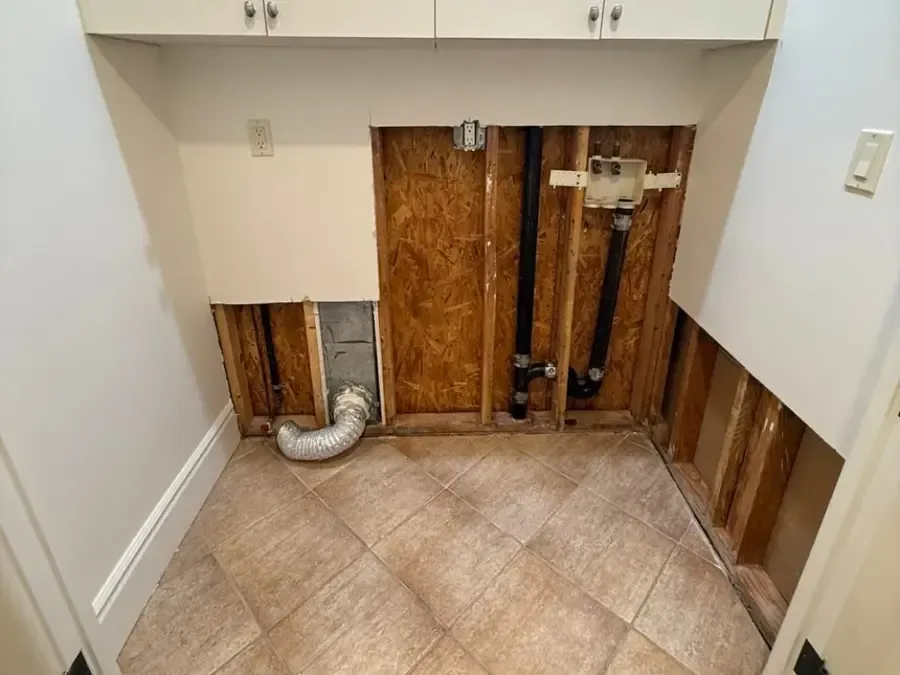
Appliance water often reaches concealed construction before it reaches the open room. The equipment footprint and its nearby penetrations should anchor the moisture search.
Key takeaways
- Do not pull powered heavy equipment across a wet floor; suitable trades should disconnect it safely first.
- Inspect behind and beneath the machine, then follow cabinet seams, wall openings, thresholds, and continuous flooring.
- Test finish flooring and lower layers separately to find moisture beneath an apparently dry surface.
- Evaluate cabinet ends, backs, bases, and toe spaces as individual components rather than one assembly.
- Retest every surface the appliance will cover before repair or reconnection closes access.
Begin with the machine and failure evidence
Washers, dishwashers, and refrigerators combine electricity, water, weight, and confined access. Occupants should avoid reaching behind energized wet equipment.
Appliance or plumbing personnel isolate the source and document whether a hose, valve, drain, pump, tubing, or internal component failed.
Restoration starts after safe movement. The original appliance position, visible water edge, connection openings, and nearby contents are photographed.
Appliance leak restoration follows actual water evidence without claiming that one machine type fails more often locally.
- Use a supply valve only from dry stable footing.
- Keep service and repair findings.
- Photograph the footprint before extraction.
- Establish dry reference areas nearby.
Dishwasher water can spread through cabinet edges
A dishwasher release may remain behind the door front while entering toe spaces, cabinet ends, wall joints, and flooring seams. Composite casework can absorb water at an unfinished edge and change shape before the finished face shows damage.
Technicians remove accessible toe pieces or trim to inspect concealed components. Cabinet backs, bases, shelves near the floor, and adjoining boxes receive separate readings.
Stable clean sections can remain protected while swollen, separated, contaminated, or inaccessible parts need another decision.
- Inspect both cabinet sides of the recess.
- Check plumbing penetrations at the wall.
- Measure toe spaces from available openings.
- Record physical change as well as moisture.
Washer releases can cross rooms and levels
A washer hose or discharge can release water quickly across a utility floor. Seams and thresholds allow liquid to reach an adjoining room beneath the visible finish.
Penetrations can send it into a wall or lower ceiling before the open floor is cleared.
The extraction map begins at the machine footprint, crosses each transition, and includes the room below when evidence supports it. Water extraction and removal uses tools suited to the finish, depth, and access rather than treating every part of the path alike.
- Trace each doorway in both directions.
- Inspect wall bases beyond the visible edge.
- Check penetrations for downward movement.
- Revisit hidden spots after contents move.
Refrigerator water may create a narrow hidden path
A refrigerator connection can release near a wall opening, feeding water into framing, cabinet sides, or a narrow strip beneath flooring. Because the unit covers the starting area, the open room may show only a small clue after water has already traveled.
The failed connection information helps distinguish a supply release from normal equipment moisture. Restoration testing begins at the penetration and moves across compatible materials until dry references are found.
The assessment avoids assigning unrelated moisture to the appliance without supporting evidence.
- Inspect the supply opening and wall contact.
- Test the full covered floor footprint.
- Check adjoining cabinets separately.
- Preserve the mechanical service conclusion.
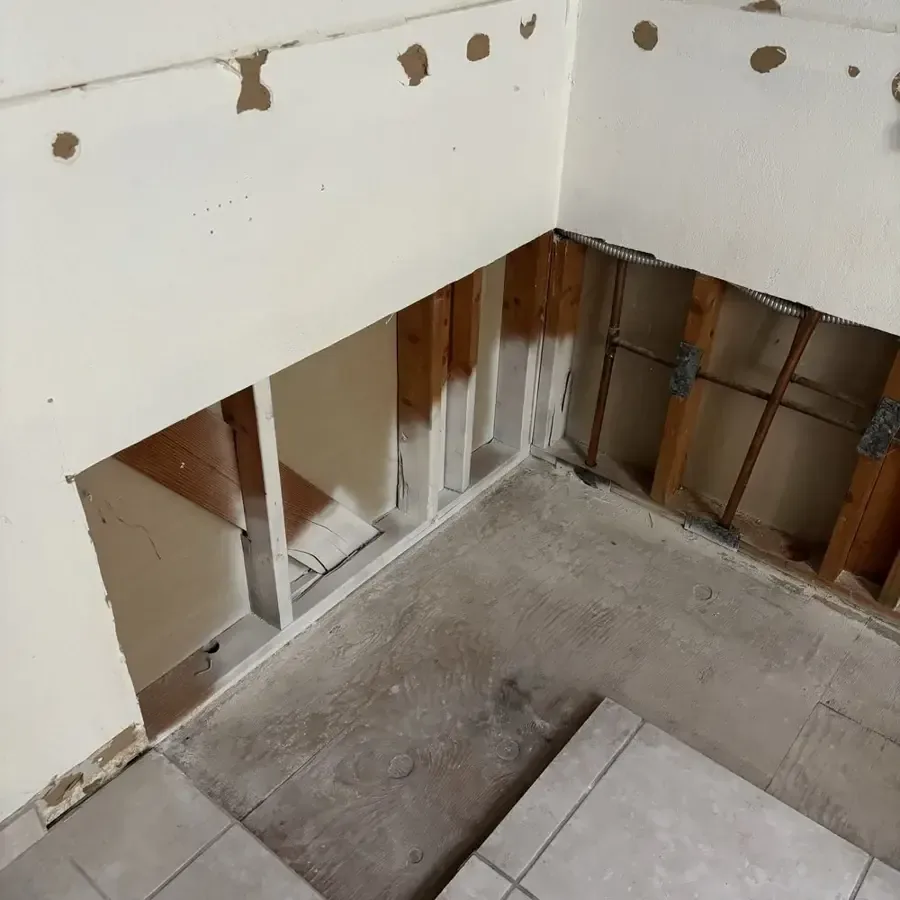
Floor layers need independent measurements
Tile, plank, sheet finish, adhesive, underlayment, wood, and concrete do not share one moisture condition. Water can cross a seam and remain below a dry looking upper face.
A compatible method should be used for each accessible material.
Limited edge access may expose a lower layer without removing an entire room of finish. After liquid pickup, air movement reaches exposed damp surfaces and dehumidification controls vapor.
Structural drying service follows daily values and investigates a stalled layer before more equipment is added.
- Name the material attached to every reading.
- Begin access at removable or damaged edges.
- Keep dry finish outside the boundary protected.
- Follow values until each retained layer reaches goal.
Verify the footprint before the appliance returns
A machine can hide the main inspection area once it is reinstalled. Final checks should cover the wall, cabinet edges, floor layers, supply and drain openings, and any lower room included in the loss.
Photographs taken before and after movement preserve the handoff.
LaPlace sits on the east bank of the Mississippi River, and service includes Indigo Lakes Estates. An appliance leak assessment starts at the failed connection and follows the floor seams into adjoining rooms.
Photographs behind the machine and readings beneath accessible finishes help keep repair and drying work coordinated.
Distinguish the appliance release from unrelated moisture
Equipment can produce condensation or small amounts of normal process moisture, while a failed connection or drain can release water into construction. The appliance technician’s finding helps distinguish those conditions.
Restoration personnel should map only the observed building moisture and avoid assigning every nearby mark to the machine.
Pattern and location matter. A narrow path from a refrigerator penetration differs from broad washer discharge across a utility floor.
Dishwasher water may remain within a cabinet recess. The source record, visible route, and direct readings should support the boundary together.
When an unrelated damp spot appears outside the plausible path, it receives a separate investigation. Combining two sources can confuse material decisions, drying progress, and documentation.
A clear diagram can show multiple areas without claiming they share a cause. This keeps the appliance footprint focused while ensuring that another water condition is not ignored.
A short observation after reconnection can document that the immediate supply and drain areas remain visibly dry. That check confirms the installation handoff but does not replace the earlier structural readings beneath the appliance.
If fresh water appears, the equipment source returns to the appropriate trade before finishes are closed again.
- Pair the service finding with the moisture map.
- Compare the pattern with the connection location.
- Label separate damp areas independently.
- Do not extend the appliance scope by assumption.
Questions
Should an occupant pull a leaking appliance forward?
Not while it is powered, connected, heavy, or surrounded by water. Suitable appliance, plumbing, or electrical personnel should establish safe movement first.
Can dishwasher water damage cabinets without a large puddle?
Yes. Water can enter toe spaces, unfinished cabinet edges, wall joints, and floor seams while remaining mostly concealed behind the machine.
Why inspect the room below a washer?
Water may descend through penetrations or framing before becoming visible. Evidence near the release determines whether a lower ceiling or wall needs testing.
Does dry flooring on top mean the lower assembly is dry?
No. Adhesive, underlayment, wood, or concrete can retain water beneath the finish. Each accessible layer requires an appropriate direct measurement.
When can the appliance be reconnected?
After source repair and when its return will not cover unfinished inspection or drying. Final readings should document every tested surface beneath and beside it. The reconnection area should remain accessible for that observation.