Sewage Backup Cleanup in LaPlace, LA
The restoration team responds 24/7 when sewage entering through a toilet, tub, or drain affects a home or business. Crews isolate the source, map every wet assembly, remove water, and run a measured drying plan with daily documentation.
(888) 417-5665Dispatch for sewage backup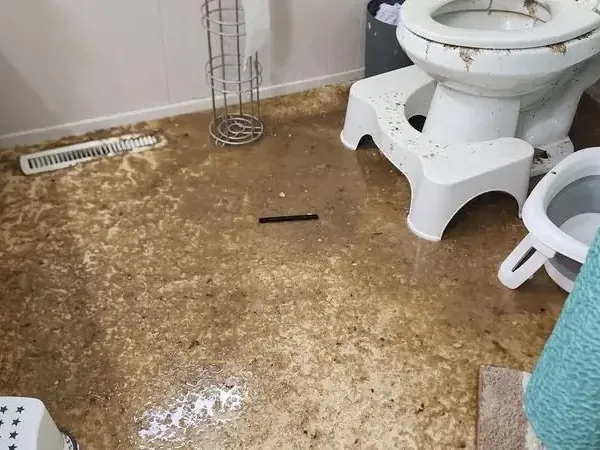
Why the sewage backup cleanup plan follows the water
Rapid local response
The response team dispatches 24/7 for active water and starts with source control, safety and a full moisture boundary.
IICRC S500 drying standard
The drying team sets category and class, chooses equipment for the evaporation load and verifies progress with daily readings.
Claim-ready documentation
The record can include the source, room diagram, moisture map, category, class, daily logs and photos before removal.
River Parish water knowledge
The crew plans for tropical rain, storm surge, humid air, supply failures and occasional freezing conditions.
How sewage backup is handled in LaPlace
Isolate Category 3 water
The crew restricts access, establishes containment, and identifies the backup source before disturbing affected material.
Extract and remove contamination
Sewage water and porous materials affected by it are removed under controlled conditions with suitable PPE and air control.
Clean and dry retained surfaces
Remaining structural surfaces are cleaned, treated with labeled products, and dried with monitored equipment.
Verify and record completion
The file records removal, cleaning, equipment, photos, and final moisture readings for retained assemblies.
First steps for sewage backup cleanup in LaPlace
Stop and identify the source
The property owner shuts off the nearest safe valve when possible. A plumber or roofer handles the repair while the mitigation crew controls water.
Keep clear of hazards
People and pets stay away from wet electricity, sagging ceilings, sewage, and outside floodwater until safe zones are established.
Protect the record
Overview photos taken before contents move can support the loss record, provided photography does not delay an urgent safety step.
Open a drying path
The extraction team moves contents, lifts or removes blocked materials, and exposes wet assemblies according to category and condition.
A backup can contaminate the route from a bathroom into the next room even when the deepest water stays near the fixture. Sewage cleanup across LaPlace, including Indigo Lakes Estates and the areas served by Airline Highway and US 51, begins with restricted access. The team removes wastewater and damaged porous materials before cleaning exposed surfaces. Drying equipment starts after that preparation, with clean areas protected from shoes, hoses, and debris leaving the work zone.
What does sewage backup cleanup cost in LaPlace, LA?
Typical sewage backup cleanup projects range from $2,200 to $12,000 or more. Water category, affected area, material class, access, contamination controls, and how long the assembly stayed wet set the actual scope.
Focused loss
$2,200 to $5,396
- Source controlled
- Limited material area
- Focused extraction and drying
Multi-room loss
$5,396 to $8,400
- Several assemblies wet
- More equipment zones
- Daily moisture logs
Complex loss
$8,400 to $12,000+
- Access or contamination controls
- Material removal where needed
- Larger drying and documentation scope
Ranges are typical, not a quote: category of water, square footage, material class and how fast drying started move the number most. Run the LaPlace water damage cost calculator for a closer range.
How sewage backup cleanup is assessed before work begins
The restoration contractor who responds starts with safety, source control, and a room-by-room moisture map. Thermal imaging reveals patterns, while pin and pinless meters confirm which surfaces and assemblies are actually wet. The crew records a dry reference in comparable material, because a wall or floor can look normal while moisture remains behind the finish.
Because sewage is Category 3 from the start, the mitigation team establishes containment, uses PPE, removes porous materials affected above the water line, cleans remaining surfaces, and applies an EPA-registered antimicrobial at its labeled dwell time. The team also sets the class of loss. Class 1 involves limited absorption, while Class 3 can involve ceilings, walls, flooring, insulation, and contents across most of a room. Class 4 identifies dense or low-permeance materials that need a specialized drying approach.
- Source and electrical hazards documented before extraction
- Water category and class assigned from observed conditions
- Moisture boundaries marked beyond the visible edge
- Contents moved or protected to open the drying path
- Drying goal tied to comparable unaffected material
Safety point for this loss
The property owner should avoid wet outlets, sagging ceilings, sewage, and outside floodwater. The response team establishes safe zones before equipment is moved into the affected area.
Equipment used for sewage backup cleanup
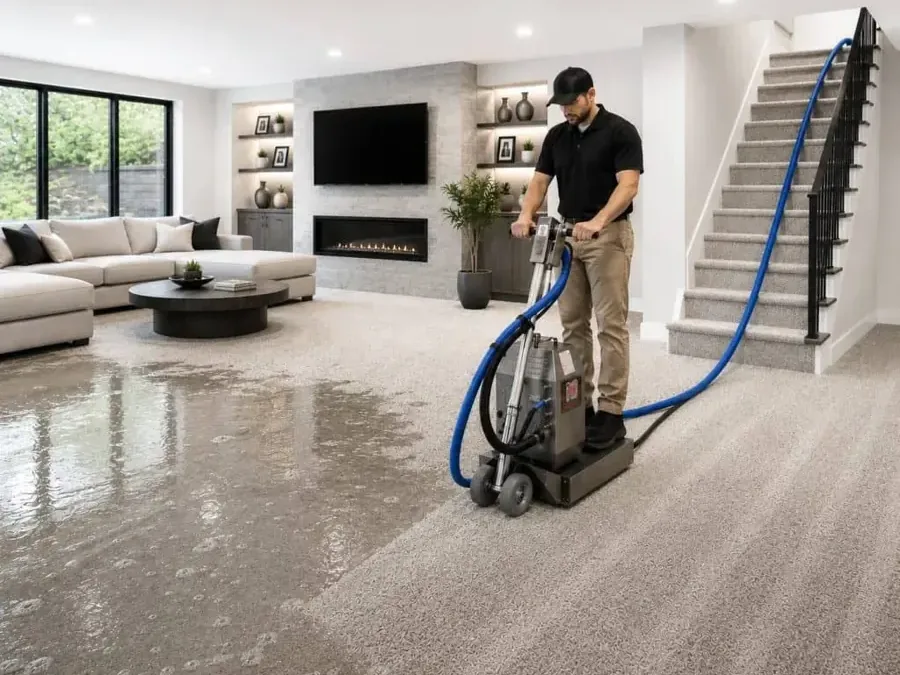
The working set can include containment, PPE, HEPA air scrubbing, controlled removal, extraction, and an EPA-registered antimicrobial. Extraction comes first because removing liquid water is more efficient than asking dehumidifiers to turn all of it into vapor. The drying team then places airflow across wet surfaces and uses dehumidification to capture the released moisture.
Psychrometric readings track temperature, relative humidity, and vapor pressure. Material readings track drywall, framing, subfloor, cabinets, and concrete. The crew adjusts equipment when a zone stalls, opens a cavity only when access is needed, and keeps the system operating until the materials reach the documented goal.
- Truck-mounted or portable extraction selected for access and volume
- Air movers placed for the evaporation load, not simply by room count
- LGR dehumidifiers sized to the class of loss and wet materials
- HEPA air control added when demolition or contamination requires it
- Daily logs used to confirm progress and explain changes
Active water near the River Parishes?
The caller can describe the source, rooms affected, and whether water is still moving. Dispatch uses those facts to prepare the first extraction setup.
Materials that change the sewage backup cleanup plan
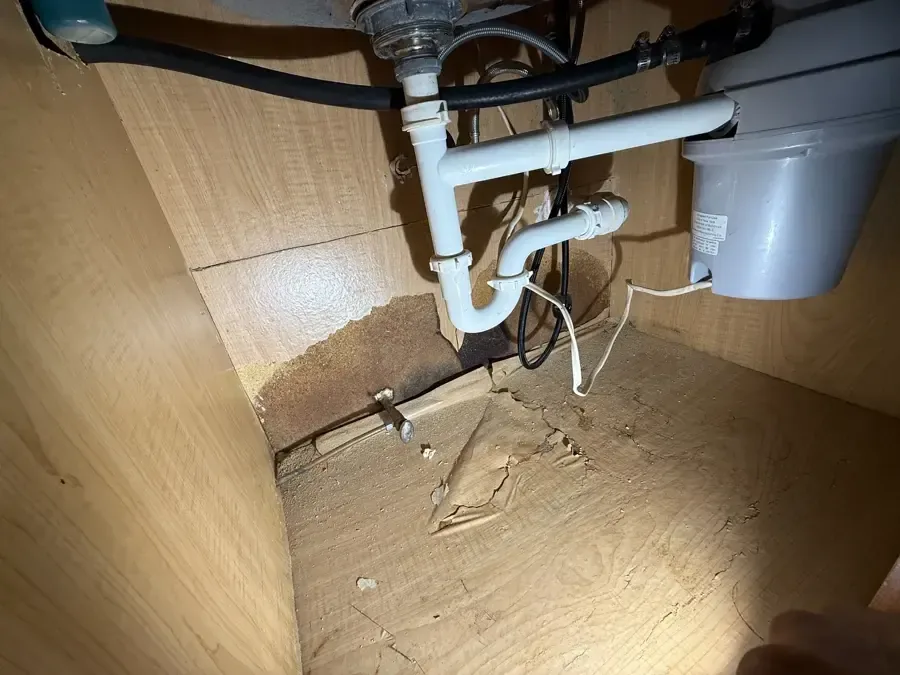
Porous carpet pad, insulation, and composite wood absorb water quickly. Drywall can wick beyond the visible stain. Cabinets hold water in toe kicks and seams. Tile may look unaffected while moisture remains in underlayment or the slab. Hardwood needs frequent readings because the top surface can improve before the underside and subfloor reach the goal.
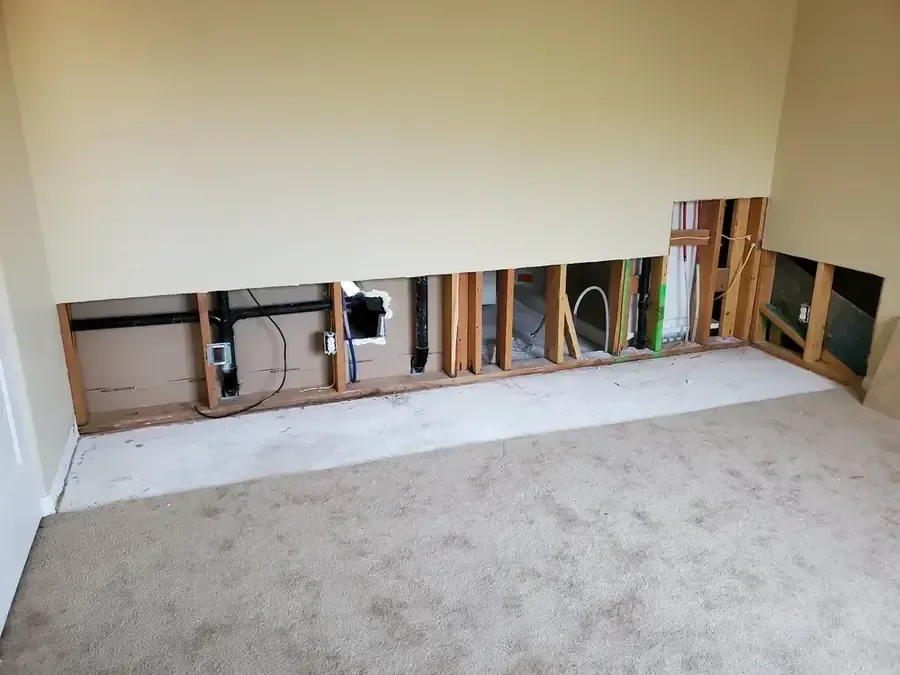
The mitigation team preserves material when the category, condition, access, and drying response support it. The team removes material when contamination, delamination, swelling, loss of strength, or blocked access makes in-place drying unsound. Category 3 porous material requires a more conservative removal decision than a clean supply leak.
- Drywall checked above the visible water mark
- Baseboards removed when they block wall-cavity evaporation
- Cabinet bases and toe kicks checked from more than one side
- Flooring evaluated with the subfloor or slab underneath
- Insulation assessed for saturation, contamination, and access
Documentation and next decisions after sewage backup cleanup
The claim record can include the reported source, water category, class of loss, affected-room diagram, moisture map, photos before removal, equipment quantities, daily readings, and a line-item scope. Those records explain why a material was dried, cleaned, or removed. The insurer applies the policy and makes the coverage decision.
Local context matters without replacing the inspection. Hurricane Isaac put floodwater over US 51 at I-10, and Hurricane Ida filled homes with water. Those events show why crews around Lake Pontchartrain plan for hidden wall and floor moisture, but a current loss still receives its own source and category decision.
- Report the event promptly and keep the claim number
- Save photos and communications in one place
- Ask the adjuster what approvals the policy requires
- Keep drying logs and demolition photos with the scope
- Confirm the final material readings before equipment leaves
Sewage backup cleanup across LaPlace and the River Parishes
LaPlace Water Damage Restoration covers ZIP 70068 and 70069, including homes near US 51, I-10, Airline Highway, Indigo Lakes Estates, the Mississippi River side and the Lake Pontchartrain drainage area.
Nearby coverage reaches Destrehan, Reserve, Luling, Norco, Garyville.
Related water damage services in LaPlace
Sewage Backup Cleanup questions in LaPlace, LA
Still dealing with sewage entering through a toilet, tub, or drain?
The affected area is isolated before wastewater, contaminated materials, and debris are removed.
(888) 417-5665Send sewage backup dispatchHow fast should sewage backup cleanup begin?
Active water should be treated as urgent. Source control and electrical safety come first, followed by extraction before water reaches more drywall, cabinets, insulation, or subfloor.
What equipment is used for sewage backup cleanup?
A typical setup may use containment, PPE, HEPA air scrubbing, controlled removal, extraction, and an EPA-registered antimicrobial. The exact mix follows the moisture map, water category, class of loss, access, and material response.
How long does sewage backup cleanup drying take?
A contained Class 1 loss often dries in 3 to 5 days. Dense wood, concrete, cabinets, humid conditions, and Class 3 or 4 losses can take longer. Readings decide the finish.
Does sewage backup cleanup require drywall removal?
Drywall may dry in place when it is sound, reachable, and not affected by Category 3 water. The crew removes contaminated, delaminated, weakened, or inaccessible material.
What does IICRC S500 change during sewage backup cleanup?
The standard guides inspection, category and class decisions, extraction, equipment setup, monitoring, documentation, and completion criteria. It replaces guesswork with measured decisions.
How is the cost of sewage backup cleanup calculated?
Affected area, water category, material class, extraction volume, access, cleaning, demolition, equipment quantity, and monitoring days shape the scope. The moisture map refines the planning range.
What should be documented for sewage backup cleanup?
Useful records include the source, affected rooms, category and class, moisture map, photos before removal, equipment log, daily readings, and line-item scope. The insurer decides policy coverage.
Stop sewage entering through a toilet, tub, or drain from reaching another assembly
The response team handles extraction, controlled removal, drying, and documentation around the clock.