Water Damage Restoration Luling, LA
Restoration begins by controlling the source, protecting occupants, and tracing moisture through every finish and concealed assembly it may have reached. The measured boundary, rather than a room label, sets the work.
(888) 417-5665Request restoration assistanceService covers water and sewage losses with extraction, cleaning, selective access, and structural moisture control. Each retained material receives its completion target.
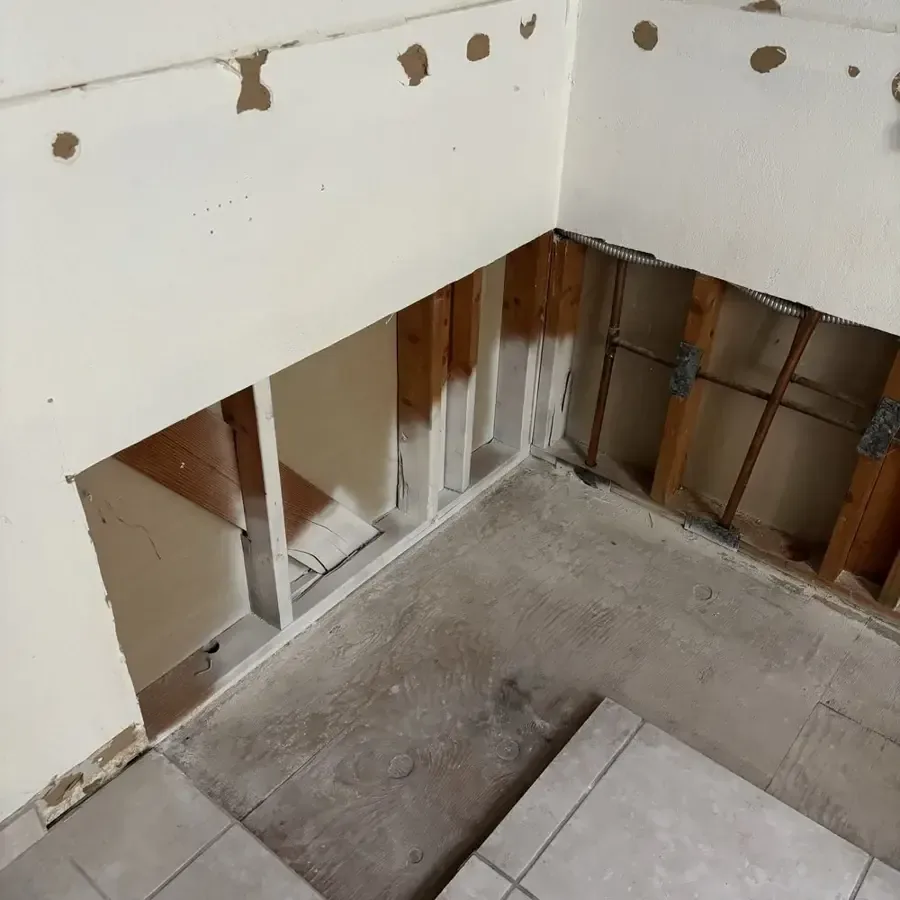
Protect people and preserve useful loss information
- 1
Stay clear of wet power
Do not enter pooled areas near outlets, equipment, fixtures, or electrical panels. Qualified electrical help should assess any concern before routine extraction starts.
- 2
Use only a safe shutoff
Close a reachable water valve if the route is dry and stable. A plumber handles failed pipe, fixture, hose, or appliance components.
- 3
Avoid unstable overhead material
Keep people and pets away from bowed ceilings, wet insulation, damaged flooring, and loose construction. Do not puncture or press a bulging surface.
- 4
Photograph from secure footing
Record the source area, visible water edge, stains, and affected rooms without delaying an urgent shutoff or crossing a hazardous work zone.
- 5
Keep clean areas separate
Move only light, dry, accessible belongings into protected space. Leave contaminated, trapped, heavy, or saturated items for controlled handling.
Choose the service that fits the loss
Plumbing water, sewage, rain, and appliance releases each require a distinct safety sequence, material decision process, and moisture plan. The observed source and contacts determine which sequence applies.
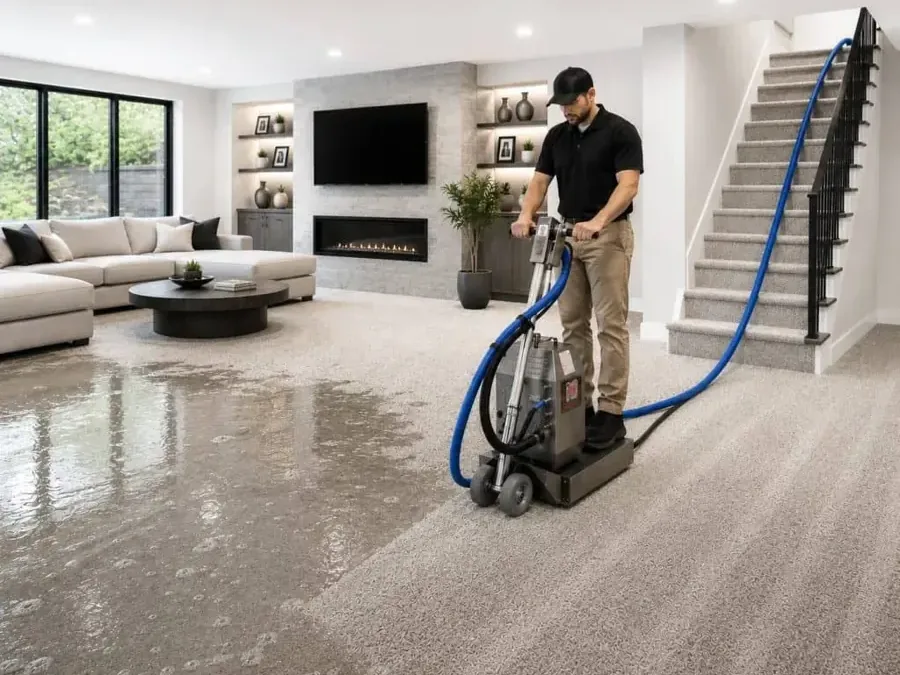
Water Extraction and Removal
Open liquid is recovered first, then seam and edge readings define where moisture remains inside floor and wall layers.
View service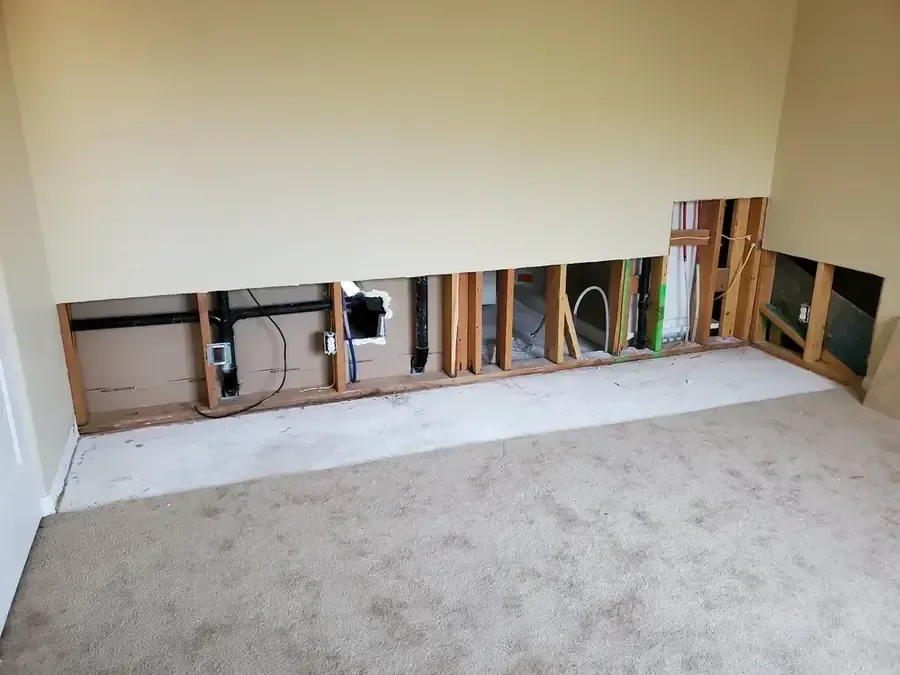
Slab Leak Water Damage
The plumber diagnoses the pipe; restoration readings establish which concrete, adhesives, finishes, and partitions became wet.
View service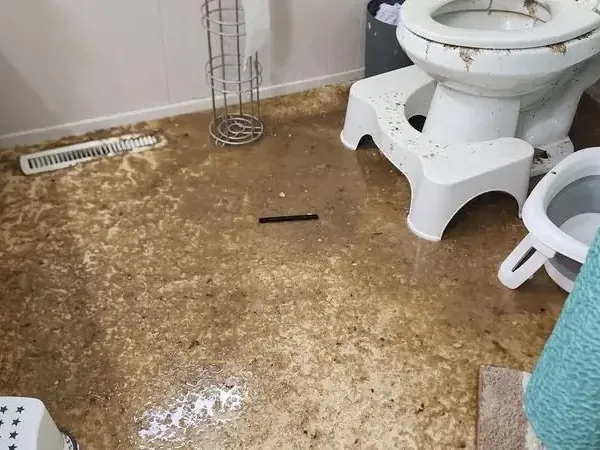
Sewage Backup Cleanup
Wastewater and contaminated debris leave by a contained route before reachable structure is cleaned and dried.
View service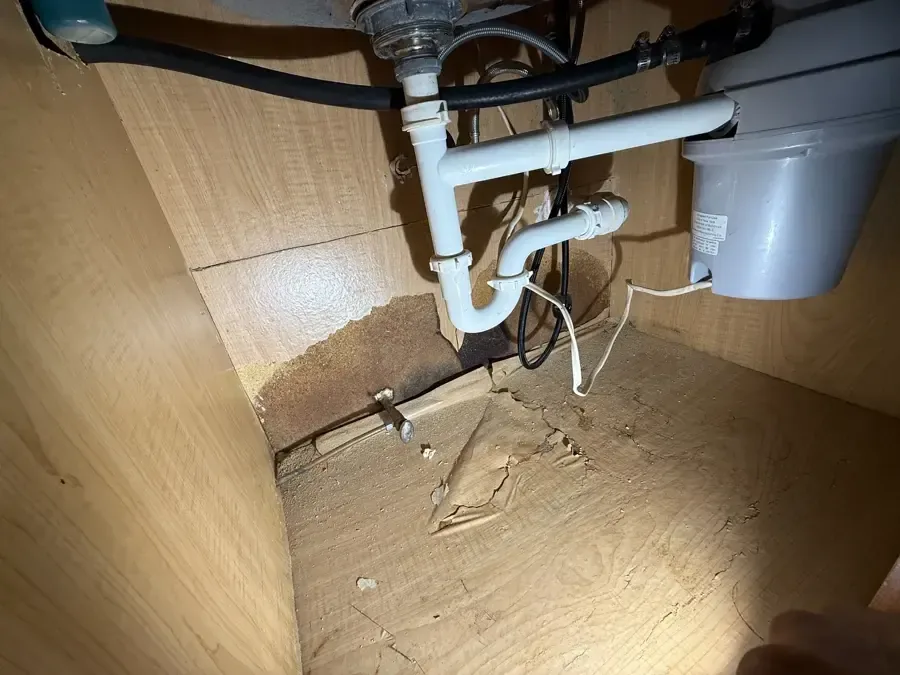
Burst Pipe Water Damage
Spray, gravity, and absorption can carry supply water beyond the repaired break into insulation and connected rooms.
View service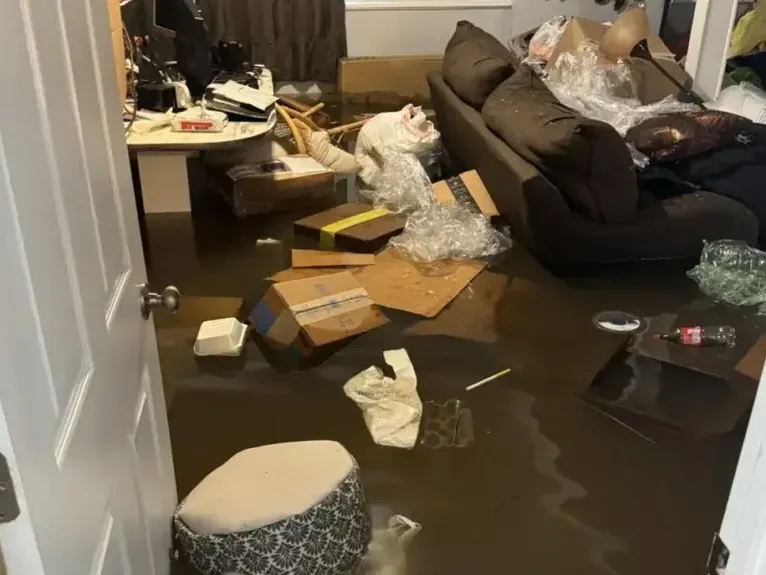
Storm and Flood Cleanup
Outside deposits and damaged finishes are addressed before retained structural surfaces receive controlled drying.
View service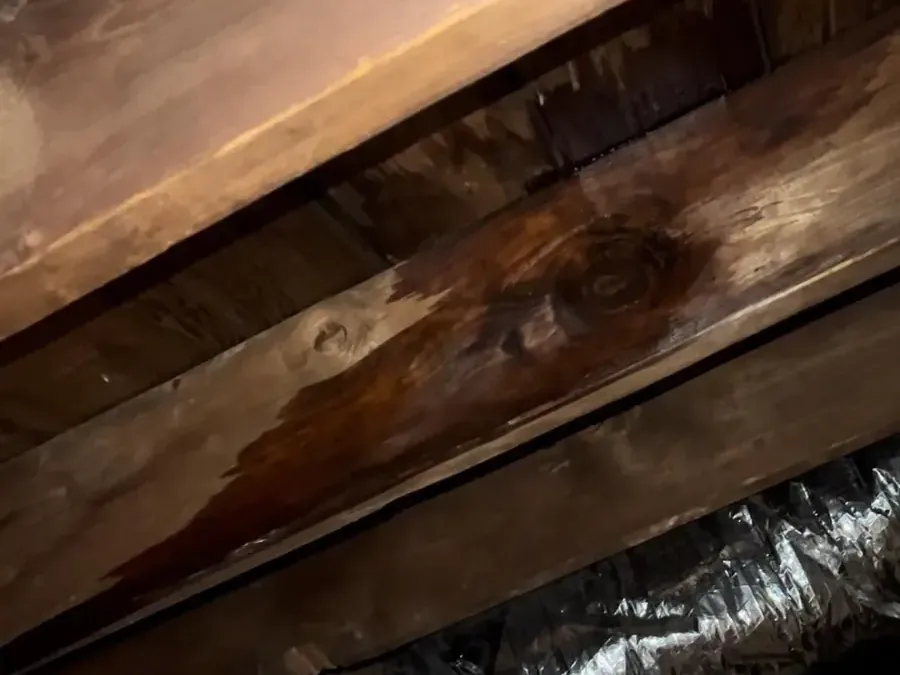
Roof Leak Water Damage
Rain is traced from repaired roofing through decking and ceiling materials to the room and flooring beneath.
View service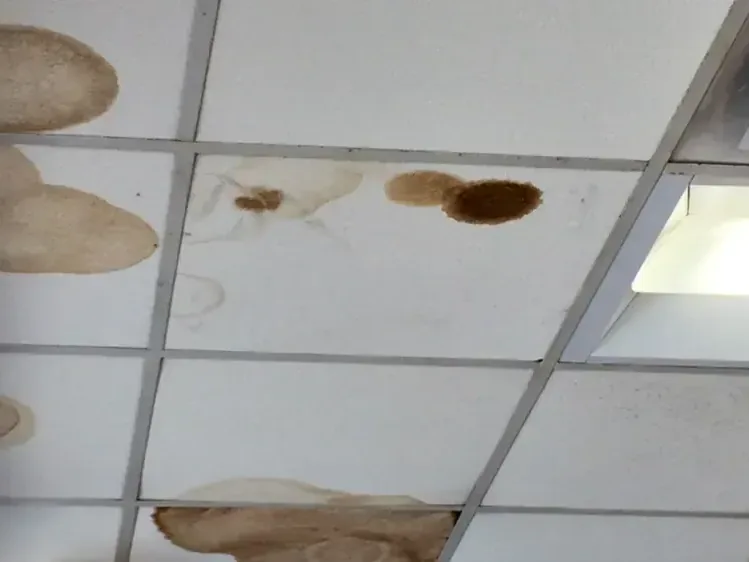
Ceiling Leak Water Damage
Safe access to an overhead cavity begins with room protection and a finding on whether rain or plumbing caused the release.
View service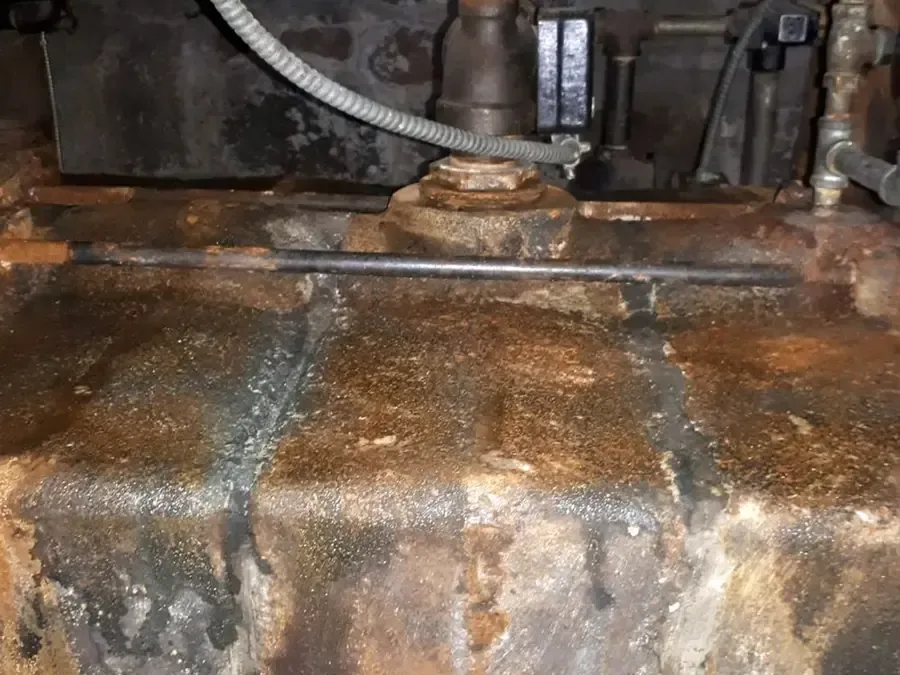
Water Heater Leak Cleanup
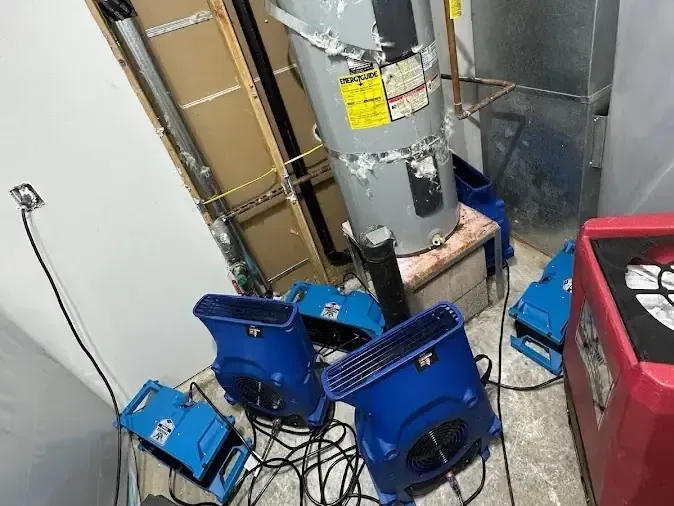
The platform, pan, partitions, and covered floor need inspection after utilities and the tank supply are made safe.
View service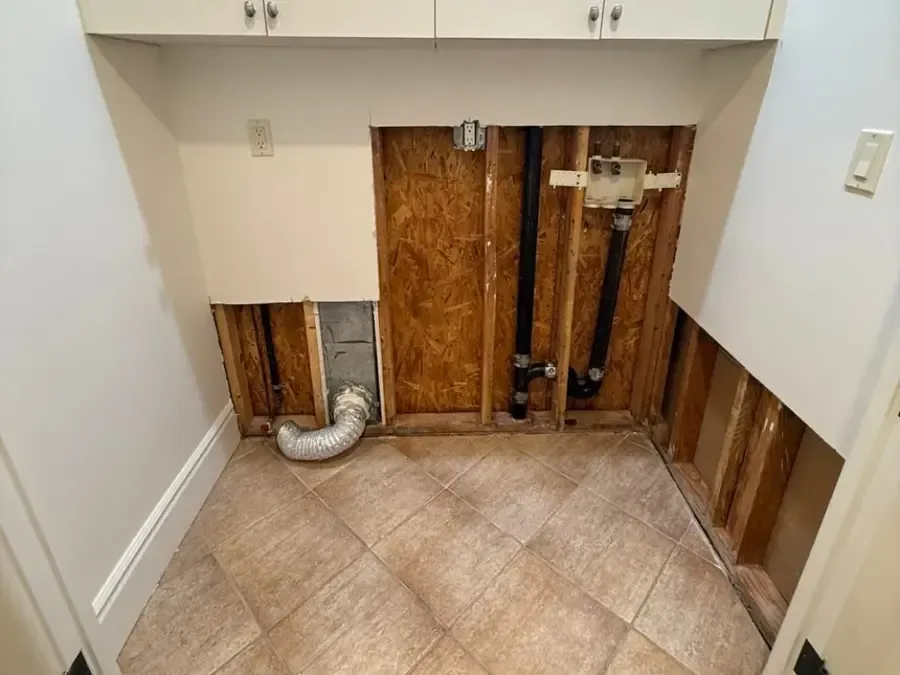
Appliance and Supply Hose Leaks
Equipment recesses, cabinet ends, and individual floor layers reveal where a concealed appliance leak traveled.
View service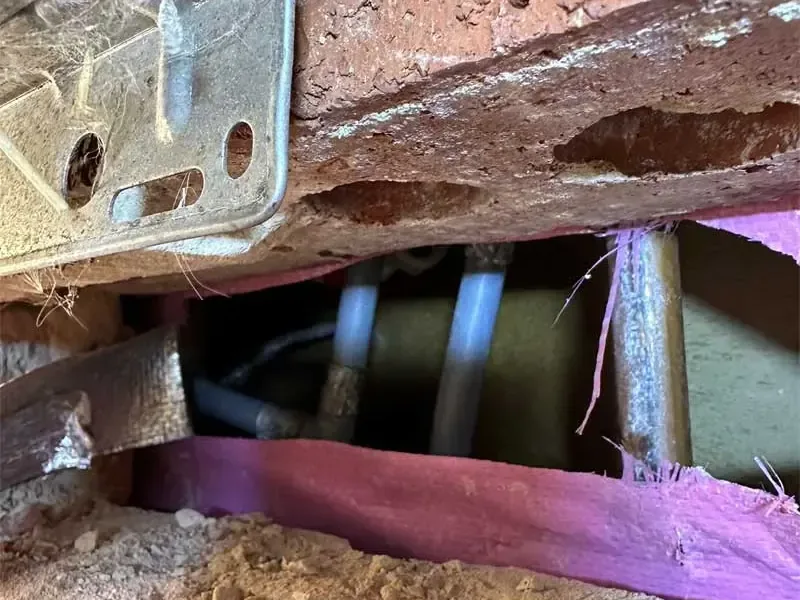
Crawl Space Water Removal
Low areas are pumped and insulation is assessed before repeat readings track the underside of the occupied floor.
View service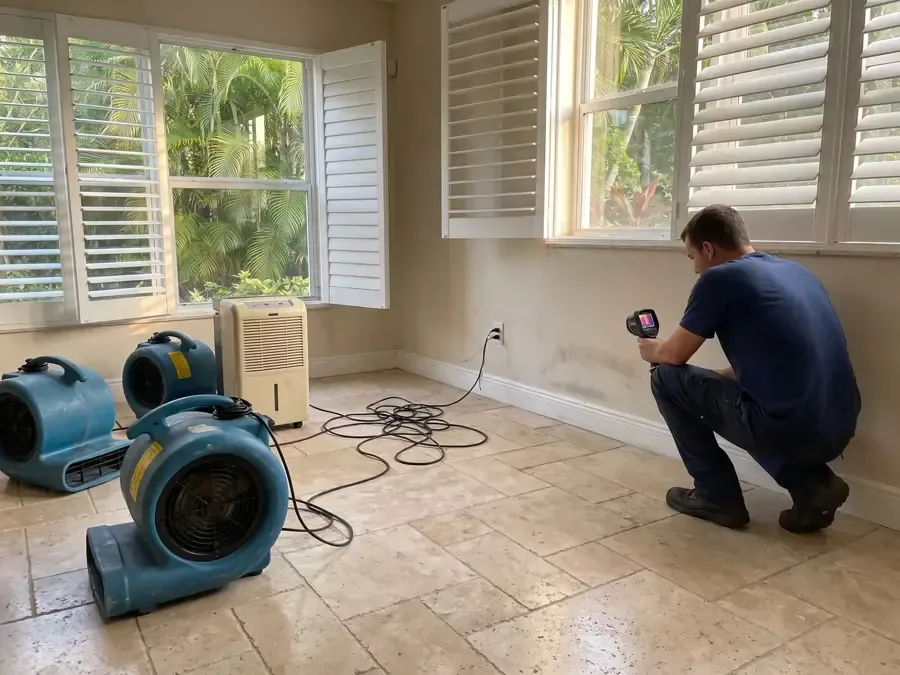
Structural Drying and Dehumidification
Airflow and humidity control change when one wet component responds more slowly than the surrounding construction.
View service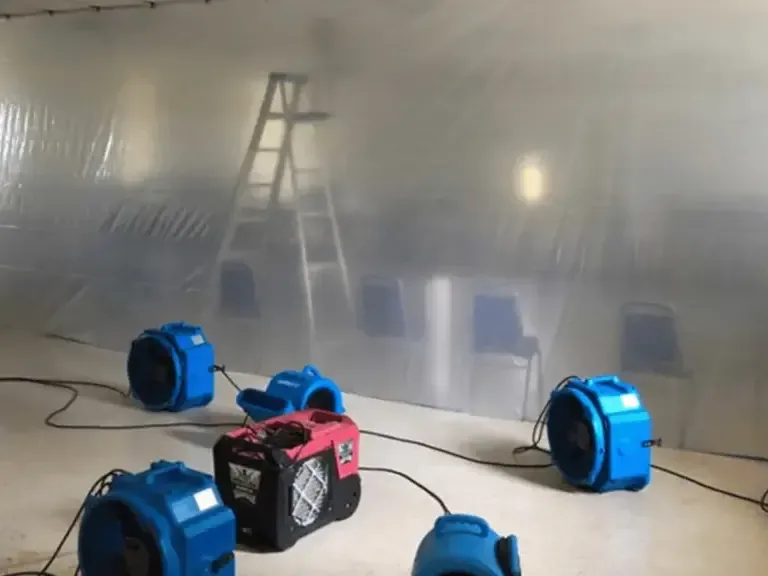
Commercial Water Damage
Work zones protect inventory and operations while extraction, cleaning, and drying are reported by affected area.
View serviceA visible puddle is only one clue
Moisture can move beneath finishes or through cavities, so the work boundary follows material readings, source evidence, and observed water paths.
Source and category
Repair findings and water contacts determine safety controls, cleaning needs, and whether an absorbent material can remain.
Layer by layer testing
Floor finishes, wallboard, insulation, wood, concrete, and cabinets receive readings suited to their individual material behavior.
Narrow access decisions
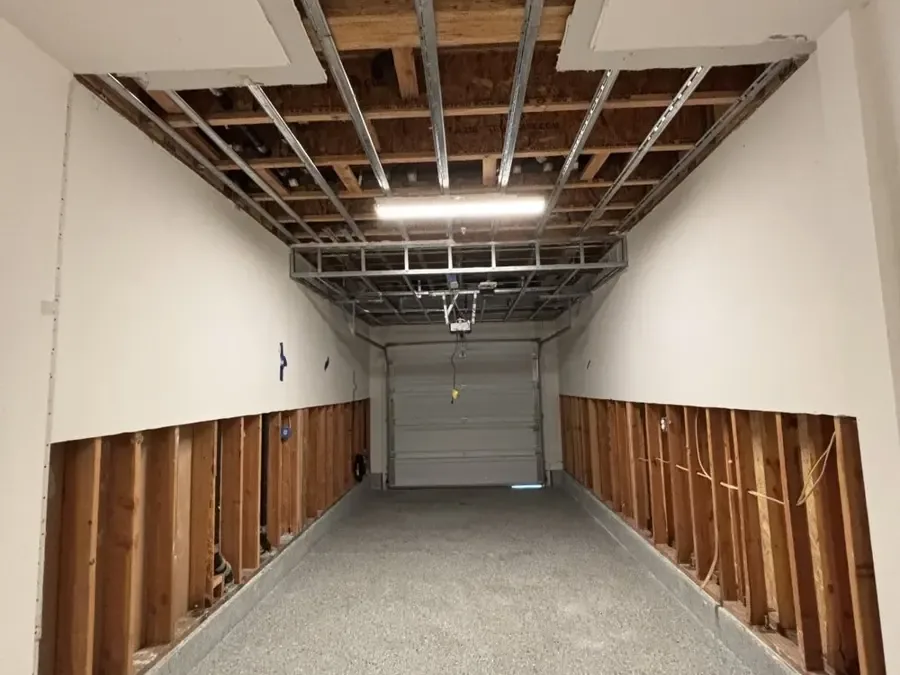
Trim or finish openings are created where concealed water, contamination, or blocked evaporation makes access necessary.
Recorded completion
Consistent locations are revisited until retained materials reach selected goals supported by the project moisture log.
The water path shapes cleanup controls
Recent supply release
A controlled plumbing escape may allow more materials to remain when they are sound, cleanable, accessible, and responding to drying.
See burst pipe workUsed or affected water
Appliance discharge or water that contacted soil and debris calls for cleaning and closer evaluation of absorbent layers.
See appliance leak workSewage and outside entry
Gross contamination requires restricted access, careful debris handling, removal of unsuitable porous material, detailed surface cleaning, and later structural drying.
See sewage cleanupDrying stops when the assembly meets its target
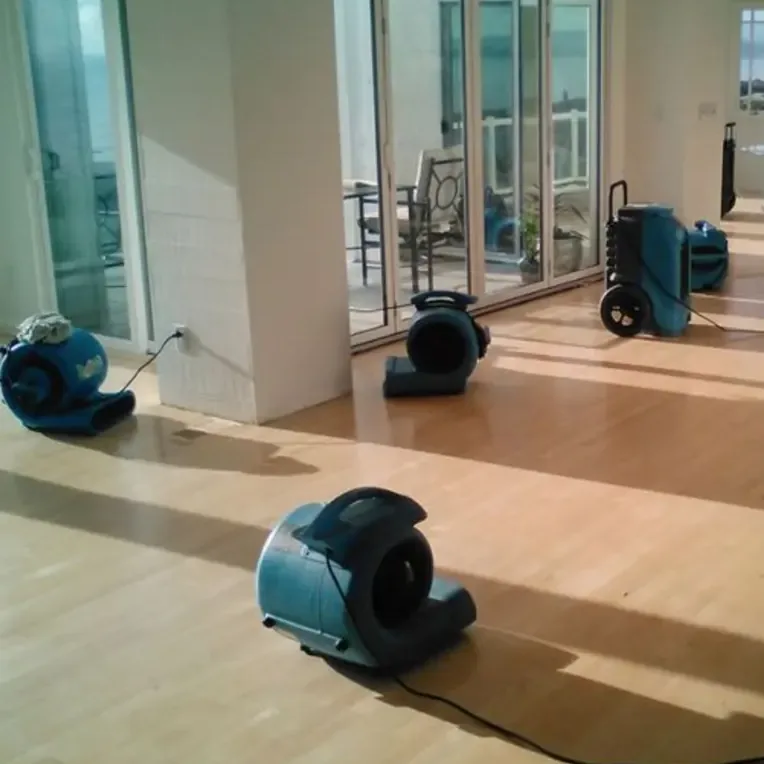
The structural drying service balances evaporation and dehumidification, then uses repeated readings to confirm which components can leave the active treatment plan. Recorded trends also reveal stalled pockets that need revised access or airflow.
- 1
Define the boundary
Technicians test beyond visible marks and identify suitable comparison areas in compatible dry construction.
- 2
Create evaporation access
Extraction and limited openings expose damp material faces that intact trim, coverings, or insulation would keep closed.
- 3
Control the environment
Air movement releases retained water as vapor, while dehumidification removes that vapor from the treatment zone.
- 4
Follow the trend
Repeat values reveal steady progress, a missed pocket, renewed water, or the correct time to reduce equipment.
Document conditions and completed work
A clear file connects the reported source with measured damage, material choices, cleaning, equipment activity, and completion readings.
- Source findings and repair notes
- Room photographs with a moisture map
- Contents and building material decisions
- Cleaning steps and equipment activity records
- Final comparison readings and invoices records
Useful owner records
Keep plumbing, roofing, appliance, or drainage findings with photographs taken before conditions change. Save insurer messages and invoices in the same incident folder.
The carrier interprets coverage and policy duties. Restoration documentation explains the physical conditions observed and the work performed on affected building materials.
Access, extraction, cleaning, and controlled drying
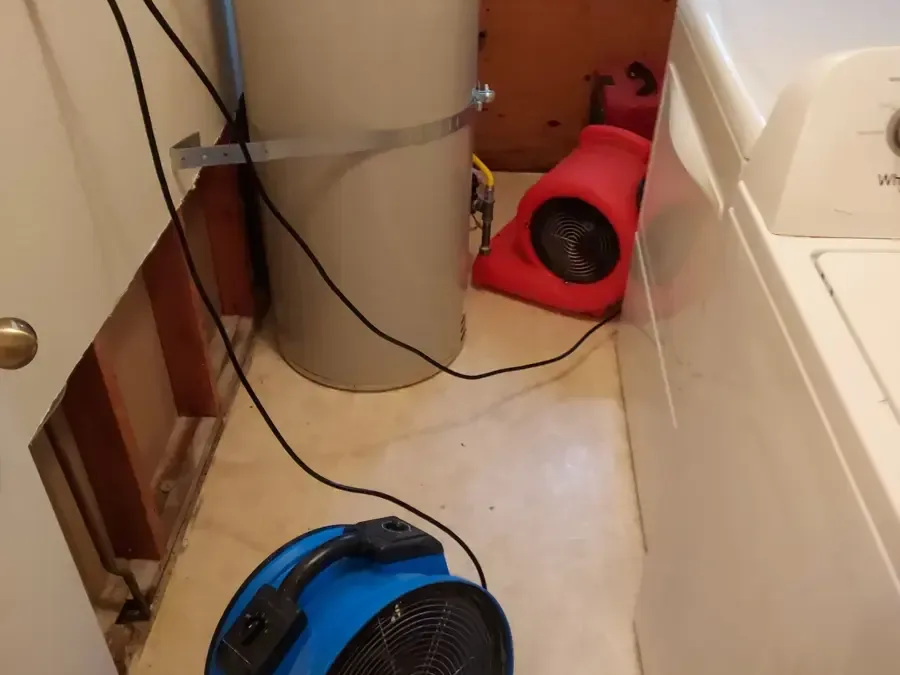
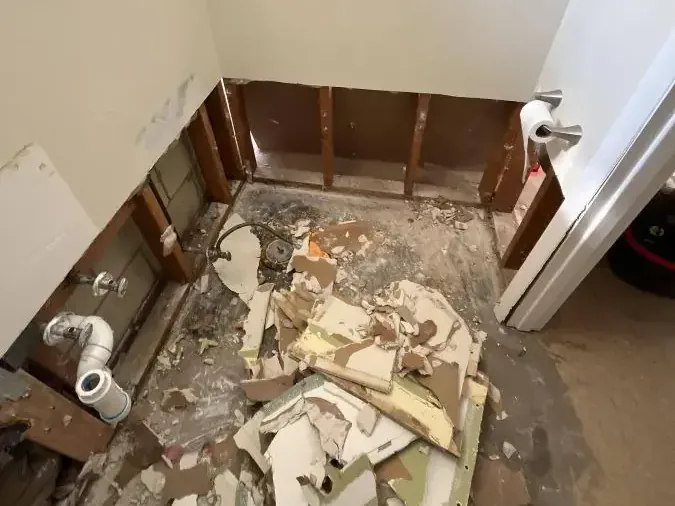
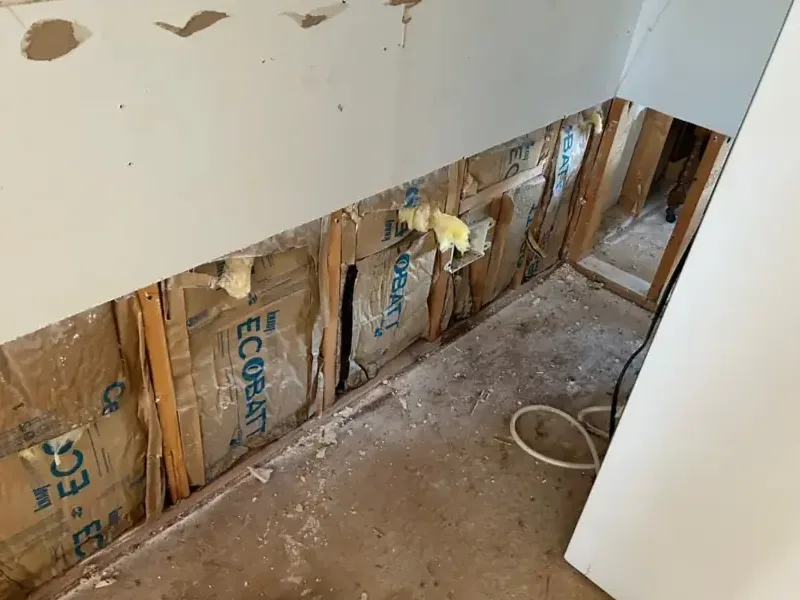
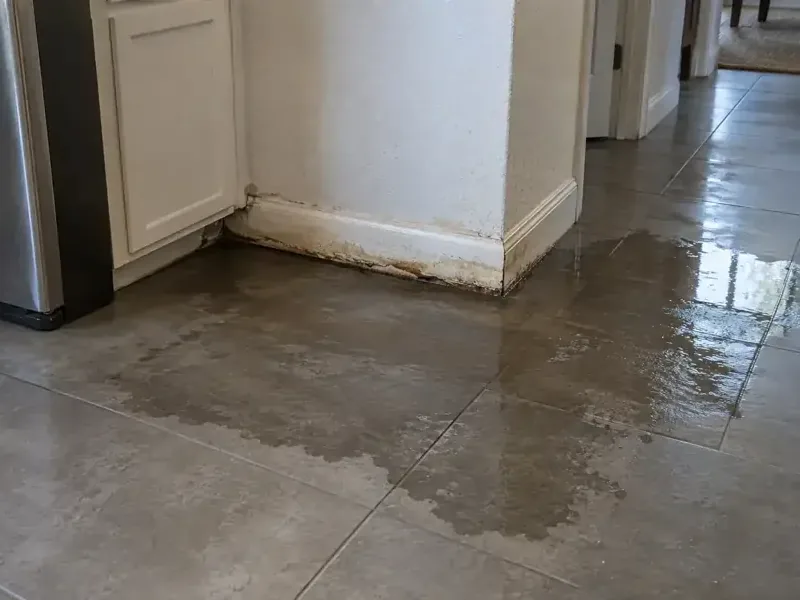
What changes restoration cost after a loss?
Price depends on water category, rooms and layers affected, extraction volume, contents, access, cleaning, selective removal, equipment capacity, and monitoring. A measured inspection defines the project rather than a room label alone. Contamination controls and concealed access can materially change labor and equipment needs.
One contained source
$1,200 to $3,200
- Limited wet area
- Direct material access
- Focused removal and drying
Water across connected rooms
$3,200 to $7,500
- Several assemblies involved
- More than one equipment zone
- Repeated boundary measurements
Broad flood or sewage work
$7,500 to $15,000+
- Controlled contamination area
- Porous material removal
- Cleaning before structural drying
These ranges support early planning rather than a property quote. The water damage cost calculator explains how material, access, and contamination choices affect a working range.
Water and sewage restoration throughout the community
Landmarks and service coverage
ZIP areas
Nearby communities
Describe the source and affected materials
Useful dispatch details include whether water is still moving, which rooms show damage, whether sewage or outside entry is involved, and any ceiling or electrical concern.
The property assessment then confirms safe access, source status, water category, material boundaries, cleanup needs, and the equipment required for retained construction.
Luling, LA · [email protected]
River setting and severe weather planning
Local geography and regional warnings support preparation, while property measurements establish the cause and extent of an individual loss.
January 2025 winter storm: South Louisiana prepared for freezing temperatures and snow, while officials urged residents to protect pipes and plan for possible power loss. The warning supplied preparation context rather than proof of a building loss.
- 01West bank setting The community occupies the west bank of the Mississippi River, but that fact does not determine a building's entry source or water category.
- 02Intense rainfall Louisiana flood hazards include flash flooding from intense rain, supporting prompt exterior water assessment without assigning a property flood zone.
- 03Exposed plumbing Regional advice recommends insulation around vulnerable pipe and faucets in unheated areas, including garages and crawl spaces.
- 04Cold air control Sealing access doors and cracks near plumbing can reduce exposure, and occupants should know the master water shutoff location.
- 05Utility context St. Charles Parish Waterworks serves the area, while present source findings remain necessary for any private building loss.
Luling Water Damage Questions
Water crossed a room?
Source control and direct testing identify the real boundary before removal, cleaning, or drying decisions begin. The measured edge can differ across flooring, walls, and cabinets.
(888) 417-5665Request a moisture assessmentWhat should happen before extraction?
Electrical, structural, and contamination hazards must be controlled. The source should be stopped when safely possible, and the visible scene should be documented before equipment changes it. Initial notes should distinguish water still moving from moisture already absorbed into construction.
How far can water move from a release?
It may cross flooring seams, wick through wallboard, descend inside framing, or collect beneath cabinets. Direct readings continue until compatible dry reference areas are found. A separate dry comparison is chosen for each material type.
Does every wet finish require removal?
No. Water category, physical condition, cleanability, access, and drying response determine retention. Unsound, contaminated, delaminated, or inaccessible porous materials may require selective removal.
Why are sewage losses isolated?
Sewage can carry harmful contamination. The work zone, debris route, tools, and affected contents remain separated while liquid removal and physical cleaning prepare retained construction for drying.
What does dehumidification accomplish?
Wet materials release vapor as moving air supports evaporation. Dehumidifiers collect that vapor so the controlled environment can continue accepting moisture from walls, floors, wood, and concrete.
How is hidden moisture verified?
Thermal patterns can focus an inspection, but compatible meters confirm individual materials. Wall cavities, floor layers, insulation, and casework are tested according to their construction.
When does equipment leave?
Technicians compare repeat readings from consistent locations with appropriate targets or unaffected references. Appearance, touch, odor, or a comfortable room cannot establish concealed moisture completion.
Which documents help with a claim?
Source findings, photographs, diagrams, material inventories, cleaning notes, equipment dates, measurement logs, invoices, and written insurer communication provide a useful account of the event.
What affects the final price?
Water source, contamination, affected area, construction layers, access, contents, demolition, cleaning, equipment demand, and monitoring all influence the scope for a specific property.
Keep water from reaching another layer
Local restoration specialists coordinate source evidence, cleanup, limited access, drying, and a clear record of the measured work.