Roof Leak Water Damage in Luling, LA
The visible ceiling mark may sit below a longer route across decking, framing, and insulation. Roof repair identifies the exterior opening while restoration testing follows moisture through the interior assembly. Interior work follows confirmation that active entry is controlled.
(888) 417-5665Request roof leak help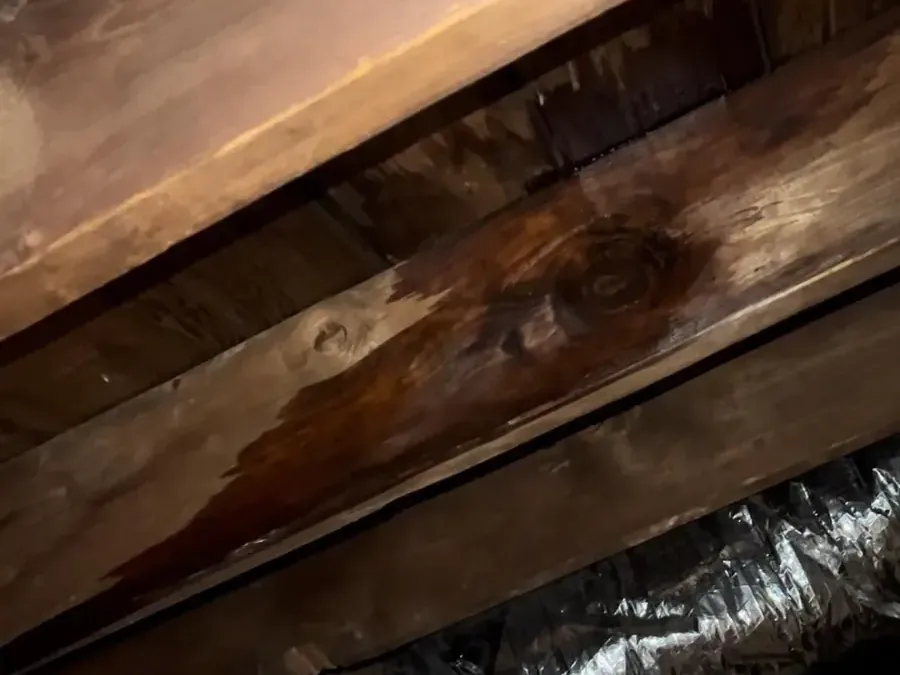
Why the roof leak water damage plan follows the water
Rapid local response
The response team dispatches 24/7 for active water and starts with source control, safety and a full moisture boundary.
IICRC S500 drying standard
The drying team sets category and class, chooses equipment for the evaporation load and verifies progress with daily readings.
Claim-ready documentation
The record can include the source, room diagram, moisture map, category, class, daily logs and photos before removal.
River Parish water knowledge
The crew plans for tropical rain, storm surge, humid air, supply failures and occasional freezing conditions.
How roof leak is handled in Luling
Pair roof and room findings
Exterior repair information is connected with interior stains, attic observations, direct readings, and affected finishes below.
Protect the overhead work area
Occupants, contents, flooring, and electrical components are separated from unstable board, trapped water, insulation, and debris.
Expose the affected layers
Measured access removes barriers that conceal wet decking, framing, insulation, ceiling board, or upper wall construction.
Verify through changing conditions
Repeat values and observations after later weather support equipment changes, completion, and the handoff to finish repair.
First steps for roof leak water damage in Luling
Stay away from sagging material
Keep occupants and pets outside the space beneath bowed board, wet insulation, loose debris, or active drips. Do not puncture the ceiling.
Avoid wet ceiling devices
Do not operate lights, fans, switches, or cords near the leak. Electrical concerns need qualified attention before ordinary restoration entry.
Limit water only from safety
A container may catch drips when it can be placed without standing below unstable material. Do not climb into a wet uncertain attic.
Record rain and repair timing
Photograph visible conditions from secure footing and retain roofing reports, temporary covering notes, and the timing of changes during later weather.
A roof opening and an indoor stain may not align vertically. At a Luling property, water can travel along a rafter, cross insulation, and reach a ceiling seam before it drips. Restoration protects the occupied room first, then uses exterior findings and interior measurements to reconstruct that path.
What does roof leak water damage cost in Luling, LA?
Roof leak restoration usually ranges from $1,400 to $7,200 or more. Attic access, insulation, ceiling area, wall travel, floors, contents, source coordination, equipment, and monitoring determine scope.
Focused loss
$1,400 to $3,268
- Entry controlled
- Limited insulation contact
- Small ceiling work area
Multi-room loss
$3,268 to $5,040
- Attic and wall moisture
- Protected opening required
- Several drying targets
Complex loss
$5,040 to $7,200+
- Long concealed rain path
- Broad insulation contact
- Multiple interior zones
Ranges are typical, not a quote: category of water, square footage, material class and how fast drying started move the number most. Run the water damage cost calculator for a closer range.
Securing the area beneath wet construction
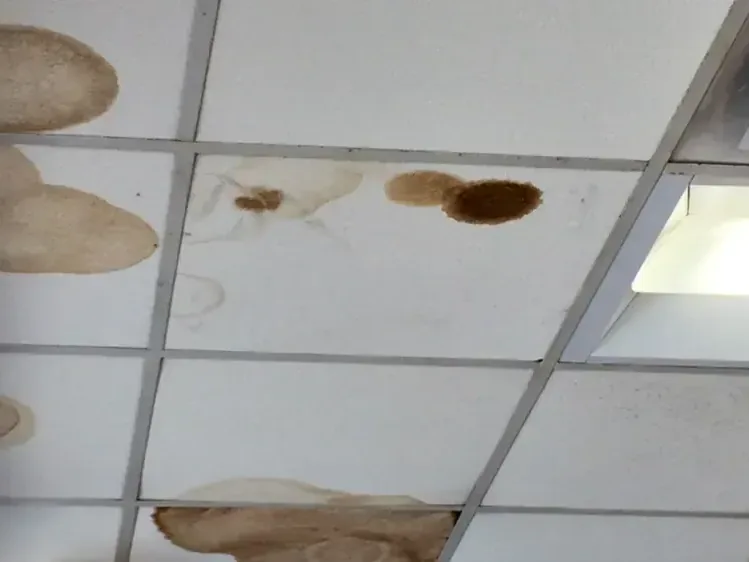
Sagging board, active dripping, or wet insulation above a ceiling can release unexpectedly. People and pets stay outside the fall area. Lights, fans, and nearby electrical components are treated cautiously until qualified personnel address any power concern.
From safe access, technicians record stain shape, drip points, floor contact, and contents below. Occupants should not pierce a bulge or climb into an uncertain attic. A controlled opening requires room protection and a plan for contained water and debris.
- Keep furniture outside the overhead hazard area
- Avoid wet switches, fixtures, and cords
- Photograph the mark before it changes
- Retain temporary and permanent roofing notes
- Use only stable approved attic access
Tracing rain through attic layers
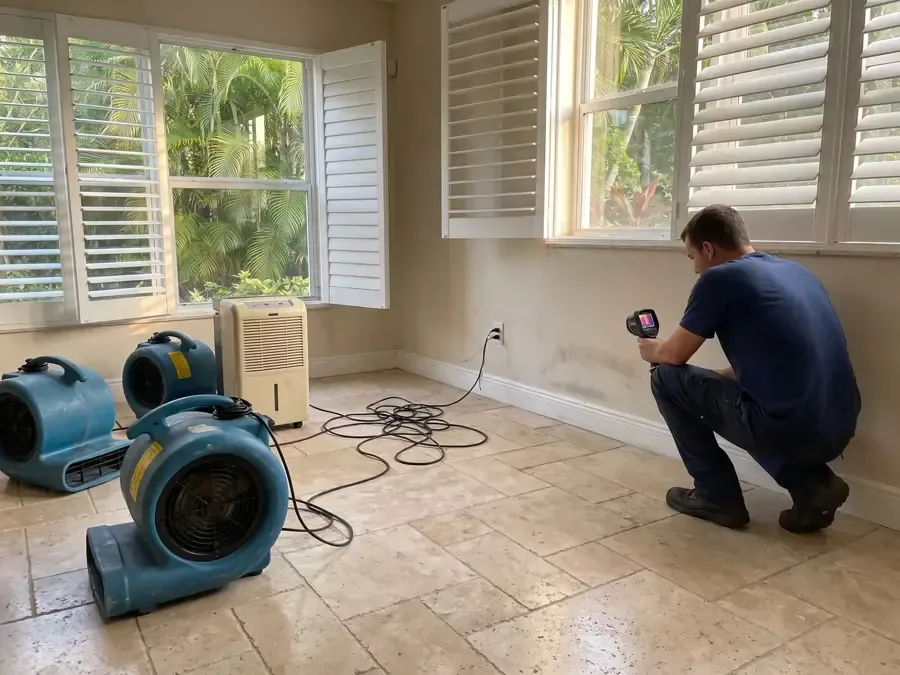
The assessment begins at accessible decking and works toward the interior. Framing intersections, fastener locations, insulation, ceiling backs, top plates, and wall cavities can redirect water. Temperature patterns focus investigation, while compatible meters verify each material.
Insulation can hide moisture against wood and gypsum. Damp or damaged sections may need removal to expose the assembly, but dry material beyond the mapped route remains protected. The crew labels attic positions so readings above correspond with ceiling and wall locations below.
- Follow marks toward the highest accessible point
- Test framing where routes change direction
- Check ceiling board beyond visible discoloration
- Separate insulation condition from wood values
- Continue downward when readings enter a wall
Drying only after rain entry is controlled
Temporary protection may support emergency work, but dependable structural drying requires the roof opening to stop admitting water. After roofing personnel document source control, the crew extracts collected liquid and creates access to wet faces. Airflow and dehumidification are arranged for the attic and room conditions separately.
New rainfall can test the repair while mitigation continues. A returning mark or rising measurement sends the source back for reassessment rather than being treated as slow drying. Ceiling water restoration addresses controlled overhead openings in more detail.
- Verify source status before closing finishes
- Open barriers only within the damp boundary
- Protect the room from loose insulation and dust
- Record attic and occupied air conditions
- Investigate any change after later rain
Connecting repair evidence to the moisture file
Roof leak recovery is available around Lakewood Elementary School, the Mississippi River, and Airline Highway. The roofer inspects the actual roof construction and damage at each property. The exterior inspection and current building observations provide the evidence for the specific loss.
Restoration help in Luling connects roof damage work with extraction and drying. Completion documentation should include roof findings, interior photographs, insulation choices, ceiling access, equipment changes, and final material values. That record supports reconstruction planning without promising insurance coverage.
Checking insulation where the stain does not point
Wet insulation may slump away from the roof opening or carry water along framing before it reaches the ceiling face. From a safe access point, technicians examine material condition and moisture on both sides of the visible path. Sections that block inspection or cannot be dried in place are handled selectively. Sound, accessible areas stay under measurement rather than being removed because they share the same attic.
Rain context for Luling supports careful inspection after severe weather, but the exterior defect and interior route must be confirmed at the property. Lakewood Elementary School, Airline Highway, and the Mississippi River describe the service community without predicting which roof component failed. A useful handoff pairs the roofer's repair information with photographs of the attic path, insulation decisions, ceiling and wall readings, equipment adjustments, and final values for retained wood and finishes. That record helps distinguish source repair from interior restoration.
After equipment changes, the same attic and room points are tested again. A stable dry comparison supports closure, while one slow joist or ceiling edge remains active until its own target is met.
Roof leak water damage across Luling and nearby communities
Roof leak restoration covers properties around Lakewood Elementary School, Airline Highway, the Mississippi River, and ZIP areas 70070, 70057, and 70039, with attic evidence directing work.
The same service nearby: roof leak water damage in LaPlace, Destrehan, Norco.
Related water damage services in Luling
Roof Leak Water Damage questions in Luling, LA
Rain has entered an attic or ceiling?
Roof repair stops further entry while interior checks follow moisture from the attic into the room below.
(888) 417-5665Arrange roof water restorationCan drying begin before roof repair?
Safe emergency extraction and protection may begin, but a dependable dry phase requires active entry to stop. Roofing personnel handle the exterior source. The interior team records the route through insulation and finishes after exterior entry is controlled.
Why is dampness found beyond the stain?
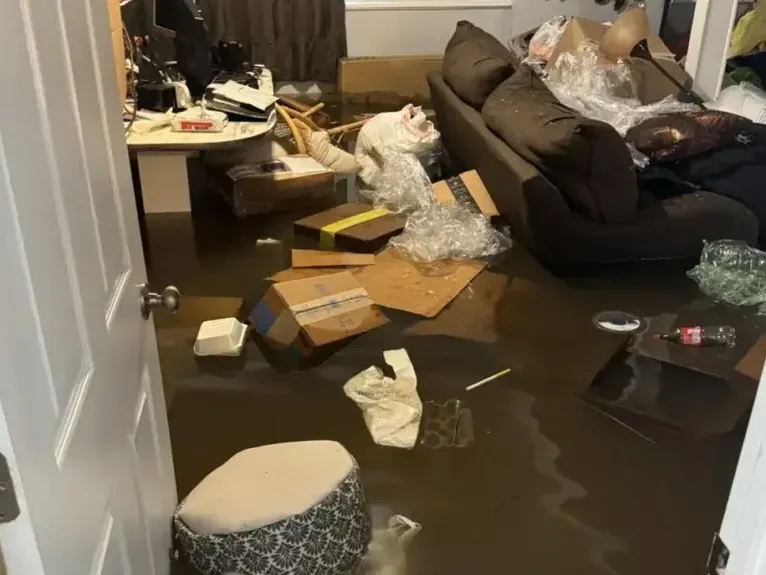
Water can spread across the ceiling back, follow framing, or soak insulation before appearing. Direct tests extend until suitable dry boundaries are confirmed. Flooring beneath the ceiling receives separate checks when drips or drainage reached the room.
Should an occupant drain a ceiling bulge?
No. Board, water, and insulation may fall suddenly. The crew first controls the area, addresses electrical hazards, and plans contained drainage or removal.
Does all wet insulation need removal?
Material type, contamination, condition, access, and drying response matter. Sections that hold water or block inspection may require removal while dry areas remain.
How is roof framing checked?
Technicians repeat direct readings at documented accessible points and compare progress with suitable references. Appearance and touch cannot verify internal wood moisture.
What if a mark returns during rain?
Renewed evidence can indicate incomplete source control or another opening. Interior finish decisions pause while roofing personnel reassess the exterior assembly.
What changes roof leak restoration cost?
Attic access, insulation, ceiling height, walls and floors reached, contents, containment, material removal, equipment arrangement, and monitoring influence the project.
Track the route from decking to interior finish
The restoration crew protects the room, coordinates roof findings, exposes wet layers selectively, and measures every retained component through completion.