Structural Drying in Luling, LA
Once liquid is removed, wallboard, wood, concrete, cabinets, and flooring can keep releasing moisture. Drying balances access, moving air, and dehumidification while direct values show progress. Equipment changes follow trends at the original test locations.
(888) 417-5665Request measured drying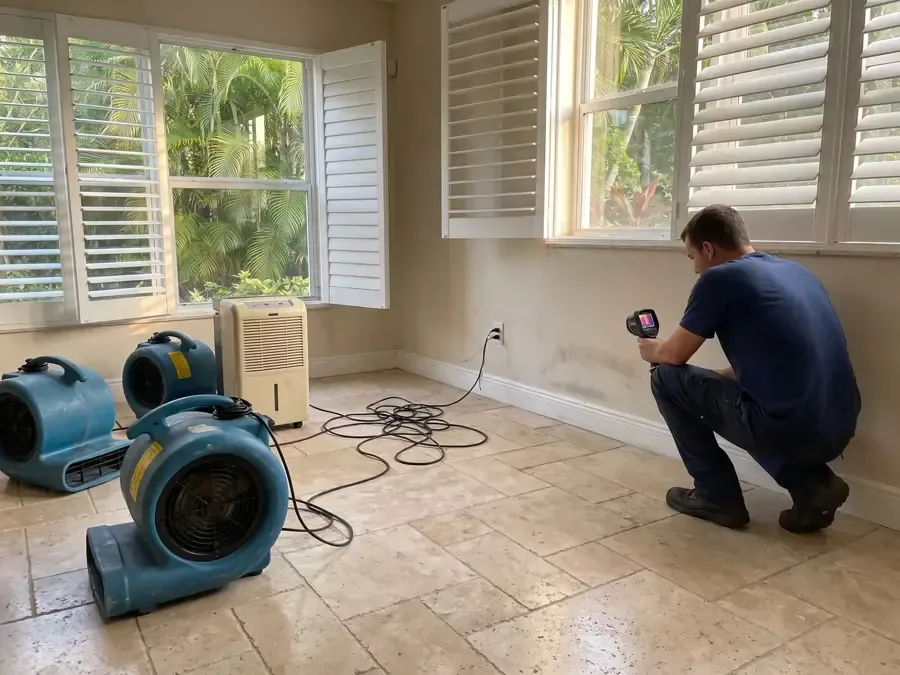
Why the structural drying and dehumidification plan follows the water
Rapid local response
The response team dispatches 24/7 for active water and starts with source control, safety and a full moisture boundary.
IICRC S500 drying standard
The drying team sets category and class, chooses equipment for the evaporation load and verifies progress with daily readings.
Claim-ready documentation
The record can include the source, room diagram, moisture map, category, class, daily logs and photos before removal.
River Parish water knowledge
The crew plans for tropical rain, storm surge, humid air, supply failures and occasional freezing conditions.
How structural drying and dehumidification is handled in Luling
Map retained materials
The drying team identifies wet components, suitable comparison areas, blocked surfaces, and selected measurement points before equipment placement.
Create evaporation paths
Limited access removes trim, coverings, insulation, or barriers that prevent air from reaching confirmed damp material faces.
Balance air and dehumidification
Moving air supports moisture release while dehumidifiers collect vapor inside a controlled treatment space.
Adjust from repeat trends
Consistent readings reveal progress, stalled pockets, source recurrence, and the correct time to reduce or remove equipment.
First steps for structural drying and dehumidification in Luling
Confirm the release has stopped
Drying cannot resolve continuing water. Retain plumbing, roofing, appliance, or drainage findings that show what source work was completed.
Leave operating equipment in place
Do not move, unplug, cover, or redirect machines without instruction. Keep people, pets, fabrics, and loose objects away from airflow and cords.
Maintain the treatment boundary
Doors or temporary barriers may control the environment. Report any power interruption or need to open the area so measurements can be interpreted.
Report fresh water or stains
A new drip, mark, odor, or humidity change can alter the plan. Note its timing and location without entering an unsafe space.
A room can appear dry while moisture remains behind paint or beneath flooring. Structural drying in Luling focuses on the materials that retained water after extraction. Each component is identified, given an accessible evaporation route, and measured at repeatable locations.
What does structural drying and dehumidification cost in Luling, LA?
Structural drying generally ranges from $1,600 to $8,200 or more. Wet surface area, layers, access, moisture load, environmental control, equipment capacity, electrical needs, and monitoring determine scope.
Focused loss
$1,600 to $3,724
- Open accessible materials
- Stable source control
- Limited equipment zone
Multi-room loss
$3,724 to $5,740
- Walls and floors involved
- Selective access required
- Several measurement groups
Complex loss
$5,740 to $8,200+
- Dense concealed materials
- Broad environmental control
- Extended monitoring changes
Ranges are typical, not a quote: category of water, square footage, material class and how fast drying started move the number most. Run the water damage cost calculator for a closer range.
Converting the wet map into equipment decisions
The baseline diagram separates walls, flooring, underlayment, wood framing, concrete, and casework. Compatible meters confirm moisture where temperature patterns suggest a concern. Unaffected materials of similar construction can provide comparison values when their conditions are suitable.
South Louisiana humidity makes outdoor air an unreliable default. Technicians compare environmental conditions before opening windows, changing containment, or introducing replacement air. The treatment boundary should support moisture removal rather than invite an uncontrolled vapor load.
- Label every reading point by material
- Confirm a dry perimeter around the affected area
- Note coatings that limit evaporation
- Finish contaminated cleaning before ordinary airflow
- Record starting air conditions inside the zone
Balancing surface evaporation and vapor collection
Moving air replaces the humid layer resting against an exposed wet surface. Dehumidification captures the vapor released into the room. Air movement alone can raise indoor humidity, while vapor removal cannot reach water sealed below an intact covering.
Equipment follows damp surface geometry rather than room count. Cabinet recesses, corners, floor edges, and wall openings may need focused air paths. Temporary barriers or closed doors help preserve the designed environment as outdoor conditions shift.
- Direct airflow across material faces
- Keep intakes and outlets unobstructed
- Secure loose fibers before increasing velocity
- Separate treatment air from normal traffic
- Verify that machines support one coordinated system
Using daily trends to solve stalled sections
Technicians return to the same labeled locations and compare values with earlier visits. If one point stops improving while the larger boundary shrinks, the cause is investigated. Hidden insulation, paint, flooring, closed cabinetry, poor air access, or a renewed release may explain the difference.
Concrete, wood, and gypsum have distinct behavior and targets. One schedule or number cannot apply to every material. Extraction and water removal reduces the liquid load first; drying addresses what remains absorbed or concealed.
- Chart material values rather than isolated room averages
- Compare compatible surfaces using the same method
- Investigate an increase before adding equipment
- Create smaller access where a barrier is confirmed
- Reduce the system as completed zones permit
Closing the project with traceable evidence
Lakewood Elementary School, the Mississippi River, and Airline Highway define the local service context, not a drying duration. Assembly type, moisture load, access, indoor control, and material response determine the individual timeline.
Luling water restoration connects drying with source specific cleanup. The final file includes the moisture diagram, environmental conditions, access decisions, equipment changes, interruptions, and completion values. Those records help repair trades understand the retained substrate before new finishes are installed.
Responding when one material stops improving
A flat trend calls for investigation, not simply more operating time. The drying team checks whether a finish blocks evaporation, a cavity lacks circulation, damp insulation remains concealed, or replacement air is adding moisture. Equipment can be moved, access can be refined, and the control area can be tightened. The change is documented beside the next reading so its effect is visible instead of assumed.
South Louisiana storm moisture gives regional context for humidity control, but indoor conditions and material values govern a Luling project. Lakewood Elementary School, Airline Highway, and the Mississippi River identify local coverage without predicting how a wall or floor will dry. Technicians keep room air readings alongside separate points in wood, concrete, wallboard, and cabinetry. When those points reach their selected comparisons and remain stable, equipment can be reduced in stages while the last slow component stays under observation.
Readings are taken under comparable conditions whenever practical. A number collected immediately beside moving air may not describe the same material condition as a sheltered point. Consistent locations and notes about equipment changes make the trend useful for deciding whether to continue, alter, or close a drying zone.
Structural drying and dehumidification across Luling and nearby communities
Structural drying serves properties near Lakewood Elementary School, the Mississippi River, Airline Highway, and ZIP areas 70070, 70057, and 70039, using building readings to direct equipment.
The same service nearby: structural drying and dehumidification in LaPlace, Destrehan, Norco.
Related water damage services in Luling
Structural Drying and Dehumidification questions in Luling, LA
Materials remain damp after liquid removal?
Material readings show where airflow or dehumidification needs adjustment and when drying is complete.
(888) 417-5665Arrange controlled structural dryingWhy does drying continue after extraction?
Extraction recovers movable liquid. Wallboard, flooring, wood, concrete, and cabinets can still hold absorbed water or conceal it beneath an intact finish. A stalled trend can require different access, equipment placement, or control of replacement air.
What is the purpose of air movers?
They replace humid air at exposed damp surfaces and support evaporation. Placement follows wet material faces and avoids distributing unclean debris. Completion depends on stable material values, not room comfort or surface appearance alone.
What does a dehumidifier do?
It collects vapor released into the treatment area so indoor air can continue accepting moisture from retained construction as evaporation proceeds.
Should windows be opened?
Only when measured outdoor conditions help. Humid replacement air can increase the load and interrupt the controlled environment, so the drying plan governs ventilation.
Why would one reading stop improving?
A coating, hidden layer, insulation, weak airflow, dense material, unsuitable environment, or renewed source may slow progress and require investigation.
How is a material target selected?
Construction type, meter method, compatible unaffected references, and project conditions inform the goal. One universal value does not fit every material.
What affects drying cost?
Wet area, materials, layers, access openings, treatment zones, environmental load, electrical capacity, equipment quantities, monitoring, and the response trend influence the project.
Build the system around measured wet surfaces
Drying specialists expose blocked faces, balance airflow with dehumidification, follow daily trends, and record completion at each original test location.