Water Extraction in Luling, LA
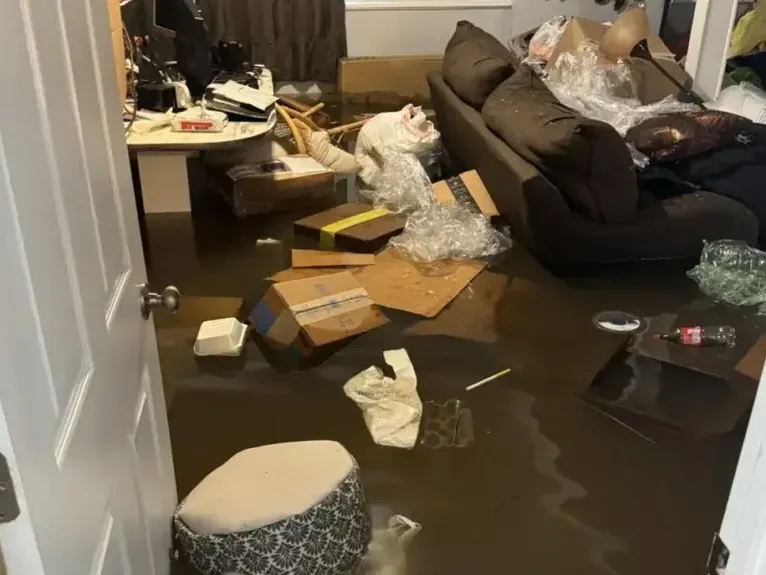
Open water can disappear beneath a floor edge, doorway, or cabinet long before the room looks clear. Extraction follows those routes and defines the damp material boundary left for drying.
(888) 417-5665Arrange water extraction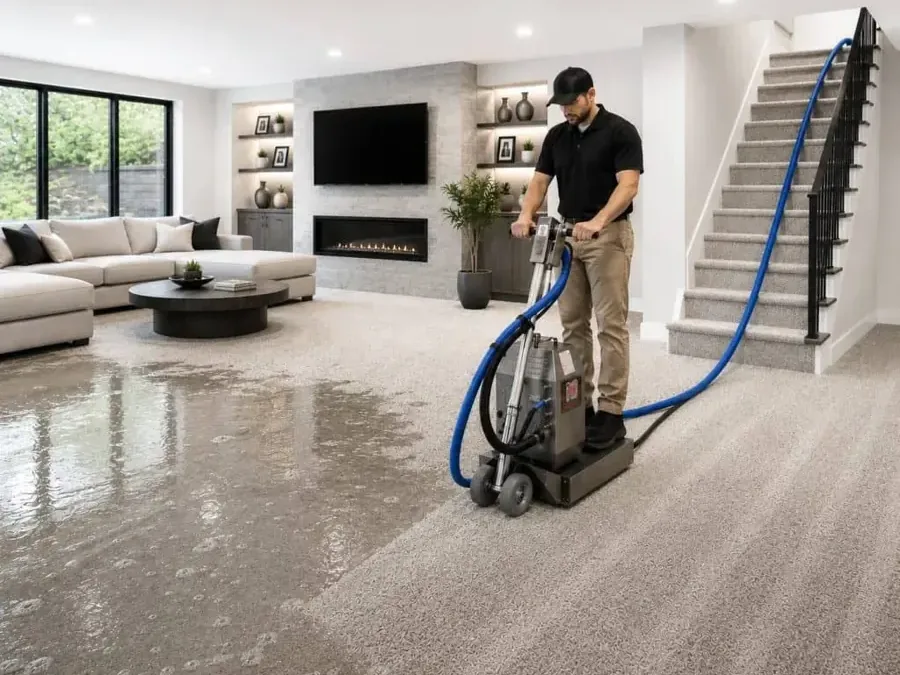
Why the water extraction and removal plan follows the water
Rapid local response
The response team dispatches 24/7 for active water and starts with source control, safety and a full moisture boundary.
IICRC S500 drying standard
The drying team sets category and class, chooses equipment for the evaporation load and verifies progress with daily readings.
Claim-ready documentation
The record can include the source, room diagram, moisture map, category, class, daily logs and photos before removal.
River Parish water knowledge
The crew plans for tropical rain, storm surge, humid air, supply failures and occasional freezing conditions.
How water extraction and removal is handled in Luling
Record source and water edge
The crew photographs visible conditions, identifies hazards, and maps reachable liquid before extraction alters the room.
Recover by surface type
Pumps, broad tools, carpet equipment, and portable units are selected according to depth, finish, debris, and access.
Inspect the cleared footprint
Floor seams, wall edges, thresholds, cabinets, and newly exposed areas receive direct material checks after pickup.
Transfer to drying measurements
Remaining damp construction is charted for airflow, dehumidification, selective access, repeat testing, and final documentation.
First steps for water extraction and removal in Luling
Avoid water near electricity
Do not enter pooled areas beside outlets, appliances, fixtures, cords, or panels. Electrical hazards need qualified assessment before ordinary removal work.
Stop the source from safety
Use a reachable valve only when the approach is dry and stable. Plumbing or appliance personnel should repair the failed component.
Photograph the starting edge
From secure footing, capture the source area, visible spread, and contacted contents before extraction changes the scene. Do not delay urgent isolation.
Keep wet items off clean floors
Move accessible dry belongings to protection. Leave saturated, contaminated, heavy, or trapped contents for a controlled handling route.
Water resting on a room surface is only the portion available to see. A Luling extraction assessment records the release area and checks where liquid could have crossed into thresholds, wall bottoms, casework, or lower floor components. The wider local restoration program connects removal with source specific cleanup and drying.
What does water extraction and removal cost in Luling, LA?
Water extraction in this area usually ranges from $1,200 to $6,500 or more. Volume, finish type, water category, rooms reached, access, cleaning, equipment, and later drying determine scope.
Focused loss
$1,200 to $2,926
- Accessible source area
- Limited surface spread
- Focused pickup and checks
Multi-room loss
$2,926 to $4,550
- Water crossed thresholds
- Several finish types
- Broader moisture diagram
Complex loss
$4,550 to $6,500+
- Contamination or access limits
- Concealed layers involved
- Expanded drying arrangement
Ranges are typical, not a quote: category of water, square footage, material class and how fast drying started move the number most. Run the water damage cost calculator for a closer range.
Preserving the path before pickup changes it
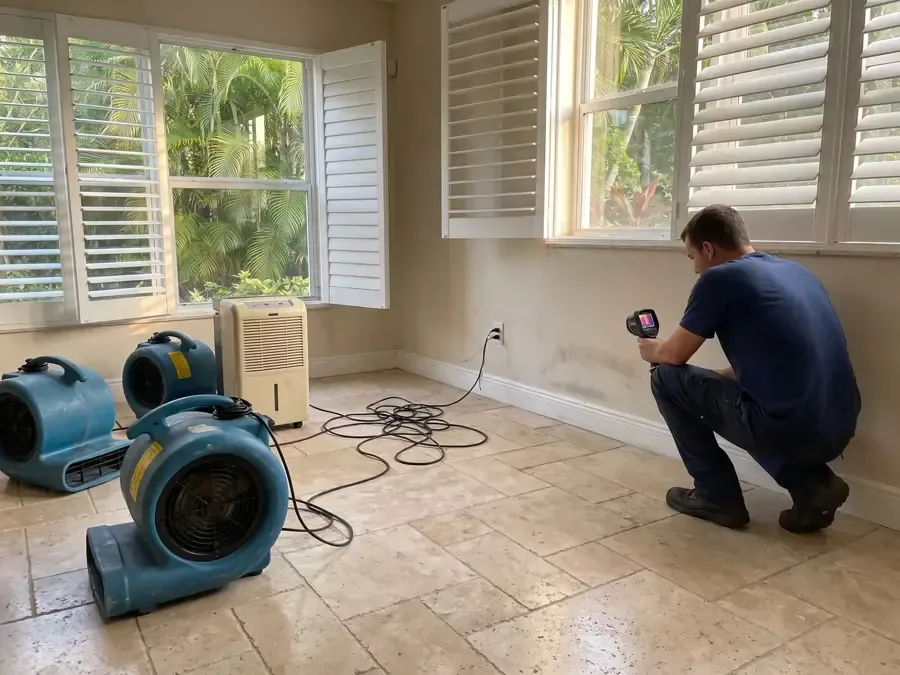
Technicians photograph the water edge, note the deepest accessible points, and identify items touching the wet surface. Testing begins near the source and works outward in deliberate bands. A temperature pattern can direct attention, but a material reading confirms whether the spot belongs inside the work area.
St. Charles Parish Waterworks serves the Luling area. For indoor water removal, technicians first check whether the supply, an appliance, drainage, or weather is feeding the wet area. The report records any source repair alongside the extraction work, with a separate room diagram showing where liquid collected and which materials stayed damp.
- Mark open water before hoses obscure its edge
- Check both sides of every crossed doorway
- Inspect cabinet bases and recessed toe spaces
- Establish dry comparison points outside the loss
- Protect unaffected rooms from equipment traffic
Selecting tools for the water and finish
A broad hard surface tool can collect shallow water across an open floor, while carpet may need weighted passes. Portable equipment reaches closets, edges, and tight spaces around fixed cabinets. Pumping is considered where depth permits, but the discharge route must not send water back toward the building.
The operator watches recovered volume and the response of the material rather than assuming one pass is enough. Loose rugs and movable contents are lifted from safe areas to expose water beneath them. A protected holding location prevents damp items from creating a second spot on clean flooring.
- Begin at deeper collection areas
- Match suction and tool shape to the surface
- Make follow up passes where recovery continues
- Inspect newly exposed finish beneath contents
- Keep hoses and wheels on a controlled route
Finding the water that extraction cannot collect
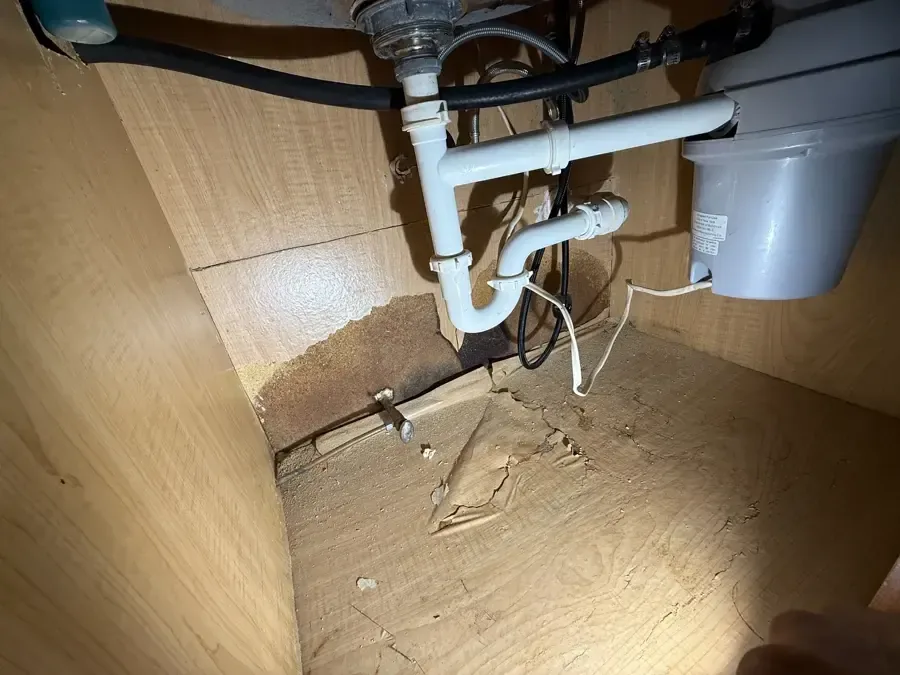
Wallboard, wood, concrete, underlayment, and composite cabinets can retain water after the open floor clears. Each component receives its own direct measurement. Technicians check adhesive and subfloor beneath a dry feeling finish, then inspect the cabinet base and toe space where an intact face can conceal dampness.
When trim or a covering blocks testing, a narrow access point may reveal the hidden layer. Removal does not automatically extend to a room boundary. The measured wet edge, contamination, material condition, and ability to evaporate determine how much access is needed.
- Test floor layers independently where possible
- Check wall bases beyond the visible water mark
- Inspect penetrations where liquid can descend
- Record retained and removed materials separately
- Update the diagram after access reveals new conditions
Moving from removal to verified drying
Air movers help accessible materials release moisture, while dehumidifiers collect the resulting vapor. Equipment is positioned around the damp faces, not simply spaced by room size. Indoor conditions and direct values are recorded so adjustments have a measurable reason.
The Mississippi River, Lakewood Elementary School, and Hale Boggs Memorial Bridge locate the community served without defining an individual loss. The structural drying service explains the next phase. Completion records include initial photographs, extraction activity, equipment changes, and final readings at the original test locations.
Rechecking low points after the first removal pass
Liquid can settle again after a nearby cabinet void, carpet edge, or floor seam releases water. The technician returns to the original low points after the broad pickup and compares the new condition with the first extraction notes. A second collection at one edge does not automatically expand work throughout the room. It triggers focused tests around that edge, including the wall base and the next floor transition.
Service around the Mississippi River, Lakewood Elementary School, and Hale Boggs Memorial Bridge includes extraction from occupied homes and businesses. The property record follows the release room by room: where water was recovered, where readings found a damp edge, and which materials moved into drying. This sequence helps the next technician revisit the same locations and check that water has stopped spreading.
Water extraction and removal across Luling and nearby communities
Extraction service reaches properties around Lakewood Elementary School, Airline Highway, the Mississippi River, and ZIP areas 70070, 70057, and 70039, with site measurements defining boundaries.
The same service nearby: water extraction and removal in LaPlace, Destrehan, Norco.
Related water damage services in Luling
Water Extraction and Removal questions in Luling, LA
Water is spreading across a floor?
The crew checks the water source and wet boundaries before selecting extraction equipment.
(888) 417-5665Request measured liquid removalWhen should extraction start?
After electrical, structural, and contamination hazards are controlled, standing water should be removed promptly. Early pickup can reduce travel into wall bases, cabinets, flooring layers, and adjoining spaces. The first moisture map also preserves where the visible loss began before removal changes the scene.
Why does the crew test beyond the puddle?
Liquid can move beneath finishes and through seams before appearing. Readings outside the visible edge show whether underlayment, wallboard, wood, or casework joined the loss. Transitions and sheltered edges are checked again after pickup because liquid can settle from connected spaces.
Which equipment removes the water?
Tool choice follows depth, surface, debris, contamination, and access. Pumping, hard surface pickup, carpet extraction, and portable equipment may serve different areas of one project.
Can carpet stay after extraction?
Water category, physical condition, backing, pad, floor below, and cleaning access all matter. Carpet and each lower layer receive their own retention decision.
What occurs after open water is gone?
Technicians retest materials within and beyond the starting boundary. Absorbed moisture then requires evaporation access, controlled air movement, dehumidification, and continuing direct measurements.
How is extraction documented?
Useful records include source findings, starting photographs, water depth or edge notes, recovered areas, contents movement, material readings, equipment dates, and completion values.
What changes the price?
Liquid volume, water category, surface type, rooms crossed, cabinets, walls, underfloor spread, debris, access, cleaning, extraction equipment, and the required dry phase affect cost.
Trace the edge before it moves farther
Extraction specialists recover accessible water, inspect connected finishes, and build the moisture map that directs controlled drying.