Ceiling Leak Water Damage in Luling, LA
A drip or brown ring reveals where water emerged, not every surface it crossed. The response protects people below, confirms plumbing or rain entry, and maps the concealed ceiling cavity. The floor below is tested independently.
(888) 417-5665Request ceiling help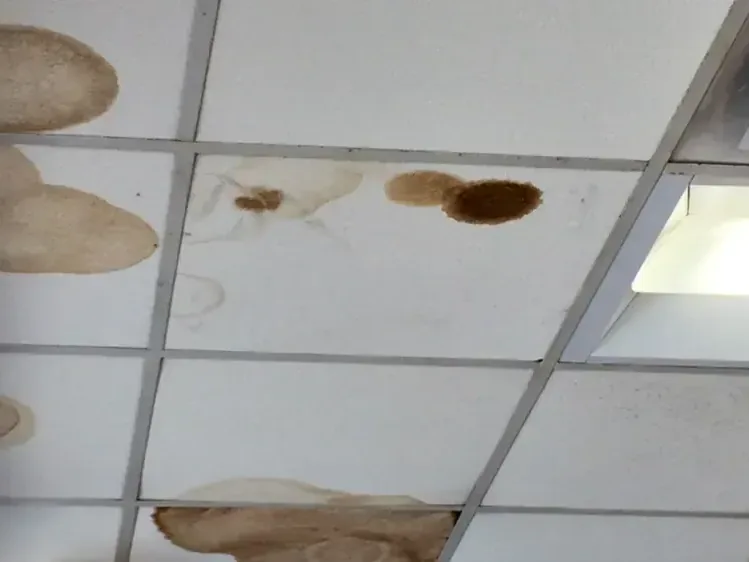
Why the ceiling leak water damage plan follows the water
Rapid local response
The response team dispatches 24/7 for active water and starts with source control, safety and a full moisture boundary.
IICRC S500 drying standard
The drying team sets category and class, chooses equipment for the evaporation load and verifies progress with daily readings.
Claim-ready documentation
The record can include the source, room diagram, moisture map, category, class, daily logs and photos before removal.
River Parish water knowledge
The crew plans for tropical rain, storm surge, humid air, supply failures and occasional freezing conditions.
How ceiling leak is handled in Luling
Secure the occupied room
The team controls fall, electrical, slip, contents, and debris hazards before investigating the overhead construction.
Establish source and cavity path
Plumbing or roofing findings combine with direct testing to map moisture beyond the stain and drip point.
Drain and open under control
Protected access releases trapped liquid, removes weak material, and exposes insulation and framing without uncontrolled debris spread.
Measure the entire vertical loss
Cavity wood, retained gypsum, walls, and the floor below are tracked separately until their selected completion goals are reached.
First steps for ceiling leak water damage in Luling
Leave the space below immediately
Keep everyone away from bowed, cracked, soft, or dripping ceiling material. Water and debris can release without warning from the hidden cavity.
Do not operate wet fixtures
Avoid ceiling lights, fans, nearby switches, and electrical cords. Qualified electrical personnel should assess affected components before routine work starts.
Use plumbing controls only safely
Close an accessible water valve when the route is dry and outside the fall zone. Do not cross water or stand beneath damaged board.
Observe changes without probing
Photograph the mark from a safe location and note whether it changes with rain or fixture use. Leave openings and drainage to trained personnel.
A ceiling stain can expand quietly before a drip reaches the floor. Inside a Luling building, water may rest on gypsum, saturate insulation, follow a framing member, or enter a wall. The room below is secured before the source and cavity are investigated.
What does ceiling leak water damage cost in Luling, LA?
Ceiling leak restoration generally ranges from $1,100 to $6,200 or more. Source type, ceiling stability, insulation, cavity access, walls, floors, contents, equipment, and monitoring determine scope. Material access and containment needs can also change the work.
Focused loss
$1,100 to $2,774
- Source controlled
- Small overhead area
- Limited cavity drying
Multi-room loss
$2,774 to $4,340
- Wall or floor contacted
- Protected opening needed
- Several material targets
Complex loss
$4,340 to $6,200+
- Long concealed path
- Broad insulation involvement
- Multiple access locations
Ranges are typical, not a quote: category of water, square footage, material class and how fast drying started move the number most. Run the water damage cost calculator for a closer range.
Recognizing signs that require distance
Bulging, cracking, active dripping, and wet fixtures can signal weakened overhead material or electrical risk. Occupants should avoid the room rather than testing the board. Technicians observe from secure footing, establish an exclusion area, and coordinate qualified electrical help where necessary.
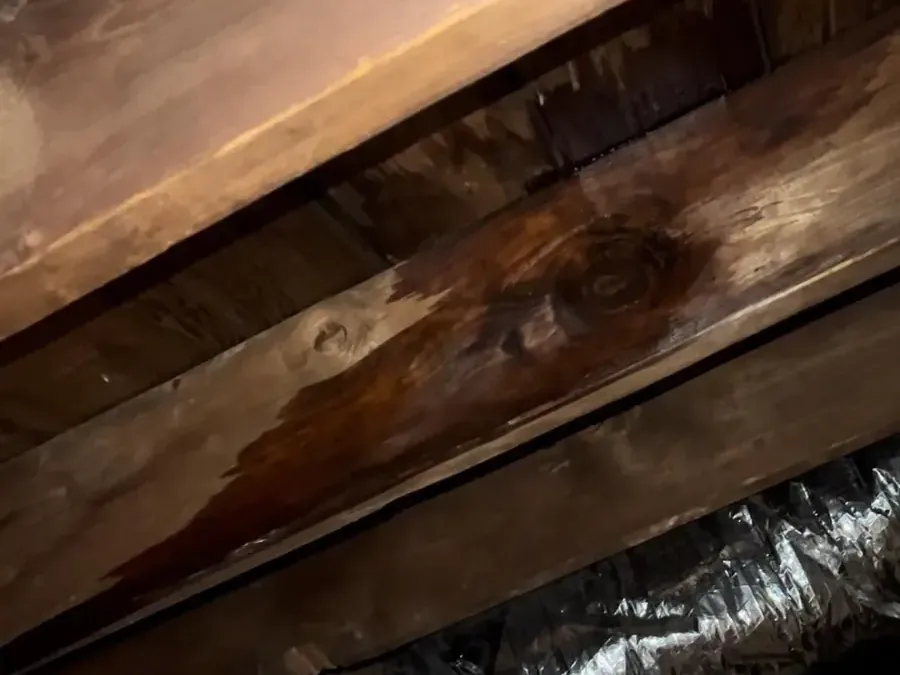
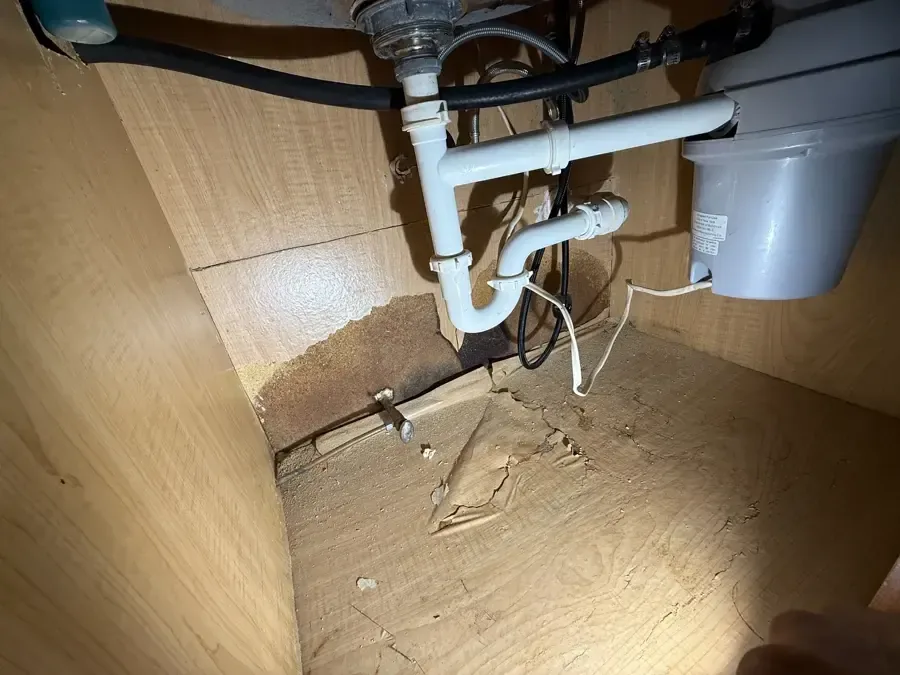
A supply pipe, drain component, roof opening, or water from an adjoining room can reach the same ceiling bay. The inspection follows damp material above the stain to locate the entry route. Plumbing or roofing findings establish the source, while restoration measurements follow the materials that absorbed the released water.
- Close the room to unnecessary traffic
- Do not touch wet lights or fans
- Notice whether rain or fixture use changes the mark
- Photograph the outline without standing beneath it
- Protect reachable contents outside the fall zone
Creating access without releasing debris uncontrolled
Flooring, furniture, doors, and air returns are protected before the cavity is opened. A planned point allows trapped water to drain into containment and lets the crew view insulation and framing. Loose gypsum is removed in manageable sections within the protected space.
The cut follows measured moisture and material strength, not the nearest corner. Sound dry board beyond the boundary remains when testing supports it. Insulation is assessed separately because its retained water can keep the back of otherwise stable board wet.
- Select access using readings and construction clues
- Drain collected water into controlled containers
- Contain board and insulation as they leave
- Inspect framing pockets and wall tops
- Retest surfaces revealed by each opening
Managing upper and lower wet areas together
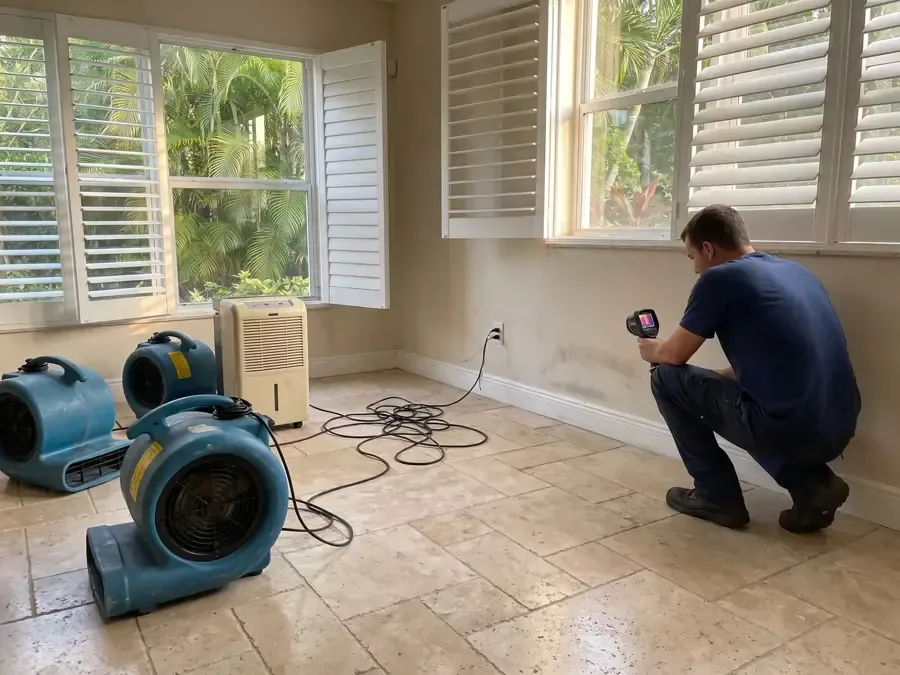
The cavity needs air across exposed framing and a dehumidified environment to accept released vapor. Below it, drips may have wet the floor, baseboards, furniture, or cabinets. Those lower materials receive their own extraction and testing rather than being assumed dry once the ceiling stops dripping.
Equipment is arranged to avoid distributing loose fibers while still reaching wet faces. A stationary reading prompts a search for hidden insulation, closed bays, or renewed source water. Water extraction support covers the liquid removal phase at floor level.
- Track framing separately from gypsum
- Test the floor beneath the full drip area
- Keep loose cavity debris out of airflow
- Adjust access when one bay remains elevated
- Document final values before repair closes the opening
Providing a complete handoff after drying
Hale Boggs Memorial Bridge, Lakewood Elementary School, and the Mississippi River identify the community served. They do not distinguish a plumbing leak from rain entry. The current repair report and cavity evidence make that distinction.
Luling restoration services connect ceiling work with roof leak and pipe loss responses. The finished file lists source status, room protection, controlled drainage, removed material, cleaning, equipment locations, and direct completion measurements. Any outstanding electrical, plumbing, roofing, or finish work stays identified for the proper trade.
Protecting the floor while overhead work continues
Water released from a ceiling can create a second wet area below. Before an opening is enlarged, the crew shields dry contents, establishes a debris zone, and tests the floor beneath the drip or bulge. Any water collected during controlled drainage is recorded separately from moisture already absorbed into flooring. This keeps the overhead cavity and the room surface on distinct treatment plans.
Hale Boggs Memorial Bridge, Lakewood Elementary School, and the Mississippi River identify Luling coverage, but none establishes whether a current ceiling loss began with plumbing or rain. Source findings provide that answer. The restoration record then follows insulation, framing, wallboard, nearby walls, and the floor below through their own measurements. If one layer stalls, technicians adjust access or equipment for that layer instead of assuming the entire room shares one drying condition.
Photographs taken after controlled opening show the actual cavity route and support repair planning without treating every nearby ceiling section as affected.
Ceiling leak water damage across Luling and nearby communities
Ceiling leak restoration reaches buildings near Hale Boggs Memorial Bridge, Lakewood Elementary School, the Mississippi River, and ZIP areas 70070, 70057, and 70039, with source evidence setting scope.
The same service nearby: ceiling leak water damage in LaPlace, Destrehan, Norco.
Related water damage services in Luling
Ceiling Leak Water Damage questions in Luling, LA
A ceiling is dripping or changing shape?
Technicians assess overhead stability and protect the room before opening wet ceiling material.
(888) 417-5665Arrange protected ceiling restorationWhat does a ceiling ring actually show?
It identifies where moisture reached the visible face, but the cavity can be wet beyond it. Direct testing and access locate the outer material boundary. The floor beneath the release is inspected independently after the overhead area is made safe.
Should a bulge be punctured from below?
Occupants should not attempt it. Wet board and collected water can fall suddenly, and electrical components may be involved. Controlled drainage requires a protected area. Source findings distinguish plumbing water from rain before cleaning and material decisions are finalized.
How is the source identified?
Timing provides clues, but plumbing or roofing personnel establish the failed component. Restoration technicians connect that finding to the cavity moisture path.
Can ceiling board dry without removal?
Stable clean board may remain when access permits effective drying and readings improve. Sagging, weakness, contamination, delamination, or trapped insulation can require removal.
Why inspect the floor below?
Drips and cavity drainage can affect finish flooring, underlayment, baseboards, cabinets, and contents. The lower area needs an independent moisture map.
When is the ceiling cavity considered dry?
Repeat readings at documented framing and finish locations must meet selected targets. A faded stain, dry touch, or comfortable room cannot prove concealed completion.
What influences ceiling leak cost?
Source type, ceiling height, instability, insulation, framing, wall and floor spread, room protection, debris handling, drying equipment, and monitoring affect the project.
Secure the room before opening the cavity
Technicians identify the source, drain trapped water within containment, expose affected layers, and verify framing and finishes with direct measurements.