Ceiling Leak Water Damage in Norco, LA
A ceiling drip may begin at roofing, plumbing, or an appliance above. Before damaged board is opened, the source, electrical exposure, finish stability, insulation, and water spread through the room need separate checks.
(888) 417-5665Assess the ceiling safely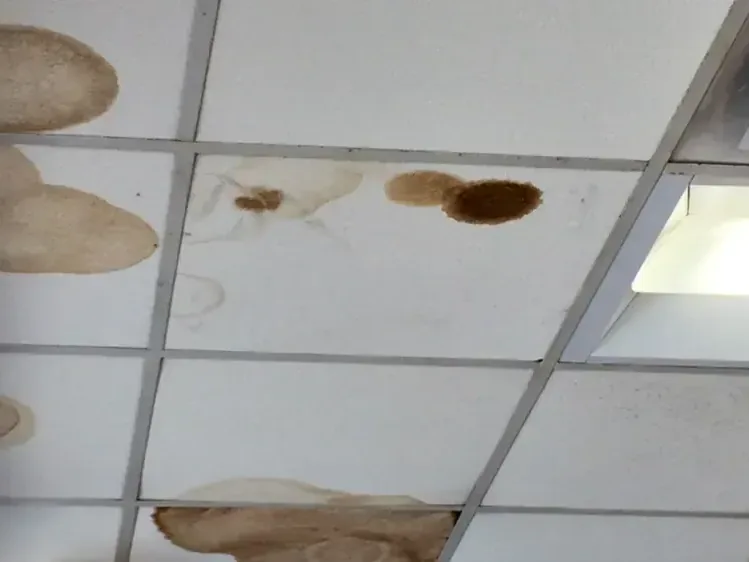
Why the ceiling leak water damage plan follows the water
Rapid local response
The response team dispatches 24/7 for active water and starts with source control, safety and a full moisture boundary.
IICRC S500 drying standard
The drying team sets category and class, chooses equipment for the evaporation load and verifies progress with daily readings.
Claim-ready documentation
The record can include the source, room diagram, moisture map, category, class, daily logs and photos before removal.
River Parish water knowledge
The crew plans for tropical rain, storm surge, humid air, supply failures and occasional freezing conditions.
How ceiling leak is handled in Norco
Protect the room
The fall zone, wet electrical components, contents, and walking surfaces are assessed before ceiling material is approached.
Verify the overhead source
Roof, plumbing, drain, or appliance findings are coordinated so continuing water is controlled before finish closure.
Map and expose wet layers
Readings identify ceiling board, insulation, framing, walls, and flooring that need extraction, removal, cleaning, or drying access.
Measure both levels
The cavity and room below are monitored at repeatable targets until every retained assembly reaches its chosen comparison goal.
First steps for ceiling leak water damage in Norco
Clear the area below
Keep people and animals outside the drip and fall zone. Do not stand beneath bowed board or move heavy belongings from directly under unstable material.
Avoid wet electrical features
Do not touch switches, lights, fans, outlets, or wiring exposed to water. Qualified electrical help should address unsafe conditions before access work.
Stop the overhead source
Have the correct trade control the roof, pipe, drain, or appliance. Restoration work should not begin finish closure while water continues to enter.
Preserve visible evidence
Photograph stains, sagging, drips, flooring, and affected contents from dry footing. Keep repair findings and any removed material notes with the project record.
The safest position around a ceiling leak is not directly beneath it. Saturated board or tile can release without warning, and water near lights or wiring creates another concern. In Norco, overhead moisture may be related to roof entry, a supply pipe, a drain, or equipment above. The source must be confirmed before the cavity is closed. The local restoration hub shows related roof, pipe, and extraction services.
What does ceiling leak water damage cost in Norco, LA?
Ceiling leak restoration commonly ranges from $1,100 to $6,200 or more. Source access, unstable finish, insulation, wall and floor spread, debris handling, drying equipment, and monitoring shape the scope.
Focused loss
$1,100 to $2,774
- Source already controlled
- Small ceiling section
- Simple cavity access
Multi-room loss
$2,774 to $4,340
- Water followed framing
- Walls or floors affected
- Several material targets
Complex loss
$4,340 to $6,200+
- Unstable finish removal
- Insulation and contents
- Expanded drying controls
Ranges are typical, not a quote: category of water, square footage, material class and how fast drying started move the number most. Run the water damage cost calculator for a closer range.
Secure the area beneath changed ceiling material
Occupants and animals should stay outside the drip and fall zone. Dry, portable items can be moved from a safe edge, but no one should pull down board or lift a ceiling tile without first considering electrical exposure and the weight of retained water. A container is appropriate only when it can be placed without entering danger.
The initial record includes the stain shape, sagging, drip locations, fixtures, flooring, and affected contents. Technicians inspect the room from dry footing, then determine whether qualified electrical help is needed. If water is still entering, the proper repair trade controls the roof, pipe, drain, or appliance source.
- Block access beneath unstable material
- Keep clear of wet lights and wiring
- Photograph ceiling shape from a safe position
- Record floor and content effects below
- Coordinate source repair before closure
Trace water above and beyond the stain
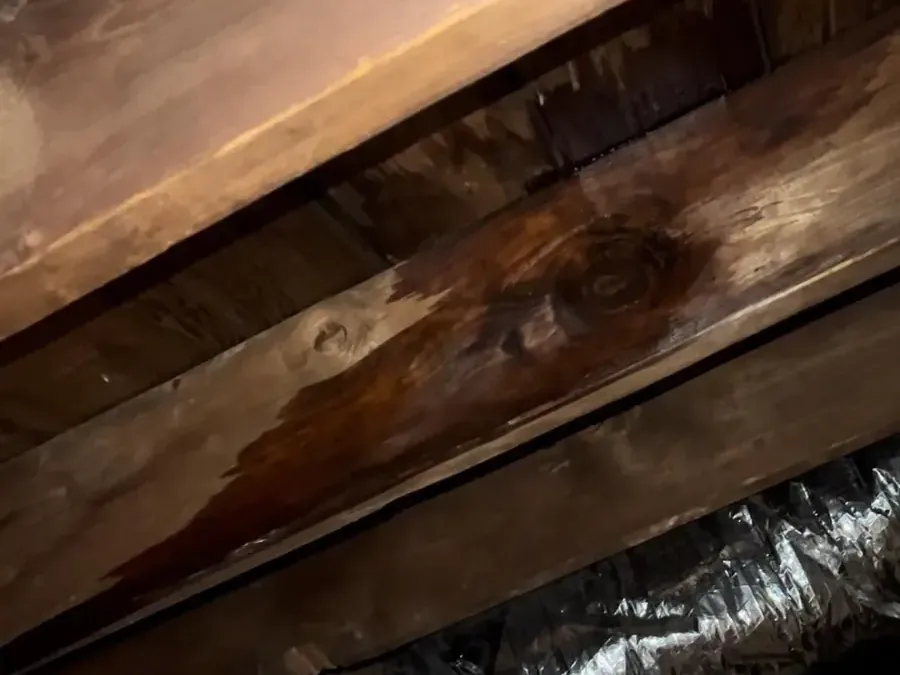
Water can spread across the upper face of ceiling board or follow framing before gravity creates a visible drip. Insulation may absorb and redistribute it. A small stain can therefore connect to a wider damp area, while a large old stain may no longer test wet. Direct material readings distinguish those conditions.
Access from above is useful when a safe attic or upper room permits it. Otherwise, a controlled opening from below may be needed after the area is protected. Thermal patterns direct meter placement. The technician checks joists, insulation, wall tops, adjacent partitions, and the floor where water landed, treating each as a separate material target.
- Test outward from every visible change
- Inspect framing paths and penetrations
- Evaluate insulation apart from ceiling board
- Check wall bases and flooring below
- Mark dry comparison points around the loss
Open only what safety and drying require
Board that has lost strength, become contaminated, or trapped saturated insulation may need removal. A sound section can remain when its cavity is reachable and readings demonstrate progress. The opening should expose the affected layer without turning a measured repair into broad demolition.
Buildings around Diamond, Airline Highway, and Norco Elementary School receive the same site-specific approach. These locations do not indicate roof age, pipe type, or ceiling construction. Dust protection, debris handling, and photographs preserve clean areas and make the access decision understandable later.
- Support the work area before material removal
- Follow the damp boundary rather than the room outline
- Bag failed ceiling material inside containment
- Preserve dry finish beyond confirmed readings
- Keep cavity targets available for rechecks
Coordinate cavity and room drying
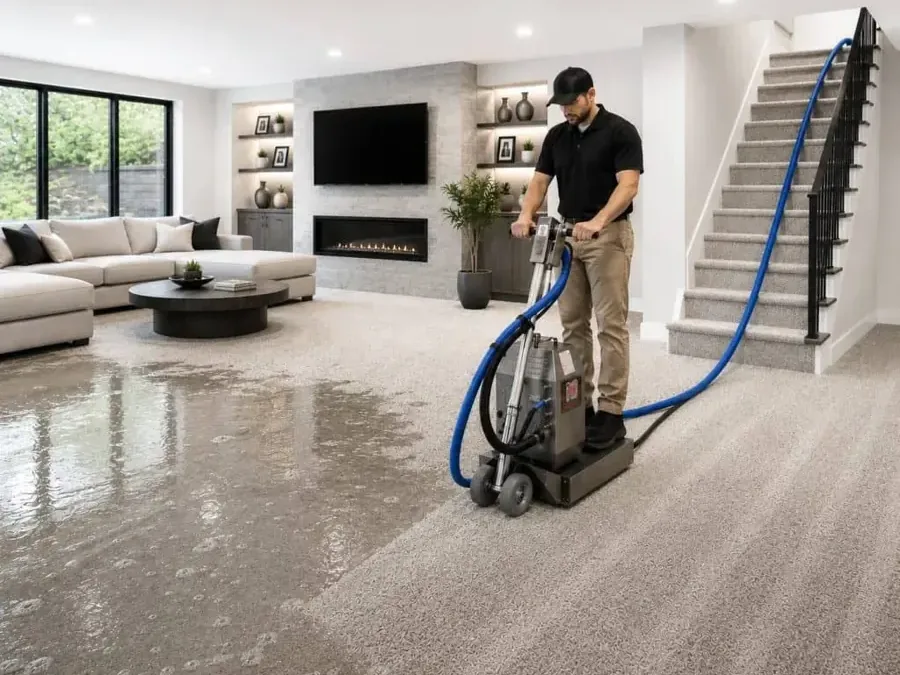
After the source is corrected and unsafe material is handled, airflow can reach joists, wall tops, and retained ceiling surfaces. Dehumidification captures vapor released into the controlled room. Wet flooring or furniture below receives a separate extraction and drying plan rather than being treated as a side effect.
Daily readings show whether the overhead cavity and lower room improve together. If a joist dries while insulation or a wall remains wet, the equipment layout changes. Completion requires recorded goals for every retained target. The roof leak service provides connected detail when rain is the confirmed source.
- Direct airflow into accessible damp spaces
- Keep ceiling and floor targets separate
- Control humidity through the entire work zone
- Revisit identical meter locations
- Save final readings before repair begins
The completion discussion identifies which surfaces are ready for repair and which cosmetic marks may remain visible despite dry readings. Keeping appearance and moisture as separate findings prevents a stain from being mistaken for active water or even a clean surface from being mistaken for a dry concealed cavity. Before repairs begin, the ceiling map identifies tested bays and accessible plumbing connections so the finish work can follow the documented wet boundary.
Ceiling leak water damage across Norco and nearby communities
Ceiling leak service is available near Diamond, Airline Highway, Norco Elementary School, and the Mississippi River. Source evidence and overhead readings define each building's work boundary.
The same service nearby: ceiling leak water damage in LaPlace, Destrehan, Luling.
Related water damage services in Norco
Ceiling Leak Water Damage questions in Norco, LA
A stain is growing overhead?
Technicians assess overhead stability and protect the room before opening wet ceiling material.
(888) 417-5665Request a safe ceiling inspectionWhat should happen first when a ceiling sags?
Keep everyone away from the area below. Saturated material can fall suddenly, and nearby lights or wiring may be wet. Qualified assessment should precede any opening.
Can the visible stain reveal the source?
A stain shows an exit point, not always the origin. Water may travel across framing or the upper ceiling face from a roof, pipe, drain, or appliance elsewhere.
Must wet ceiling board be removed?
Removal depends on strength, contamination, delamination, access, and measurable drying. Sound material may remain when the cavity can be reached and readings show improvement.
How is insulation handled?
Insulation is evaluated for saturation, contamination, physical condition, and access. Material that holds water against framing or prevents verification may require controlled removal.
Why test the flooring below?
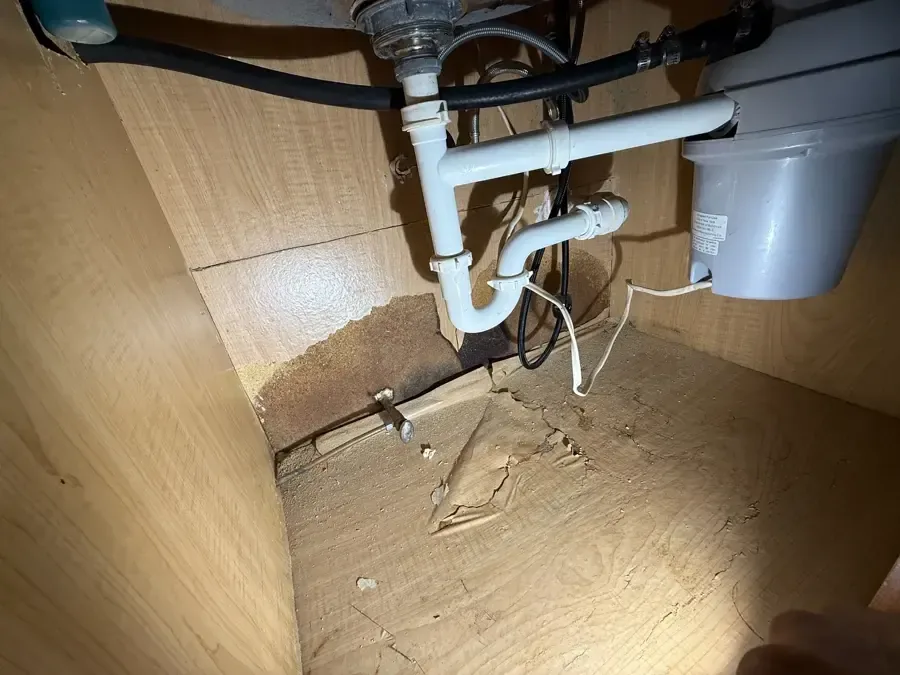
Dripping water can enter rugs, finish seams, underlayment, wall bases, and furniture. The lower surface needs its own moisture boundary even when the source is overhead.
Who repairs the original source?
A roofer, plumber, or appliance professional handles the failed component. Restoration technicians protect the room, remove water, access wet construction, dry materials, and document results.
When can the ceiling be closed?
Closure should wait until the source repair is documented and retained cavity materials have reached recorded goals. Photographs and completion readings preserve the condition before concealment.
Protect the room before wet board or insulation shifts
The response team identifies the source, checks electrical and fall concerns, maps connected materials, and verifies the cavity and floor below.