Burst Pipe Water Damage in Norco, LA
A failed supply pipe can wet a wall cavity, ceiling, cabinet, or floor before the shutoff is reached. Cleanup pairs repair evidence with extraction and a material map that extends beyond the obvious spray area.
(888) 417-5665Trace the pipe release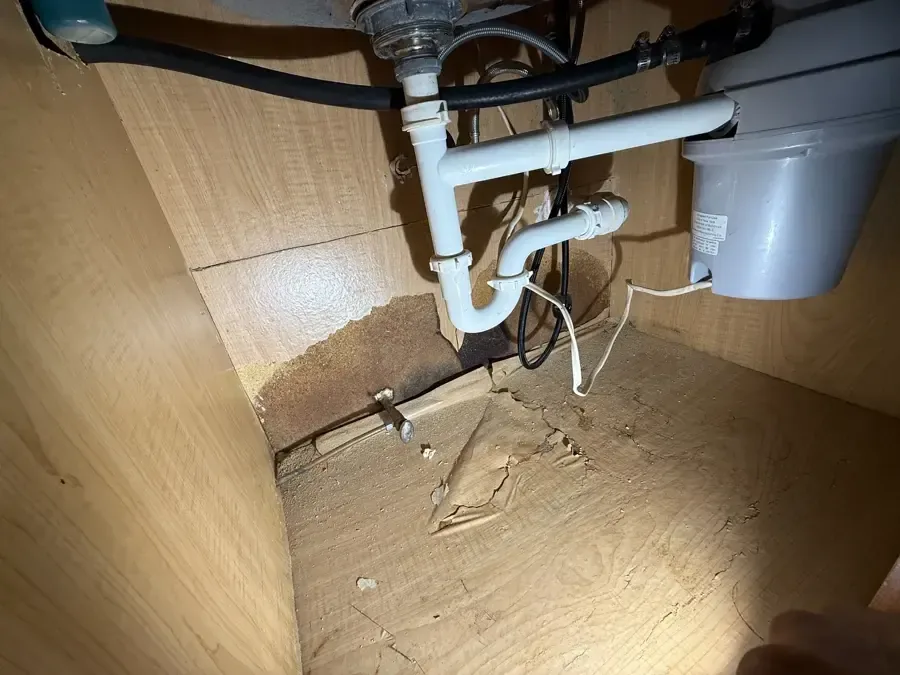
Why the burst pipe water damage plan follows the water
Rapid local response
The response team dispatches 24/7 for active water and starts with source control, safety and a full moisture boundary.
IICRC S500 drying standard
The drying team sets category and class, chooses equipment for the evaporation load and verifies progress with daily readings.
Claim-ready documentation
The record can include the source, room diagram, moisture map, category, class, daily logs and photos before removal.
River Parish water knowledge
The crew plans for tropical rain, storm surge, humid air, supply failures and occasional freezing conditions.
How burst pipe is handled in Norco
Confirm source control
A safe shutoff and plumbing repair stop continued flow while preserving evidence about the location and nature of the failure.
Follow the water route
Inspection moves outward and downward through insulation, walls, ceilings, cabinets, flooring, and utility openings using direct readings.
Open only blocked areas
Failed finishes and inaccessible wet cavities receive selective access so liquid can be removed and air can reach retained construction.
Prove each assembly dry
Technicians revisit marked targets, compare progress, adjust equipment, and save completion readings before finish repairs begin.
First steps for burst pipe water damage in Norco
Reach a safe valve
Close the fixture valve or master shutoff only if the route is clear of energized water, falling material, and slippery surfaces. Otherwise, wait for qualified help.
Protect the rooms below
Stay out from beneath sagging ceiling finishes and move only dry, portable belongings when that can be done without entering the water path.
Keep the repair area visible
Photograph the failed pipe and surrounding construction, then retain the plumber's findings. Avoid closing the cavity before restoration readings are complete.
Do not force rapid heat
Open flames and improvised heating can damage materials or create a fire hazard. Drying equipment should operate as part of a measured plan.
A pressurized release can send water through several assemblies before anyone sees the first drip. The wet patch may be below the break, beside it, or in a lower room connected by a cavity. Regional utility advice relevant to Norco recommends knowing the master shutoff location because freezing weather can increase the chance that exposed pipe cracks or bursts. The Norco restoration hub connects pipe losses with extraction and drying options.
What does burst pipe water damage cost in Norco, LA?
Burst pipe water damage work commonly ranges from $1,500 to $7,800 or more. Release volume, affected cavities, insulation, floor and ceiling spread, access, removal, equipment, and monitoring shape the cost.
Focused loss
$1,500 to $3,534
- Pipe already repaired
- Small material boundary
- Direct cavity access
Multi-room loss
$3,534 to $5,460
- Water moved between rooms
- Insulation or cabinets wet
- Several drying zones
Complex loss
$5,460 to $7,800+
- Multiple concealed paths
- Finish removal needed
- Extended material tracking
Ranges are typical, not a quote: category of water, square footage, material class and how fast drying started move the number most. Run the water damage cost calculator for a closer range.
Make the source safe without creating another hazard
A fixture valve may stop a small branch release. A master valve may be necessary when the break continues behind a finish. No one should cross standing water near electrical equipment or reach into a damaged cabinet simply to operate a shutoff. When access is uncertain, qualified utility or plumbing help should take over.
The plumber diagnoses and repairs the failed pipe. Restoration begins with water that already entered the building. Technicians note the release point, shutoff time, repair opening, and visible route. These details help explain why inspection expands into a lower level, shared partition, cabinet run, or floor transition even after the new leak has stopped.
- Identify the safest reachable control
- Keep clear of wet electrical components
- Retain the plumber's repair findings
- Photograph the release and surrounding finishes
- Do not close the repair opening before testing
Track gravity, pressure, and absorbent materials
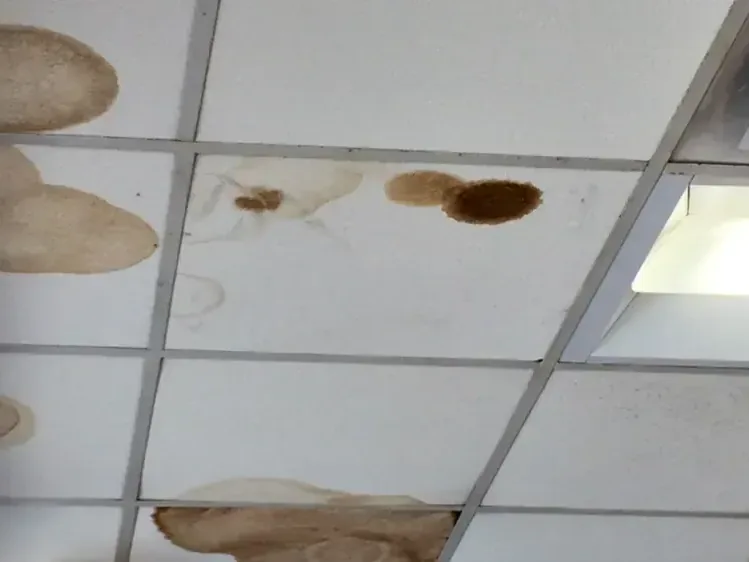
Spray can wet surfaces above the final puddle, while gravity carries water down framing and utility penetrations. Insulation holds water against wood and gypsum. Cabinets can absorb moisture at raw edges. Flooring may draw water beneath an apparently dry finish. The inspection therefore starts at the break and works outward and downward.
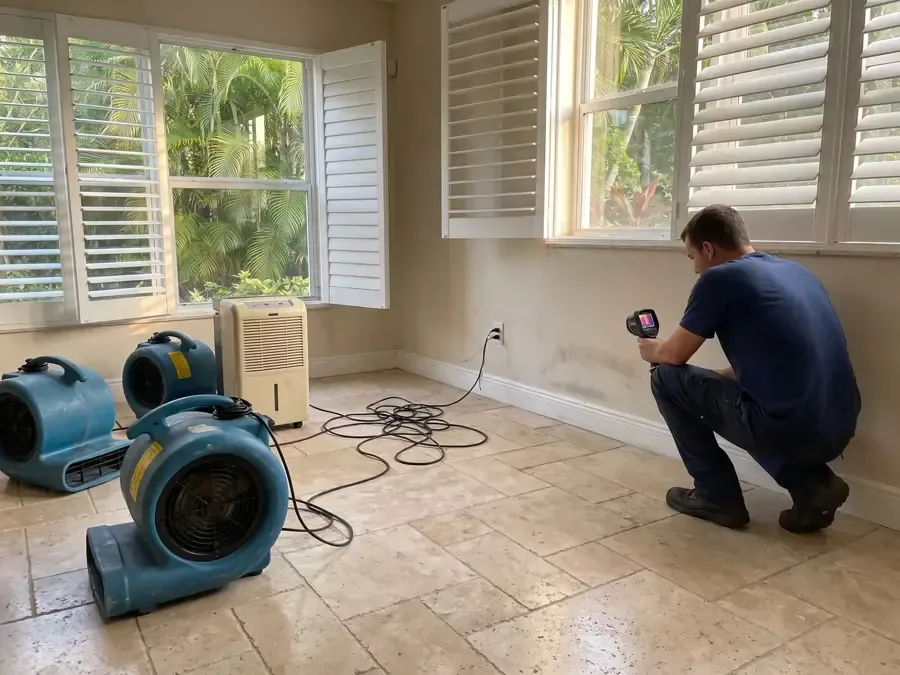
Direct meter readings verify which materials require action. Thermal images focus the search on temperature differences for closer testing. Technicians compare suspect areas with unaffected construction, mark the boundary, and revisit the same points during drying. A stain outside that boundary may be historical; a normal-looking wall inside it may still be wet.
- Inspect above, below, and beside the pipe failure
- Check insulation and wallboard separately
- Test cabinets at joints and unfinished edges
- Follow water through floor and ceiling penetrations
- Mark dry reference materials for comparison
Use winter guidance without assuming a local pattern
Regional advice recommends draining outdoor hoses, insulating exposed pipes and faucets, sealing cold air openings, and using listed heat products according to instructions. Garages and crawl spaces are specifically identified as areas where exposed pipe may need protection. These are prevention practices, not proof that a particular building has vulnerable plumbing.
A South Louisiana winter storm in January 2025 prompted pipe protection warnings and possible power loss planning. Properties near Diamond, Airline Highway, and Norco Elementary School still need an individual cause assessment after any release. Weather context does not determine whether a pipe failed from cold, wear, impact, or another cause.
- Record the observed break instead of assigning a cause
- Inspect unheated areas only when safely accessible
- Never use an open flame to warm plumbing
- Confirm repairs before restoring finishes
- Keep prevention advice separate from loss evidence
Dry from the cavity outward
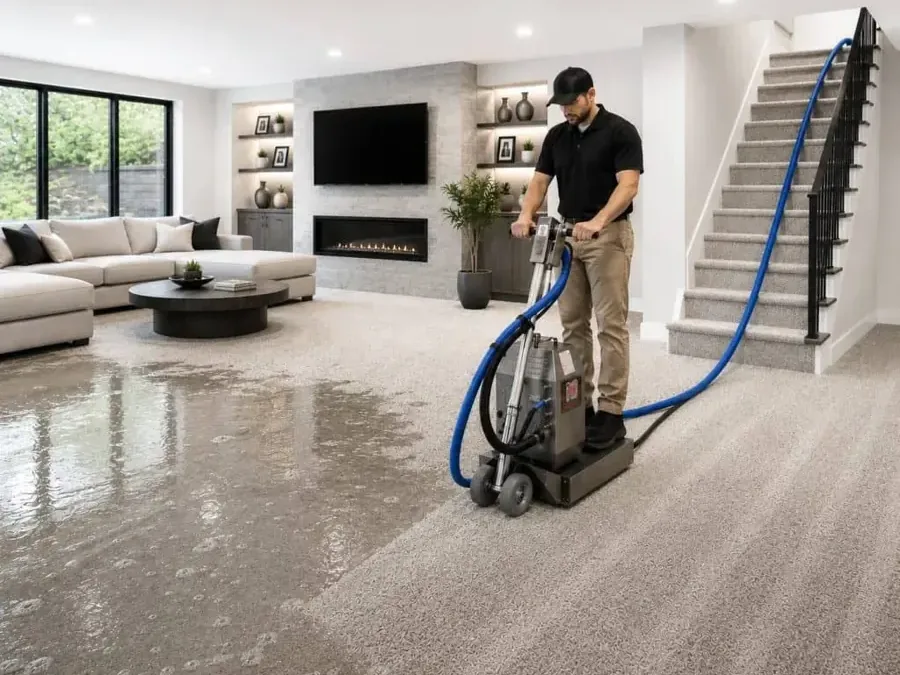
Bulk water is extracted before directed drying begins. Saturated insulation or failed finish material can block air from reaching framing and may need controlled removal. Small access openings sometimes provide an effective pathway while leaving sound material in place. Contamination and structural condition influence every retention choice.
Air movers and dehumidifiers then serve the measured area. Readings at framing, wallboard, cabinetry, subfloor, and other targets show whether the assembly improves. Equipment changes follow the slow material, not a preset duration. The structural drying page explains that monitoring phase in greater detail.
- Extract liquid from floors and accessible cavities
- Remove barriers only where readings justify access
- Direct air through the actual wet pathway
- Record material response at repeatable points
- Verify completion before openings are repaired
Before finish repair, the crew also checks the far side of shared partitions and the floor directly below the release path. This last pass can catch an isolated damp edge missed during initial access and keeps the final material record tied to the actual pipe event.
Burst pipe water damage across Norco and nearby communities
Burst pipe cleanup covers properties near Diamond, Airline Highway, Norco Elementary School, and the Mississippi River. The plumbing finding and building measurements establish the individual restoration scope.
The same service nearby: burst pipe water damage in LaPlace, Destrehan, Luling.
Related water damage services in Norco
Burst Pipe Water Damage questions in Norco, LA
A pipe released water behind finishes?
After the pipe is shut off, technicians trace escaped water through adjoining walls and floors.
(888) 417-5665Arrange a cavity moisture assessmentShould the master shutoff always be used?
Use the smallest safe control that stops the release. A fixture valve may be enough, while a hidden break may require the master. Do not cross electrical or structural hazards to reach either.
Who repairs a burst pipe?
A plumbing professional diagnoses and repairs the pipe. The restoration crew extracts escaped water, evaluates materials, creates drying access, operates equipment, and documents moisture conditions.
Why inspect rooms below the break?
Water follows framing, penetrations, and gravity. A release in one area can reach a lower ceiling, wall, cabinet, or floor before a visible stain develops.
Does insulation always have to be removed?
Not every type or condition requires the same decision. Saturation, contamination, access, physical change, and measurable drying potential determine whether insulation can remain.
Can freezing weather crack plumbing here?
Regional utility guidance identifies freezing as a risk for exposed pipes. A plumber inspects the failed section and records the repair, while restoration technicians follow the resulting water path.
How is hidden drying verified?
Readings are repeated at marked framing, wallboard, cabinet, and floor locations. Openings should remain accessible until those materials meet the selected comparison goals.
What records support the project file?
Save shutoff details, plumbing findings, photographs, moisture maps, material decisions, equipment logs, progress readings, completion values, invoices, and written claim communication.
Connect the repair opening to the complete water path
The response team traces walls, ceilings, cabinets, insulation, and flooring, then dries each confirmed material from repeatable readings.