Burst Pipe Water Damage in Destrehan, LA
A split pipe can release water into walls, ceilings, cabinets, and flooring before the shutoff is reached. Restoration begins after safe source control, then follows every branch of the water path with direct measurements.
(888) 417-5665Destrehan burst pipe help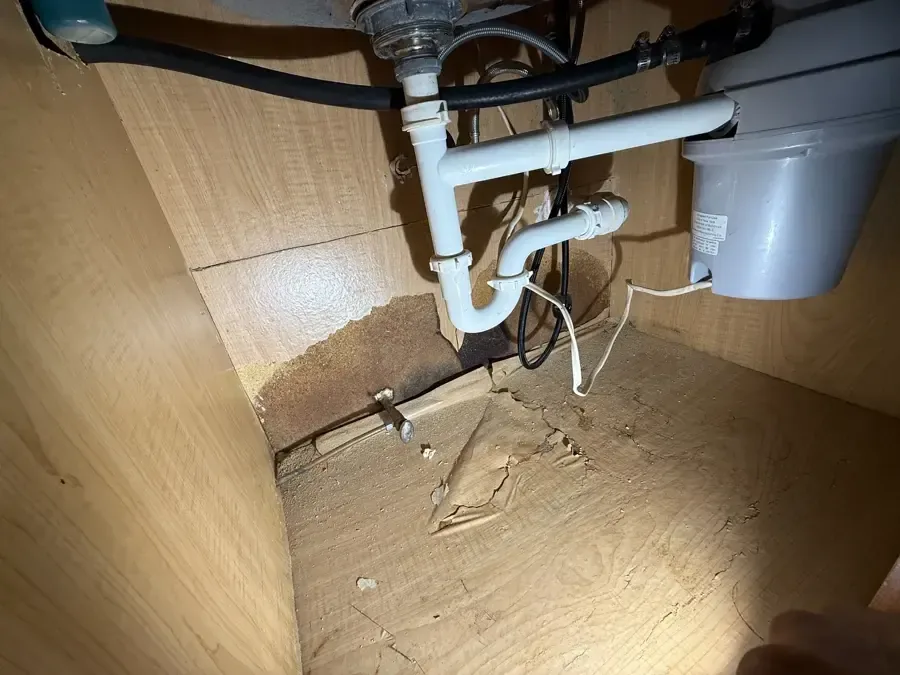
Why the burst pipe water damage plan follows the water
Rapid local response
The response team dispatches 24/7 for active water and starts with source control, safety and a full moisture boundary.
IICRC S500 drying standard
The drying team sets category and class, chooses equipment for the evaporation load and verifies progress with daily readings.
Claim-ready documentation
The record can include the source, room diagram, moisture map, category, class, daily logs and photos before removal.
River Parish water knowledge
The crew plans for tropical rain, storm surge, humid air, supply failures and occasional freezing conditions.
How burst pipe is handled in Destrehan
Confirm repair status
The plumber isolates and repairs the failed component before concealed spaces are closed or drying is finalized.
Trace the pressure path
Meters follow spray, gravity flow, and wicking through ceilings, walls, cabinets, flooring, and insulation.
Extract and open selectively
Liquid is recovered and small access points expose wet materials that cannot release moisture through intact finishes.
Prove the dry result
Repeat readings from framing and finishes are compared with unaffected references and stored with the project notes.
First steps for burst pipe water damage in Destrehan
Shut water off safely
Use the nearest valve or main only when it can be reached without entering water near electrical equipment or unstable materials.
Avoid the wet ceiling
Do not stand beneath bulging drywall or wet fixtures. Water held above a ceiling can release material without warning.
Move only dry valuables
Take accessible dry items away from spray or pooling, but leave saturated contents until a protected handling route is ready.
Record the break area
Photograph the failed pipe location, visible water path, and affected rooms without delaying the shutoff or entering an unsafe space.
A burst pipe creates two separate jobs. Plumbing work stops and repairs the failed component. Water damage restoration handles what escaped before control was achieved. The response team starts at the break, then checks the direction gravity, pressure, and connected cavities carried the water. Regional guidance identifies attics, garages, crawl spaces, exterior walls, and cabinets as places where exposed pipes may be vulnerable during severe cold.
What does burst pipe water damage cost in Destrehan, LA?
Burst pipe water damage projects typically range from $1,500 to $7,800 or more. Release volume, affected cavities, insulation, flooring, cabinets, access openings, extraction, and drying equipment shape the actual restoration scope.
Focused loss
$1,500 to $3,534
- Source repaired
- One room or cavity
- Limited extraction and drying
Multi-room loss
$3,534 to $5,460
- Water crossed assemblies
- Insulation or cabinets affected
- Several equipment zones
Complex loss
$5,460 to $7,800+
- Difficult cavity access
- Broader material removal
- Extended moisture documentation
Ranges are typical, not a quote: category of water, square footage, material class and how fast drying started move the number most. Run the water damage cost calculator for a closer range.
Following pressurized water through the building
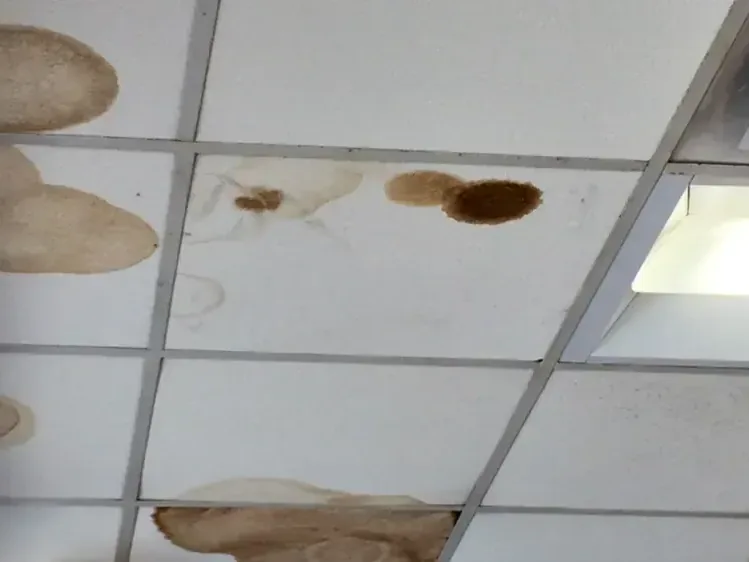
Supply water may spray across a room, run down a wall cavity, or collect below flooring. A ceiling stain can be separated from the actual break by joists and insulation. Technicians inspect the reported room first, then test adjacent surfaces along the likely path. Readings establish where the wet materials end instead of assuming the nearest wall contains the whole loss.
Destrehan experienced a main pipe rupture in January 2017 that interrupted service for some customers, and parish officials reported another water main break in April 2018. During a service interruption, the property owner can save utility notices alongside the plumbing report. A dated record helps the restoration crew follow when indoor water appeared and which rooms needed extraction.
- Confirm the pipe has been isolated or repaired
- Inspect below the break and on both sides of partitions
- Test insulation where water crossed a ceiling or exterior wall
- Open cabinet bases for readings when supply fittings failed
- Mark a dry comparison outside the affected path
Extracting water before cavities are dried
Accessible liquid is removed from floors, carpet, and low collection points. Wet contents are moved through a protected route. If insulation holds water or a closed wall prevents useful airflow, a controlled opening can provide access. The crew avoids broad demolition when a smaller measured opening will permit extraction, inspection, and drying.
Floor layers require separate attention. Water can pass beneath a floating finish and remain at the wall edge after the surface appears clear. Cabinet toe kicks can conceal a wet base. After carpet extraction, the technician checks pad and subfloor separately. Each layer receives its own condition and moisture decision.
- Recover pooled water from the lowest reachable areas
- Check flooring beneath transitions and removable trim
- Release trapped water before placing air movers
- Remove saturated insulation when it cannot dry in place
- Keep dry belongings outside the equipment route
Planning airflow for opened and closed spaces
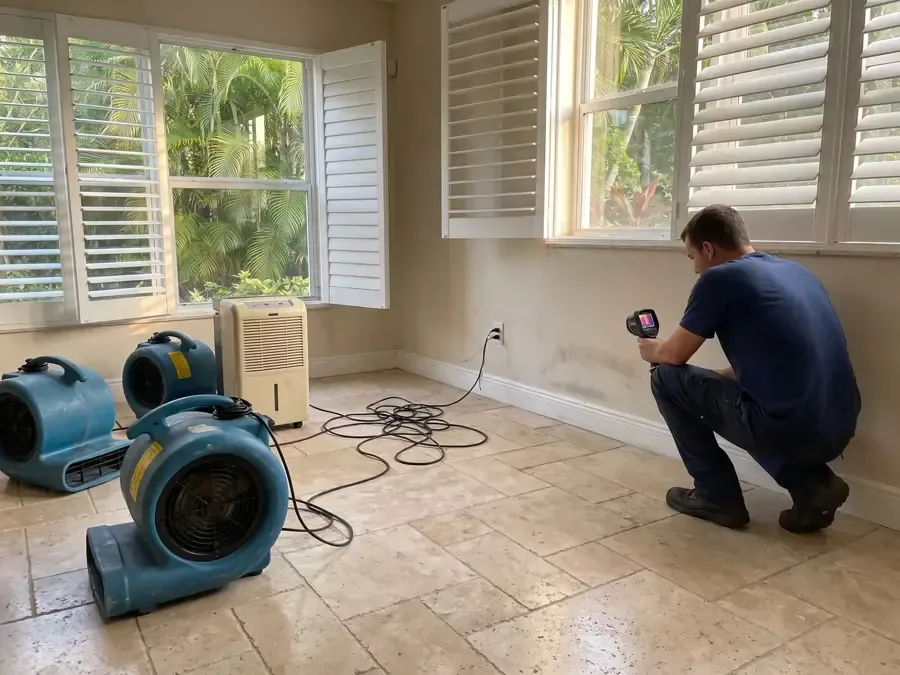
Air movers work across exposed wet surfaces, while dehumidifiers reduce moisture in the room air. A cavity may need an access opening or a specialized attachment rather than a fan pointed at the finished wall. Equipment quantities respond to the measured area, the material load, and how well vapor can leave each assembly.
Brief freezes are part of the regional weather record. Local guidance recommends insulating exposed water pipes, removing and draining outdoor hoses, and avoiding open flames when thawing frozen plumbing. Once a release has occurred, prevention advice does not replace the current restoration work. The burst pipe service in LaPlace describes related repair coordination and drying principles.
- Direct airflow toward wet faces that can release moisture
- Use dehumidification to capture vapor from the work zone
- Measure framing and drywall at repeatable locations
- Change access when an enclosed section stops improving
- Remove equipment only after the material goals are stable
Documenting cause, access, and drying
The pipe repair invoice and plumber findings can identify the failed component. The restoration file adds affected room notes, photographs, a moisture map, material access decisions, equipment records, and completion readings. Together they distinguish cause repair from mitigation without inventing a reason for the failure.
Service covers properties near Airline Highway, Great River Road, Destrehan Plantation, and the Mississippi River. These named places establish local relevance, not a claim that pipes in one part of town fail more often. Every burst receives its own observed source and measured scope. The Destrehan service hub lists the other water and sewage responses available locally.
Shutoff timing belongs in the record because it helps explain the possible release period without turning an estimate into a fact. The crew uses physical readings, not timing alone, to decide how far testing must extend.
Burst pipe water damage across Destrehan and nearby communities
Burst pipe restoration serves local properties around Airline Highway, Great River Road, local Plantation, Ormond Estates, and Murray Hill Drive. Every room receives its own measured moisture decision.
The same service nearby: burst pipe water damage in LaPlace, Norco, Luling.
Related water damage services in Destrehan

Burst Pipe Water Damage questions in Destrehan, LA
A split pipe is still releasing water?
After the pipe is shut off, technicians trace escaped water through adjoining walls and floors.
(888) 417-5665Send burst pipe restoration helpWhat should happen immediately after a pipe bursts?
Use a safe shutoff, keep clear of wet electrical components and sagging ceilings, and arrange the plumbing repair. Restoration then maps and extracts the escaped water.
Can water remain inside a wall after the floor is dry?
Yes. Insulation, framing, drywall backs, and enclosed floor edges can retain moisture after surface water disappears. Direct readings and selective access identify those areas.
Will all wet drywall be removed?
Clean water drywall may dry when it remains sound and both faces can release moisture. Removal becomes more likely with damage, contamination, saturation, or blocked cavity access.
How is wet insulation handled?
The technician considers type, saturation, contamination, access, and drying response. Insulation that holds water or blocks cavity drying may need controlled removal.
Can a frozen pipe be thawed with a flame?
Regional guidance states that open flames should not be used to thaw frozen plumbing. A plumbing professional can address the pipe while restoration handles released water.
What proves the wall is dry?
Measurements from the affected framing and finishes are compared with appropriate dry references. The technician checks inside accessible cavities and records the final readings before closing the drying stage.
What determines the restoration price?
The amount released, rooms reached, cavity access, insulation, floor layers, cabinet involvement, extraction, material removal, equipment, and monitoring needs define the work scope.
Control the source and map the concealed water path
The restoration crew extracts accessible water, opens only measured wet cavities, and verifies framing and finishes with repeat readings.