Appliance Leak Water Damage in Luling, LA
A washer hose, dishwasher component, or refrigerator connection can release water beneath equipment before any puddle reaches the open room. Testing starts behind the machine and follows seams outward. The covered footprint remains open until its materials are verified.
(888) 417-5665Luling appliance leak help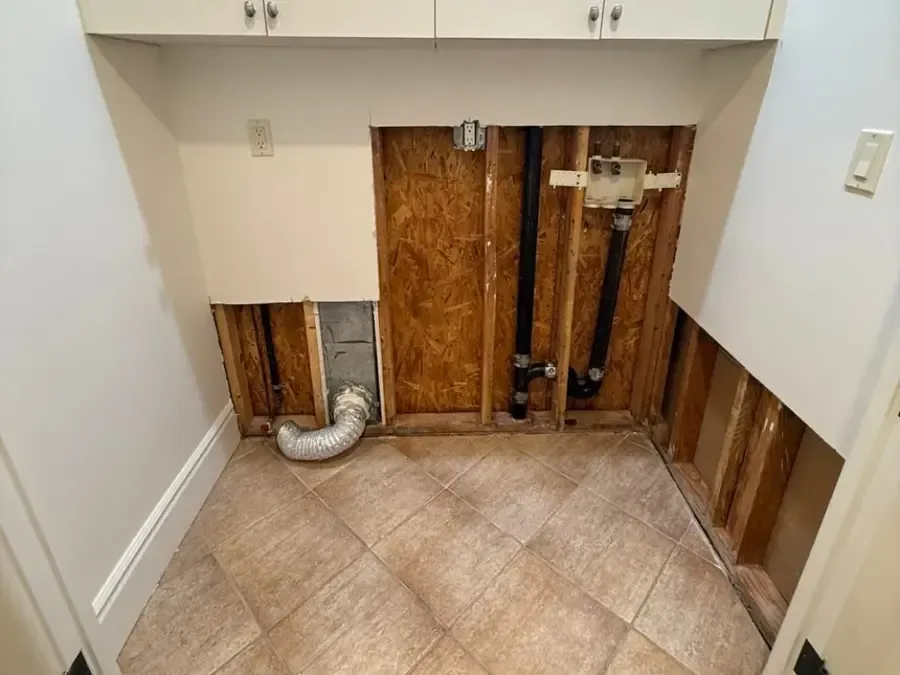
Why the appliance and supply hose leaks plan follows the water
Rapid local response
The response team dispatches 24/7 for active water and starts with source control, safety and a full moisture boundary.
IICRC S500 drying standard
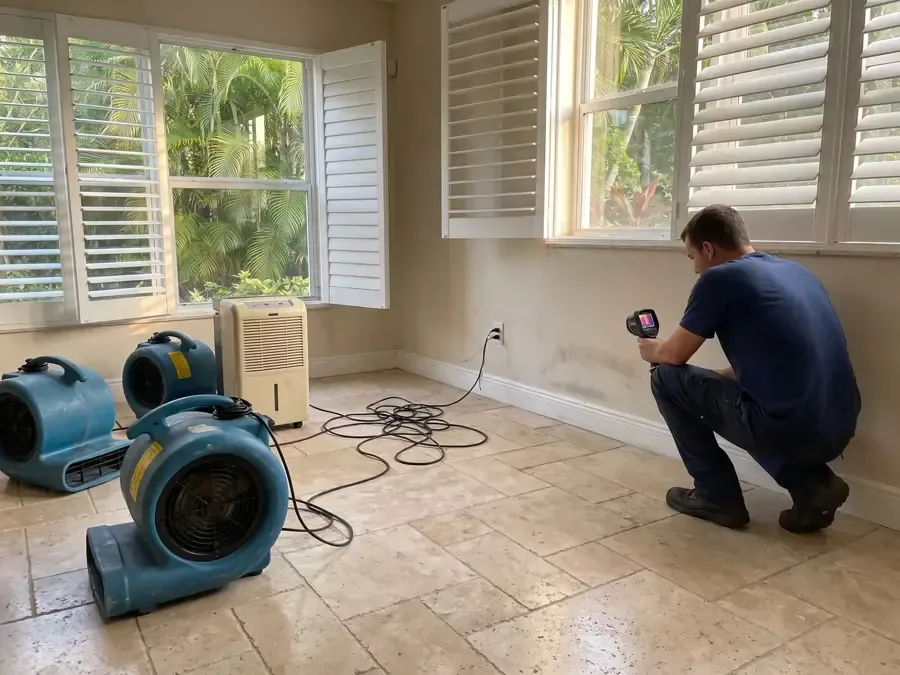
The drying team sets category and class, chooses equipment for the evaporation load and verifies progress with daily readings.
Claim-ready documentation
The record can include the source, room diagram, moisture map, category, class, daily logs and photos before removal.
River Parish water knowledge
The crew plans for tropical rain, storm surge, humid air, supply failures and occasional freezing conditions.
How appliance and supply hose leaks is handled in Luling
Document isolation and failure
The machine position, affected connection, repair finding, and visible water route are recorded after safe access is established.
Inspect the covered footprint
Floor layers, cabinets, wall penetrations, thresholds, and lower rooms are tested independently beyond the appliance recess.
Extract and expose wet faces
Portable tools remove liquid while limited trim, cabinet, or flooring access opens concealed material for evaporation.
Clear the area for reconnection
Final readings and photographs confirm tested surfaces behind and below the appliance before it returns to position.
First steps for appliance and supply hose leaks in Luling
Separate electricity from water
Do not touch a plug, cord, control, or appliance while standing on wet flooring. Qualified personnel should establish safe disconnection before movement.
Use only a reachable dry valve
Close a supply when it can be accessed without leaning across water or shifting heavy equipment. Do not force a damaged control.
Protect nearby dry belongings
Move light accessible items beyond the wet edge from stable footing. Leave trapped, saturated, contaminated, or heavy objects for controlled handling.
Retain the failure evidence
Photograph the machine position, connections, and water path when safe. Keep service notes and the failed component information with the restoration record.
The floor in front of an appliance can stay dry while water collects behind it. In a Luling kitchen or utility room, a release may follow a hose opening, cabinet seam, wall penetration, or continuous floor finish. Safe disconnection precedes movement and direct testing of the covered footprint.
What does appliance and supply hose leaks cost in Luling, LA?
Appliance leak restoration generally ranges from $1,000 to $5,800 or more. Equipment location, water category, release volume, cabinets, floor layers, walls, access, drying, and monitoring determine the actual scope.
Focused loss
$1,000 to $2,584
- Source controlled promptly
- Accessible machine recess
- Limited extraction and drying
Multi-room loss
$2,584 to $4,059
- Water reached cabinets
- Floor layers affected
- Several material groups
Complex loss
$4,059 to $5,800+
- Release crossed rooms or levels
- Broad underfloor travel
- Expanded access and equipment
Ranges are typical, not a quote: category of water, square footage, material class and how fast drying started move the number most. Run the water damage cost calculator for a closer range.
Identifying the mechanical event before cleanup
A washer, dishwasher, or refrigerator combines water, electricity, weight, and tight clearances. Occupants should not pull powered equipment across a wet surface. Appliance or plumbing personnel isolate the machine and document whether the problem involved a supply hose, valve, drain, pump, tubing, or internal component.
The restoration technician records the original position and visible route after access is safe. A slow refrigerator connection and a washer discharge can create very different patterns. The current failure evidence controls the inspection, without suggesting that one type occurs frequently in the community.
- Do not reach behind wet powered equipment
- Use a dry accessible supply valve only
- Keep failed component information when available
- Photograph penetrations after equipment movement
- Establish dry reference locations before extraction
Following water into cabinets and floor systems
Dishwasher releases can enter toe recesses, end panels, and the lower edges of casework. Washer water may cross thresholds or descend through penetrations. Refrigerator tubing near a wall can feed moisture into framing before the open floor shows a clue.
Testing separates finish flooring, adhesive, underlayment, subfloor, or concrete. Cabinet backs, ends, bases, and toe components also receive individual readings. Swelling or delamination matters because a dry surface measurement cannot restore lost material strength.
- Measure the entire machine footprint
- Inspect both sides of adjacent cabinets
- Trace seams into neighboring floor sections
- Check the room below when travel is possible
- Mark unaffected components for protection
Opening the smallest practical drying route
Portable extraction tools fit equipment recesses and toe spaces after safe movement. Removable trim can give early access without disturbing larger finish areas. If water sits under a sealed covering, a focused lift or cut may expose the wet substrate for testing and evaporation.
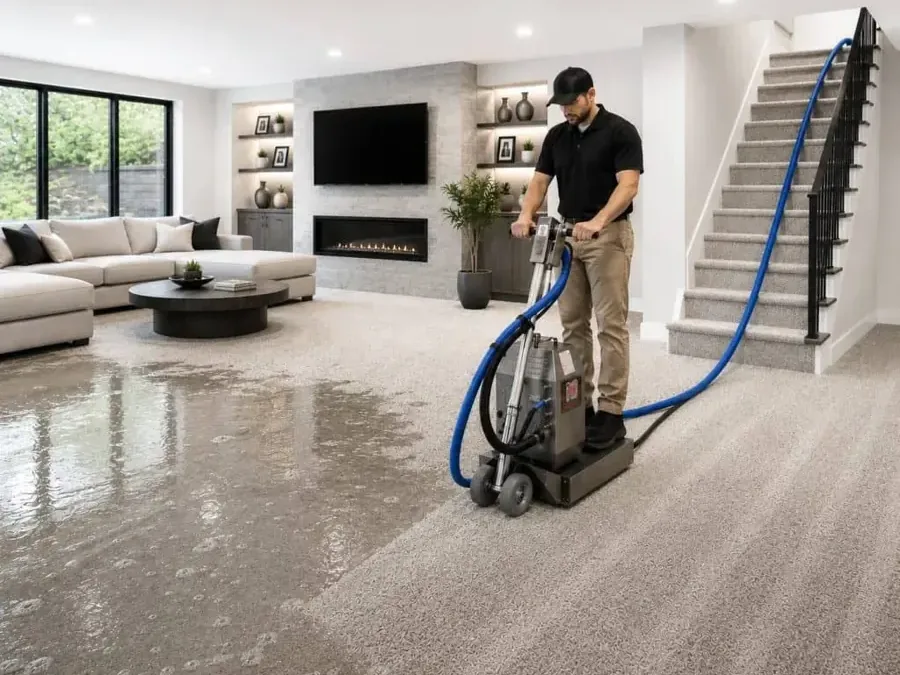
Stable clean cabinets may dry when their damp faces are reachable. Components that are swollen, separated, contaminated, or closed to cleaning need another decision. Water extraction methods handle recoverable liquid before dehumidification manages the moisture released from retained construction.
- Recover water from recesses before open traffic
- Begin access at removable or damaged edges
- Protect cabinet faces outside the boundary
- Direct air toward exposed damp components
- Investigate any value that remains unchanged
Checking every covered surface before return
Coverage includes the area around Lakewood Elementary School, Hale Boggs Memorial Bridge, and the Mississippi River. An appliance inspection records the leaking connection and the space behind the machine. Restoration measurements then follow water beneath cabinets and across floor seams so the drying plan reaches the full affected area.
Before reconnection, the wall, cabinet ends, floor layers, and supply or drain opening receive final checks. Luling water restoration options connect this work to structural drying. Photographs, movement records, source repair details, equipment dates, and completion values create a clear handoff for installation and insurance documentation.
Testing the recess after supply and drain checks
An appliance may hide separate water paths at a hose connection, drain fitting, cabinet penetration, and front threshold. Once the unit is safely disconnected and moved, technicians inspect each path instead of treating the recess as one surface. The back wall can be damp while the visible floor is clear, or a floor seam can carry water toward a cabinet end. Direct readings distinguish those conditions.
Lakewood Elementary School, Hale Boggs Memorial Bridge, and the Mississippi River place the work in Luling without suggesting that appliance leaks are frequent there. The site record documents the actual machine, connection findings, affected cabinet parts, flooring layers, wall contact, and final measurements. Protective pads and a clean holding route limit damage while the unit is out. Reconnection follows repair and drying decisions made by the appropriate trades and property representatives.
Water marks on the appliance base are compared with cabinet and floor readings before the unit is returned. This final check can reveal an isolated damp edge that needs additional access even after the central recess reaches its target.
Appliance and supply hose leaks across Luling and nearby communities
Appliance leak restoration serves buildings near Lakewood Elementary School, Hale Boggs Memorial Bridge, the Mississippi River, and ZIP areas 70070, 70057, and 70039, with footprint readings guiding work.
The same service nearby: appliance and supply hose leaks in LaPlace, Destrehan, Norco.
Related water damage services in Luling
Appliance and Supply Hose Leaks questions in Luling, LA
Water is hidden beneath an appliance?
Inspection reaches behind the machine and beneath cabinets to find water concealed by fixed finishes.
(888) 417-5665Arrange appliance leak restorationShould an occupant move a leaking appliance?
Not across water while it is powered or connected. Appliance, plumbing, or electrical personnel should isolate the equipment before the hidden footprint is exposed. Cabinet ends, toe spaces, penetrations, and floor seams are tested after the appliance is moved.
Where can dishwasher water collect?
It may enter the toe space, cabinet edges, floor seams, wall joint, and layers beneath the finish. Direct testing confirms the actual route. Reconnection waits for repair decisions and verification of materials hidden by the machine.
Can refrigerator tubing wet a wall?
Yes. A release near a penetration can reach framing, gypsum, cabinet parts, and floor layers before water becomes visible in front of the machine.
Does a dry floor surface clear the lower layers?
No. Liquid can pass through seams into adhesive, underlayment, wood, or concrete. Accessible parts of the assembly require separate measurements.
Can cabinets remain after the release?
Clean stable components can remain when damp faces are accessible and readings improve. Swelling, separation, contamination, or blocked moisture can require selective removal.
When can the appliance return?
After source repair and once its placement will not conceal unfinished testing or drying. The covered wall, cabinet, and floor areas receive final checks.
What influences appliance restoration cost?
Machine type and location, water volume, category, cabinets, flooring, walls, lower rooms, access, material removal, equipment demand, and monitoring affect the scope.
Inspect the covered footprint before reconnection
Before the machine returns for reconnection, the restoration team coordinates safe movement, maps cabinets and floor layers, creates limited access, and verifies retained surfaces.