Water Heater Leak Cleanup in Luling, LA
A leaking tank or connection may empty beneath a platform, through a closet threshold, or behind an adjoining wall. Cleanup begins after safe utility control and plumbing source work. The covered footprint is tested after the unit moves.
(888) 417-5665Request heater leak cleanup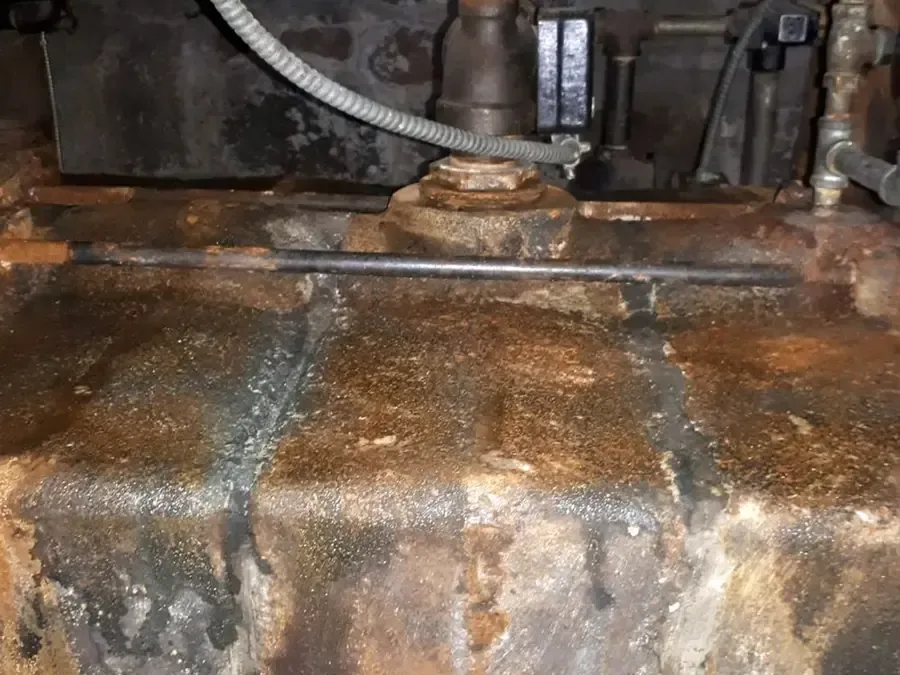
Why the water heater leak cleanup plan follows the water
Rapid local response
The response team dispatches 24/7 for active water and starts with source control, safety and a full moisture boundary.
IICRC S500 drying standard
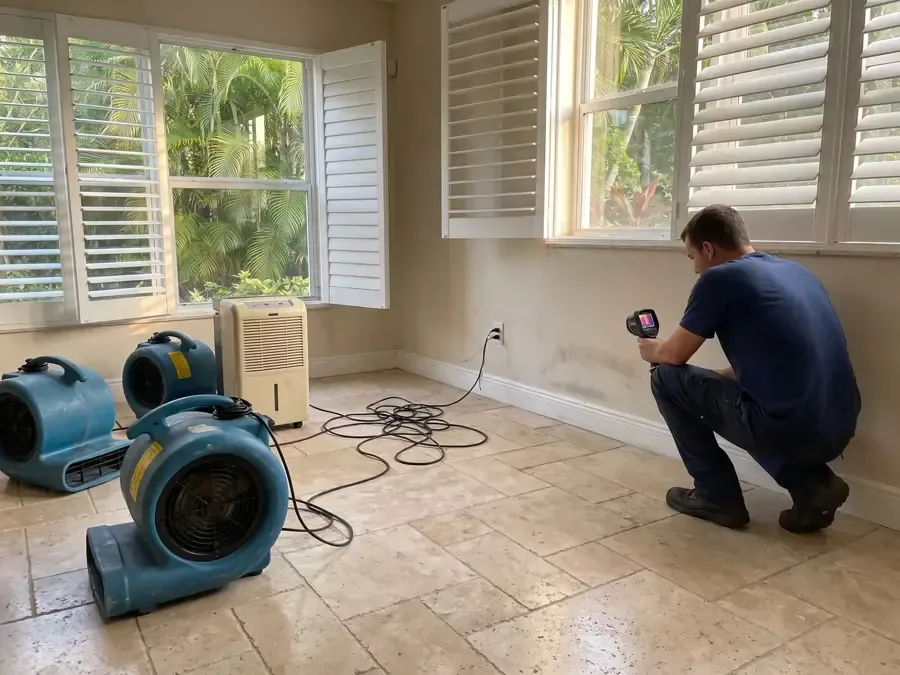
The drying team sets category and class, chooses equipment for the evaporation load and verifies progress with daily readings.
Claim-ready documentation
The record can include the source, room diagram, moisture map, category, class, daily logs and photos before removal.
River Parish water knowledge
The crew plans for tropical rain, storm surge, humid air, supply failures and occasional freezing conditions.
How water heater leak is handled in Luling
Coordinate safe appliance isolation
Plumbing and suitable utility personnel control water, power, or fuel concerns before restoration work around the installation.
Map the covered area
Technicians test the pan, platform, closet floor, wall penetrations, thresholds, and connected finishes beyond the visible release.
Extract and expose damp layers
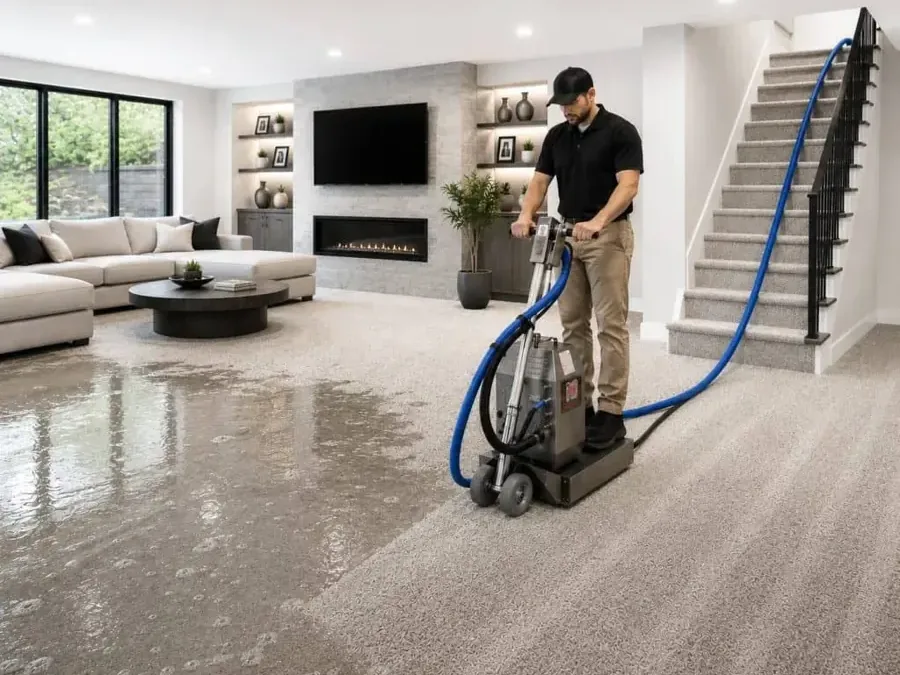
Portable tools recover liquid while narrow access points reveal materials hidden beneath trim, flooring, walls, or the tank base.
Document readiness for return
Final values and photographs show the condition behind and below the unit before installation covers the area again.
First steps for water heater leak cleanup in Luling
Avoid the equipment controls
Do not touch the heater, breaker, disconnect, valve assembly, or fuel components from wet footing. Suitable trades should isolate the installation.
Close water only when reachable
A dry accessible supply valve may stop the release. Do not force a stuck valve, cross water, or move a heavy tank.
Limit spread from secure footing
Absorbent barriers at an open doorway may help when placed safely. Do not reach behind energized equipment or enter an unstable platform area.
Keep failure information
Photograph visible connections, the tank base, pan, and water path when safe. Preserve plumbing and installation documents with the restoration file.
A mechanical closet can hide a much larger loss than its floor area suggests. At a Luling property, water may leave the tank or connection, run beneath the base, and emerge in a neighboring room. Safe isolation comes before movement or moisture testing around the equipment.
What does water heater leak cleanup cost in Luling, LA?
Water heater leak cleanup commonly ranges from $1,300 to $6,800 or more. Tank location, water volume, platform, floor layers, walls, access, extraction, equipment, and monitoring determine scope.
Focused loss
$1,300 to $3,078
- Source isolated
- Accessible utility floor
- Focused extraction and drying
Multi-room loss
$3,078 to $4,760
- Water crossed a threshold
- Platform or wall affected
- Several measured materials
Complex loss
$4,760 to $6,800+
- Difficult footprint access
- Underfloor travel confirmed
- Broader finish openings
Ranges are typical, not a quote: category of water, square footage, material class and how fast drying started move the number most. Run the water damage cost calculator for a closer range.
Giving utility safety and restoration separate roles
Water heaters involve stored water and either electrical or fuel systems. Occupants should not touch controls, cords, breakers, valves, or ignition components from a wet floor. Plumbing and the appropriate utility trade isolate and service the unit before ordinary cleanup access.
No special local heater permit rule is assumed. The actual service report documents whether a tank, valve, connection, drain pan, or another component released water. Restoration records begin with the escaped water and the materials it reached.
- Avoid manipulating controls beside standing water
- Use a supply valve only from secure dry footing
- Keep the repair or replacement findings
- Photograph the tank base before movement
- Leave covered surfaces accessible for inspection
Examining the footprint and neighboring finishes
The assessment checks the pan, platform, closet floor, wall penetrations, and baseboard edges before moving outward. A narrow threshold can allow water beneath a continuous finish. Lower wall sections and a room below are included when gravity or readings indicate a connection.
Each floor layer is treated separately. Tile, plank, sheet material, underlayment, wood, and concrete can show different conditions. Raised bases also require inspection of the platform faces and the space beneath where practical.
- Map outward from every possible release point
- Test both sides of the closet opening
- Inspect pipe and vent penetrations
- Measure platform material apart from the floor
- Follow any downward path into lower construction
Creating drying access in a compact area
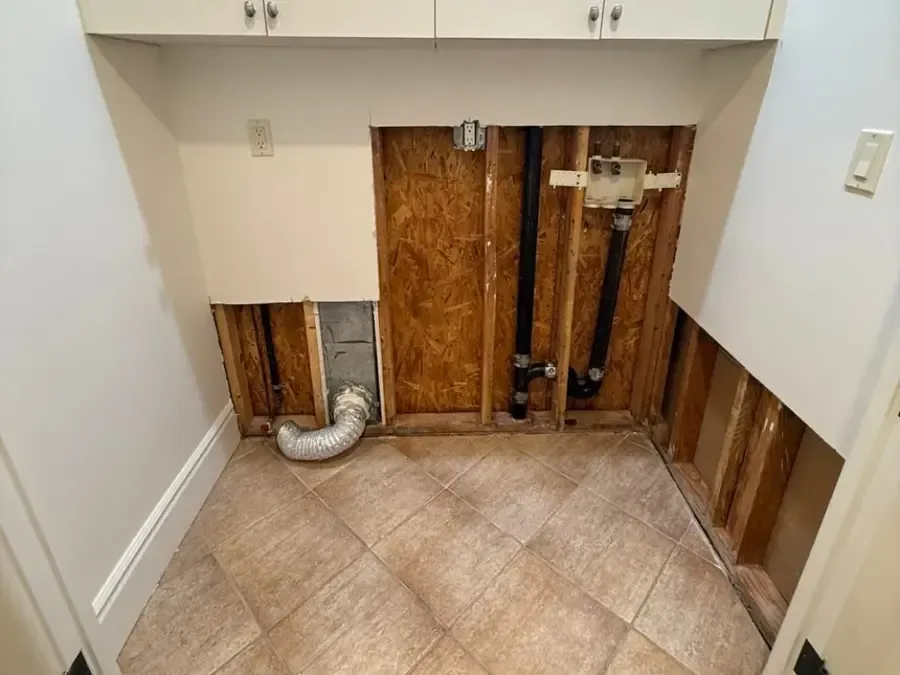
Portable extraction reaches recesses after safe appliance movement. Trim or a limited floor edge may open enough space to inspect the lower layer. Where wallboard or cabinet material has absorbed water, the measured perimeter guides access and protects unaffected finish.
The tank may need to remain out until the space behind it reaches its target. Reinstalling too early would cover the main testing and airflow location. Structural drying assistance records platform, wall, and floor values as equipment is adjusted.
- Recover liquid from recesses and open floor
- Expose barriers at the smallest useful edge
- Aim air at the actual damp face
- Control vapor within the treatment boundary
- Retest the area the new unit will cover
Preparing the heater area for return
Lakewood Elementary School, Airline Highway, and Hale Boggs Memorial Bridge place the service within the community. They do not suggest a local pattern of tank failure. The existing unit and plumbing findings establish the cause for this property.
Water restoration in Luling connects heater cleanup with extraction and floor drying. Before installation, photographs and final values document the wall, platform, pan location, and floor. After the unit returns, plumbing personnel confirm their connections, while restoration notes preserve the earlier structural condition.
Inspecting the boundary after the tank is moved
A tank footprint and its platform can conceal water that was unreachable during the initial pickup. After qualified personnel make the appliance safe and create access, the crew photographs the newly exposed area, checks the pan and connections, and tests each adjoining finish. A dry open floor does not confirm the covered platform, wall base, or threshold. Those components receive their own readings before the installation area is released.
Lakewood Elementary School, Airline Highway, and Hale Boggs Memorial Bridge are useful Luling coverage references, not evidence of how a tank failed. The property file instead connects plumbing findings with extraction volume, platform condition, cabinet or closet contact, and moisture trends. When wallboard or flooring blocks evaporation, the smallest supported opening is used. Final measurements are taken at the original wet points so reinstallation decisions rest on documented material conditions.
The release area is also checked after temporary hoses, pads, and stored items are removed. Newly exposed corners can require focused drying even when the main closet floor has already reached its selected comparison value.
Water heater leak cleanup across Luling and nearby communities
Water heater leak cleanup serves properties near Lakewood Elementary School, Airline Highway, Hale Boggs Memorial Bridge, and ZIP areas 70070, 70057, and 70039, with footprint readings setting work.
The same service nearby: water heater leak cleanup in LaPlace, Destrehan, Norco.
Related water damage services in Luling
Water Heater Leak Cleanup questions in Luling, LA
Water is escaping from the heater area?
Safe utility isolation allows the crew to inspect the heater footprint, threshold, and nearby wall bases.
(888) 417-5665Arrange tank leak restorationWho should disconnect the water heater?
A plumber and the suitable utility trade should isolate and service the equipment. Restoration personnel address escaped water only after the installation is safe. The footprint, platform, wall base, and threshold remain accessible until readings support release.
Can moisture remain beneath a tank base?
Yes. Water can pass through seams, openings, and raised platforms. The covered footprint requires direct testing before repair or replacement closes access. Qualified personnel handle utility isolation and repair while restoration work addresses escaped water.
Does a drain pan prevent all damage?
No. Release rate, pan capacity, drain function, and installation affect performance. Surrounding walls, flooring, and platform materials still need inspection after overflow.
Why inspect the next room?
A continuous floor or opening beneath the threshold can carry water beyond the closet while the visible surface appears limited near the tank.
Can the new unit be installed during drying?
Only when installation will not cover unfinished inspection or block airflow. Plumbing, restoration, and installation work should coordinate around measured progress.
How is the footprint declared dry?
Technicians retest the floor, wall, and platform materials with suitable instruments and compare values with documented goals or compatible unaffected references.
What changes heater leak cleanup cost?
Unit location, released volume, platform construction, floor layers, walls, rooms reached, extraction access, material removal, drying equipment, and monitoring influence scope.
Keep the footprint open until measurements finish
The cleanup team coordinates isolation, extracts the release, inspects the platform and adjacent materials, and documents drying before reinstallation.