Appliance and Supply Hose Leaks in Norco, LA
A washer hose, dishwasher connection, refrigerator supply, or drain can release water where cabinets and machines hide the first signs. Safe access then reveals the footprint, adjoining floor layers, walls, and nearby rooms.
(888) 417-5665Inspect the appliance footprint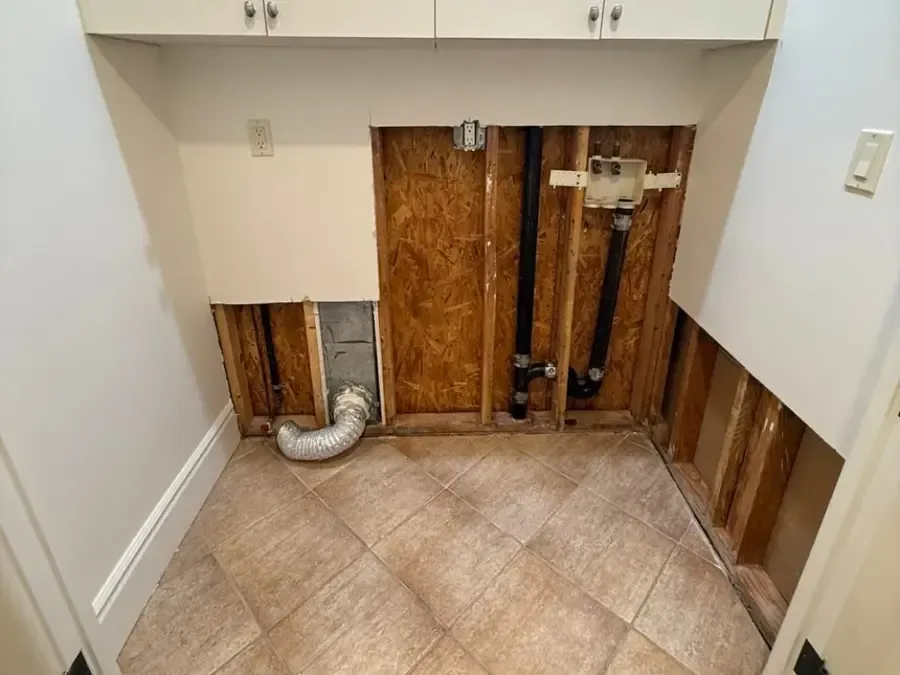
Why the appliance and supply hose leaks plan follows the water
Rapid local response
The response team dispatches 24/7 for active water and starts with source control, safety and a full moisture boundary.
IICRC S500 drying standard
The drying team sets category and class, chooses equipment for the evaporation load and verifies progress with daily readings.
Claim-ready documentation
The record can include the source, room diagram, moisture map, category, class, daily logs and photos before removal.
River Parish water knowledge
The crew plans for tropical rain, storm surge, humid air, supply failures and occasional freezing conditions.
How appliance and supply hose leaks is handled in Norco
Confirm and control the source
Repair findings distinguish a supply hose, valve, drain, fitting, or appliance failure and allow the machine to be moved safely.
Expose the concealed footprint
Technicians inspect behind and beneath the unit, then trace moisture through cabinets, walls, floor seams, and thresholds.
Extract clean or prepare dirty water
Recovery, cleaning, and material decisions reflect whether the release was fresh supply water or used appliance discharge.
Dry before reinstallation
Repeat readings confirm cabinet, wall, and floor targets while the appliance recess remains open and easy to document.
First steps for appliance and supply hose leaks in Norco
Avoid energized equipment
Do not touch plugs, cords, receptacles, or appliance controls while standing on a wet surface. Qualified help should make the machine safe before it moves.
Close a safe water valve
Use a visible appliance or fixture valve only when access is clear. Do not reach behind a heavy machine or cross electrical hazards to stop the release.
Protect the visible evidence
Photograph the water edge, nearby cabinets, flooring changes, and wall stains before moving contents or opening finishes. Save the repair finding.
Do not reinstall too soon
Leave the appliance footprint accessible until the floor, wall, cabinet, and connection area have been inspected, dried, and documented for the final handoff.
Appliance water often becomes visible at the front edge after it has already moved beneath the machine. A washer connection can wet a laundry wall. A dishwasher release can reach cabinet sides. A refrigerator supply can follow a floor seam. In Norco, these examples shape inspection without claiming any appliance fails more often locally. The community service hub connects appliance cleanup with extraction and structural drying.
What does appliance and supply hose leaks cost in Norco, LA?
Appliance and supply hose leak cleanup commonly ranges from $1,000 to $5,800 or more. Machine access, water type, cabinets, flooring layers, adjoining rooms, removal, equipment, and monitoring determine cost.
Focused loss
$1,000 to $2,584
- Safe appliance access
- Small floor footprint
- Fresh supply water
Multi-room loss
$2,584 to $4,059
- Water crossed transitions
- Cabinet materials affected
- Several drying targets
Complex loss
$4,059 to $5,800+
- Used water discharge
- Concealed floor spread
- Finish removal required
Ranges are typical, not a quote: category of water, square footage, material class and how fast drying started move the number most. Run the water damage cost calculator for a closer range.
Control the appliance without entering a wet hazard
A nearby valve may stop a clean supply release when it is safely reachable. Occupants should not pull an energized machine across wet flooring, reach behind it blindly, or operate controls while standing in water. A plumber or appliance professional diagnoses the failed hose, valve, fitting, drain, or machine component.
The restoration record begins before the footprint is exposed. Photographs capture the visible water edge, cabinet changes, base trim, and neighboring finish. Once qualified help makes the appliance safe to move, additional photographs show the wall and floor that had been concealed.
- Use only a safe accessible water control
- Keep clear of wet plugs and receptacles
- Retain the repair professional's source finding
- Photograph before and after appliance movement
- Leave the footprint open for moisture testing
Follow water through cabinets and flooring
Cabinet panels can absorb water at raw edges while coated faces look unchanged. Floating floors may carry liquid below several boards. Tile can conceal damp setting material or underlayment. The technician checks toe spaces, side panels, wall contact points, transition strips, and the adjoining room rather than stopping at the machine outline.
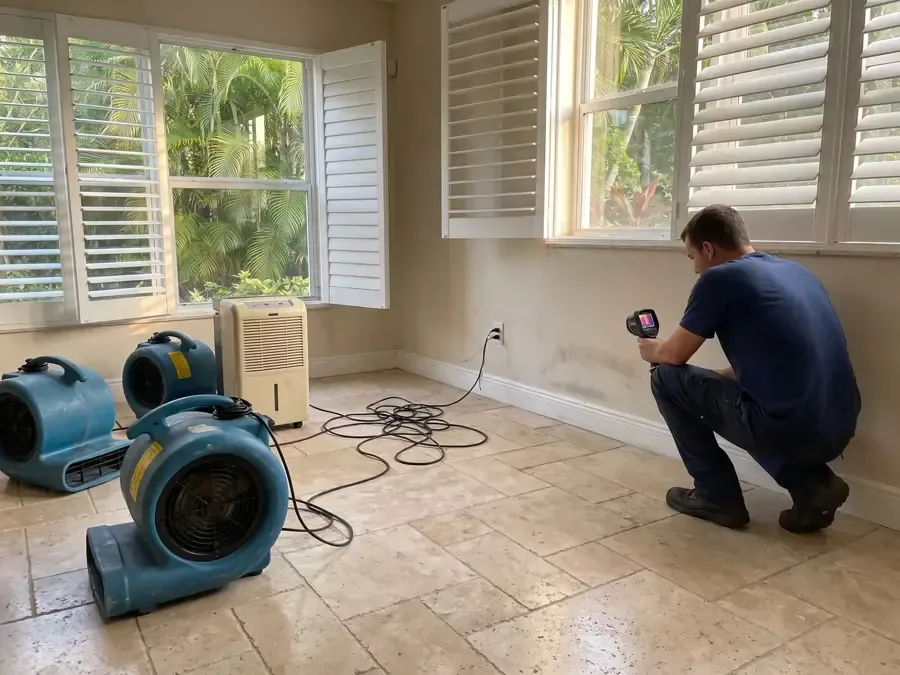
Thermal images can highlight suspect patterns, but meter readings establish the actual boundary. A removable kick plate or threshold may create useful access. When a swollen component or trapped layer cannot be dried in place, selective removal follows the measured area. Sound cabinet sections stay protected.
- Test cabinet bases and unfinished edges
- Inspect floor seams on every side of the machine
- Check shared walls and nearby thresholds
- Compare suspect material with dry references
- Document physical changes separately from moisture
Match the cleanup to the released water
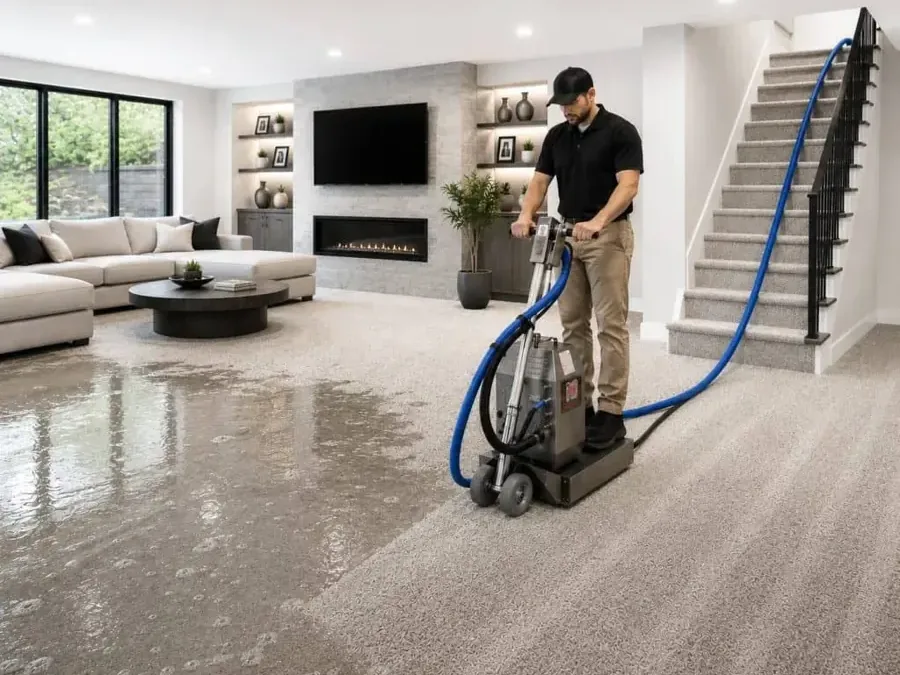
A fresh supply hose release differs from used dishwasher or washer discharge. Time, contact with food residue or laundry soil, and the materials crossed can change cleaning decisions. The crew identifies the likely source and observed conditions before choosing what can stay, what needs cleaning, and what requires removal.
Properties near Diamond, Airline Highway, and Norco Elementary School receive the same source-specific evaluation. Those place names do not imply an appliance pattern. Compact extraction tools recover accessible water. Retained hard surfaces are cleaned as needed before air is directed into the exposed footprint.
- Separate supply water from used discharge
- Keep dirty materials away from clean rooms
- Extract edges and accessible under-appliance areas
- Clean retained contact surfaces before drying
- Record water condition and material decisions
Prove the footprint is ready for the machine
Air movers and dehumidification serve the confirmed damp area after extraction and cleaning. Cabinet bases, wallboard, subfloor, concrete, and finish flooring may respond at different rates. The crew marks monitoring points and changes the equipment arrangement when one concealed layer stops improving.
Reinstallation should wait until the footprint can be photographed and retained materials have recorded completion values. That record combines repair findings, initial conditions, material decisions, equipment notes, and final readings. The main appliance leak service provides more general scope information.
- Direct air into the exposed appliance recess
- Track cabinets and floors as separate targets
- Keep transitions available for repeat testing
- Adjust access when readings plateau
- Document conditions before the machine returns
A final walkthrough also checks trim edges, fasteners, hoses, and the route used to move the appliance. Any remaining stain or cosmetic change is recorded separately from moisture. The owner receives a plain account of what was tested, what remained, and which repair items fall outside water mitigation. Technicians also note whether a threshold, cabinet back, or wall opening remains available for the repair trade, helping later work preserve the verified dry material condition for later finish work.
The final appliance footprint readings remain attached to the room diagram.
Appliance and supply hose leaks across Norco and nearby communities
Appliance leak cleanup covers properties near Diamond, Airline Highway, Norco Elementary School, and the Bonnet Carre Spillway. Machine access and direct readings establish the work boundary.
The same service nearby: appliance and supply hose leaks in LaPlace, Destrehan, Luling.
Related water damage services in Norco
Appliance and Supply Hose Leaks questions in Norco, LA
Water appearing beside an appliance?
Inspection reaches behind the machine and beneath cabinets to find water concealed by fixed finishes.
(888) 417-5665Request a concealed footprint checkShould a leaking appliance be pulled out immediately?
Not if it is energized, heavy, connected, or standing in water. Qualified help should make it safe and disconnect it before the hidden footprint is exposed.
Can a small hose leak wet another room?
Yes. Water can follow a continuous floor layer, cabinet run, or wall edge beyond the visible puddle. Readings across transitions determine the actual boundary.
Is dishwasher water treated like supply water?
Not necessarily. Used discharge may contain food residue and other contamination. Source, contact, time, and material exposure influence cleaning and removal decisions.
Will damaged cabinets be removed?
Only affected components that cannot be cleaned, stabilized, or dried need removal. Toe spaces and small access points may reveal conditions while preserving sound cabinet sections.
How is water beneath flooring found?
Technicians combine visual clues, thermal patterns, direct meter readings, accessible edges, and comparison areas. The finish surface alone cannot verify the layer below.
Who repairs the appliance connection?
A plumber or appliance professional repairs the hose, valve, fitting, drain, or machine. Restoration workers handle escaped water and affected building materials.
When can the appliance return?
After repair is confirmed, its footprint is inspected, retained materials reach recorded targets, and completion photographs capture the formerly concealed wall and floor areas. Connection access, nearby trim, and adjoining finish seams are also checked carefully before the machine returns to position.
See what the machine and cabinets have hidden
The restoration crew coordinates safe access, maps floors and cabinet edges, removes escaped water, and verifies affected materials before careful reinstallation.