Appliance and Supply Hose Leaks in Destrehan, LA
Water from a washer, dishwasher, refrigerator, or supply hose often disappears beneath the appliance before spreading under cabinets and flooring. From initial discovery through verified completion, technicians isolate the source, expose the water path, and monitor each affected material layer.
(888) 417-5665Destrehan appliance leak help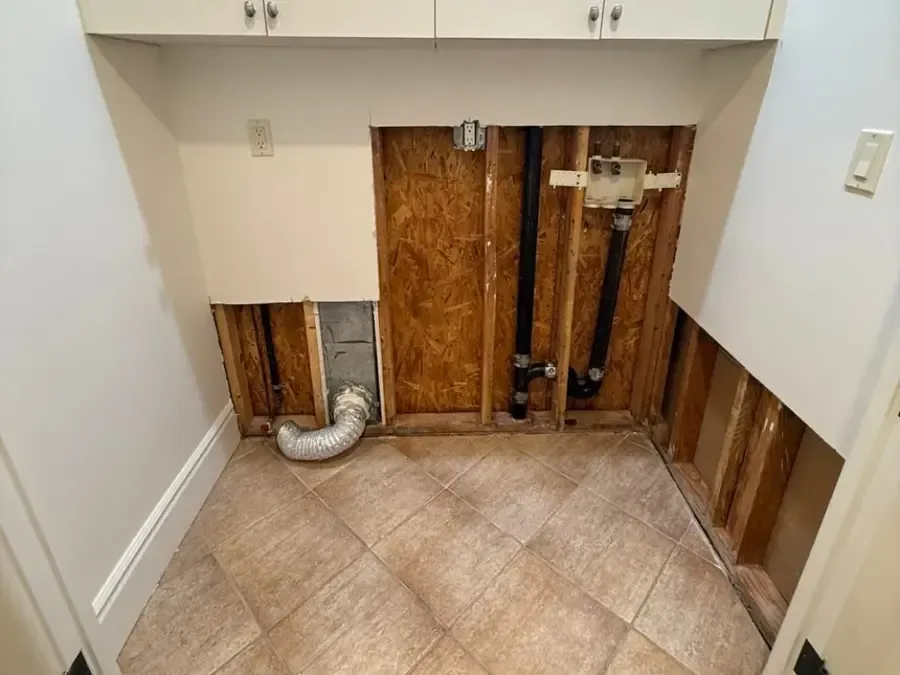
Why the appliance and supply hose leaks plan follows the water
Rapid local response
The response team dispatches 24/7 for active water and starts with source control, safety and a full moisture boundary.
IICRC S500 drying standard
The drying team sets category and class, chooses equipment for the evaporation load and verifies progress with daily readings.
Claim-ready documentation
The record can include the source, room diagram, moisture map, category, class, daily logs and photos before removal.
River Parish water knowledge
The crew plans for tropical rain, storm surge, humid air, supply failures and occasional freezing conditions.
How appliance and supply hose leaks is handled in Destrehan
Make the machine safe to move
Repair personnel isolate utilities and identify the appliance, hose, valve, or drain component involved.
Expose the concealed footprint
The crew inspects beneath the unit, inside toe kicks, behind cabinets, and across nearby floor transitions.
Extract and dry narrow spaces
Compact tools recover water and deliver managed airflow to recesses, subfloor, walls, and casework.
Clear the area for reinstallation
Final material readings and photographs document the hidden surfaces before the appliance returns.
First steps for appliance and supply hose leaks in Destrehan
Stop appliance use
Do not restart a leaking washer, dishwasher, or refrigerator. Repeated cycles can add water beneath floors and cabinets before the cause is repaired.
Avoid wet electrical connections
Leave plugs, junction boxes, and appliance controls alone when water is present. Qualified repair help makes the unit safe to move.
Keep the machine in place initially
Moving a connected appliance can damage hoses or erase useful evidence. Wait until a safe disconnection and protected route are arranged.
Photograph visible escape points
Record water at the front, cabinet edges, wall, and floor transitions before towels or contents obscure the original path.
An appliance leak can stay concealed until water emerges at a cabinet edge or doorway. A washer hose may spray into a wall. A dishwasher can release water beneath casework. Refrigerator connections can drip slowly behind a finished panel. The restoration inspection begins after safe source control and looks under, beside, and beyond the appliance footprint.
What does appliance and supply hose leaks cost in Destrehan, LA?
Appliance leak water damage projects often range from $1,000 to $5,800 or more. Machine access, cabinet involvement, floor layers, water travel, selective openings, extraction, equipment, and monitoring determine the final scope.
Focused loss
$1,000 to $2,584
- Appliance isolated
- Small recess affected
- Limited extraction and drying
Multi-room loss
$2,584 to $4,059
- Water crossed floor seams
- Cabinets or wall wet
- Several moisture targets
Complex loss
$4,059 to $5,800+
- Broad casework involvement
- Finish removal needed
- Concealed floor drying
Ranges are typical, not a quote: category of water, square footage, material class and how fast drying started move the number most. Run the water damage cost calculator for a closer range.
Moving the appliance without losing the evidence
Electrical and plumbing connections should be made safe before an appliance is pulled forward. The repair contractor identifies the failed component. Restoration technicians photograph the initial position, visible staining, supply or drain area, and water trail. Once the machine can be moved, the hidden floor and wall become part of the moisture map.
Appliance leak cleanup covers properties around Great River Road, Airline Highway, Destrehan Plantation, and Ormond Estates. They do not change how a washer box, dishwasher cavity, or refrigerator connection is diagnosed in an individual property.
- Disconnect power and water through qualified repair help
- Photograph the appliance cavity before cleaning changes it
- Test both sides of any wall containing supply connections
- Inspect the floor beneath the full machine footprint
- Follow water toward cabinets and nearby doorways
Checking casework and finished flooring
Cabinets are made of different components. A finished door may remain dry while an absorbent toe kick or box bottom swells. Technicians test side panels, bases, seams, and the wall behind the cabinet. Limited toe kick removal can create access without dismantling unaffected casework.
Floor finishes can also hide separate layers. Water may travel under plank flooring, through a seam beside tile, or into underlayment beneath sheet material. Extraction is selected for the accessible surface, and direct readings determine whether the lower layer is improving. Surface dryness alone does not authorize appliance reinstallation.
- Remove standing water from the appliance recess
- Check toe kicks from more than one accessible side
- Test floor transitions outside the cabinet run
- Document swelling, delamination, and lost adhesion
- Preserve sound dry casework beyond the measured boundary
Creating airflow in narrow appliance spaces
A recessed machine opening and the cavity below a cabinet receive little natural air movement. The crew may remove a base section or use a compact drying attachment to move air through the measured wet space. Dehumidification controls vapor released from flooring, wood, and wall material. Equipment placement protects occupied walkways and electrical cords.
Repeat readings show whether the subfloor, wall, and cabinet components are responding at similar rates. If the floor remains high beneath a dry cabinet face, the plan changes around the concealed layer. Water extraction service explains bulk removal, while structural drying covers moisture remaining after extraction.
- Open only the cabinet or wall sections needed for air exchange
- Direct low profile airflow into recessed wet spaces
- Track the subfloor independently from the finish
- Keep equipment cords outside normal occupant routes
- Verify the cavity before the machine returns
Closing the loop with repair and claim records
The file connects appliance findings with restoration work. It includes repair notes, photographs behind the machine, the room moisture diagram, cabinet condition, flooring layers, extraction details, access created, equipment logs, and final measurements. The repair technician records the failed part and any identifying information visible during inspection, including labels on the damaged connection.
Destrehan lies on the east bank of the Mississippi River and ZIP code 70047 serves the community. The failed connection or appliance component still needs to be identified at the property. The insurer interprets the policy and the cause documentation. Restoration records describe the physical damage and measured work.
A second inspection after the machine is moved can change the scope in either direction. Dry wall and cabinet sections are left alone, while newly exposed moisture is added to the diagram. This staged approach prevents the visible front edge from deciding the work before the full appliance recess is available.
Cabinet hardware and removable panels are labeled before access so dry components can return to their original location. The notes also distinguish work performed for moisture access from appliance repair performed by another contractor. Before reinstallation, the exposed floor and cabinet recesses receive another check so the machine returns to a completed drying area.
Appliance and supply hose leaks across Destrehan and nearby communities
Appliance leak cleanup serves local homes and businesses near Great River Road, Airline Highway, local Plantation, Ormond Estates, and Murray Hill Drive. Hidden appliance spaces receive separate completion measurements.
The same service nearby: appliance and supply hose leaks in LaPlace, Norco, Luling.
Related water damage services in Destrehan
Appliance and Supply Hose Leaks questions in Destrehan, LA
Water is appearing beside an appliance?
Inspection reaches behind the machine and beneath cabinets to find water concealed by fixed finishes.
(888) 417-5665Request concealed leak cleanupShould a leaking appliance be run again for testing?
No. Another cycle can release more water. A repair professional can test the component safely after the surrounding electrical and water conditions are controlled. Repair findings should be saved with the moisture record.
Can water travel beneath kitchen cabinets?
Yes. Water can pass under toe kicks and cabinet bases before appearing at an exposed edge. Measurements from several access points reveal the actual extent. Cabinet backs and the adjoining wall are included when accessible.
Does a wet cabinet always need replacement?
No. Component type, swelling, delamination, contamination, access, and drying response matter. A finished face and an absorbent box base can receive different decisions.
How is the floor beneath a washer checked?
After safe disconnection and movement, technicians inspect the machine footprint, wall connection, floor seams, transitions, and subfloor access points with moisture instruments.
Can the appliance return before drying ends?
Reinstallation should wait until required repairs are complete and the concealed floor, wall, and cabinet spaces meet their material goals. Early replacement can block access.
What should the loss file contain?
Keep repair findings, initial and hidden area photographs, moisture measurements, cabinet and floor decisions, extraction notes, equipment records, final readings, and invoices together.
What affects appliance leak cleanup cost?
Appliance access, water volume, casework, floor construction, affected rooms, material removal, compact drying attachments, dehumidification, and monitoring determine the restoration work.
Check beneath the machine before the surface hides the loss
Technicians coordinate safe appliance access, map cabinets and floor layers, extract water, and verify the hidden footprint before reinstallation.