Sewage Backup Cleanup in Luling, LA
Sewage changes the order of restoration. Occupants stay outside the affected zone while liquid, solids, and unsuitable porous materials are removed before cleaned structural surfaces enter a drying plan. Barriers and debris routes keep unaffected rooms separated.
(888) 417-5665Luling sewage cleanup help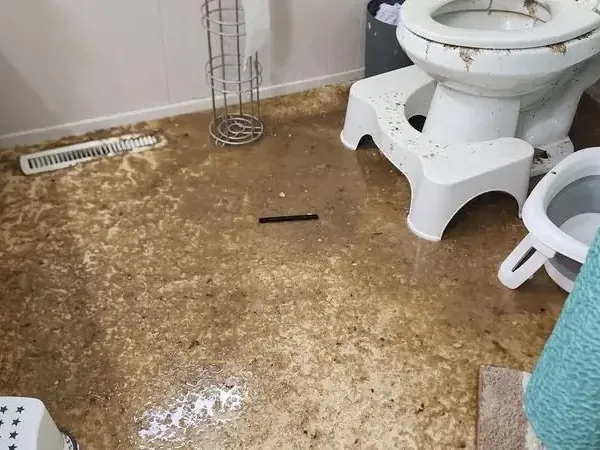
Why the sewage backup cleanup plan follows the water
Rapid local response
The response team dispatches 24/7 for active water and starts with source control, safety and a full moisture boundary.
IICRC S500 drying standard
The drying team sets category and class, chooses equipment for the evaporation load and verifies progress with daily readings.
Claim-ready documentation
The record can include the source, room diagram, moisture map, category, class, daily logs and photos before removal.
River Parish water knowledge
The crew plans for tropical rain, storm surge, humid air, supply failures and occasional freezing conditions.
How sewage backup is handled in Luling
Restrict access and map contact
The response team marks liquid, splash, porous contents, travel paths, and clean staging before routine movement begins.
Remove sewage and unsuitable materials
Liquid, solids, and affected absorbent products are collected and contained without carrying exposed debris through clean rooms.
Physically clean retained surfaces
Accessible framing, hard finishes, joints, edges, and penetrations receive detailed cleaning before normal evaporation airflow starts.
Dry prepared construction
Direct material values instructions air movement, dehumidification, monitoring, and completion decisions inside the separated treatment area.
First steps for sewage backup cleanup in Luling
Keep everyone outside the area
Close doors when practical and prevent children, pets, and unprotected occupants from crossing wastewater, splash, or affected debris.
Avoid household cleanup equipment
Do not use an ordinary vacuum, mop, fan, or shop tool in sewage. Those items can spread contamination beyond the starting room.
Stop plumbing use when related
Pause fixtures that may feed the backup and arrange drain assessment. Do not touch sewage to reach a valve or other control.
Record from a clean location
Photograph the visible boundary, fixture, and contacted materials only from safe footing. Leave saturated belongings and porous debris in place for containment.
Sewage cleanup begins by stopping movement through the property. In Luling, the crew identifies every floor edge, wall contact, cabinet recess, and content touched by the backup, then builds a protected route for workers, tools, and debris that avoids unaffected rooms.
What does sewage backup cleanup cost in Luling, LA?
Sewage backup cleanup usually ranges from $2,200 to $12,000 or more. Affected area, contamination, porous materials, contents, access, cleaning, demolition, drying equipment, and monitoring determine scope.
Focused loss
$2,200 to $5,396
- One controlled room
- Accessible hard surfaces
- Limited porous removal
Multi-room loss
$5,396 to $8,400
- Contamination crossed thresholds
- Cabinets or walls involved
- Expanded cleaning zone
Complex loss
$8,400 to $12,000+
- Broad material contact
- Difficult contents handling
- Multiple controlled areas
Ranges are typical, not a quote: category of water, square footage, material class and how fast drying started move the number most. Run the water damage cost calculator for a closer range.
Keeping the contamination boundary understandable
A fixture or drain may show where sewage entered, but the work zone follows splash and liquid travel. Doorways, baseboards, floor joints, and porous contents are checked beyond the obvious deposit. Children, pets, and unprotected occupants remain away until removal, cleaning, and drying phases are finished.
St. Charles Parish handles drainage and wastewater issues; a plumber should establish which part of the system caused the current backup and who is responsible for its repair. Plumbing findings for the current property document the source. Restoration notes describe where contamination spread and which materials contacted it.
- Close routine access to affected rooms
- Mark the furthest liquid and splash points
- Cover clean travel surfaces along the work route
- Keep dedicated tools inside the controlled area
- Photograph fixtures and finishes before removal
Removing absorbent materials that cannot be verified clean
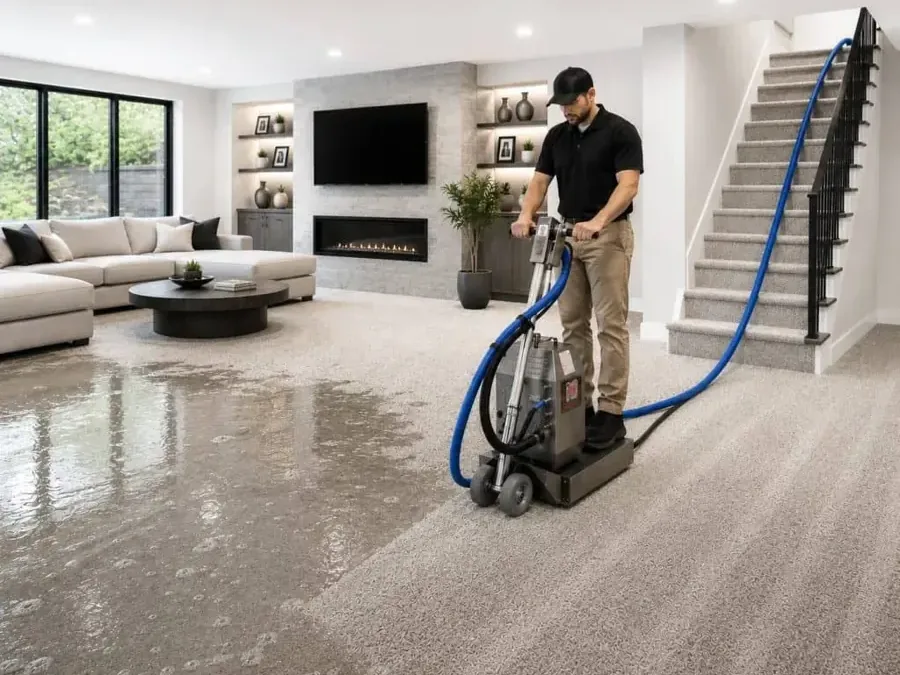
Liquid and solids are collected using equipment suited to contaminated work. Carpet pad, insulation, and other porous products may hold soil beyond reachable surfaces. Material type, contact, physical condition, and cleaning access direction removal rather than a blanket decision about everything in the room.
Wallboard and composite cabinets are examined at their cut edges, bases, and internal seams. A stable cut exposes affected cavities while keeping dry construction intact. Removed pieces are contained before passing through the property, reducing the chance that debris touches clean flooring or contents.
- Collect solids before detailed surface cleaning
- Bag porous debris where it is removed
- Separate cleanable hard finishes from hidden substrates
- Inspect cabinet parts as individual components
- Keep disposal and material notes with photographs
Cleaning first, then managing structural moisture
Ordinary drying airflow does not begin across soiled surfaces. Physical cleaning reaches exposed framing, concrete, hard flooring, fastener pockets, joints, and penetrations after gross removal. The crew inspects those details again because residue can remain where broad wiping misses.
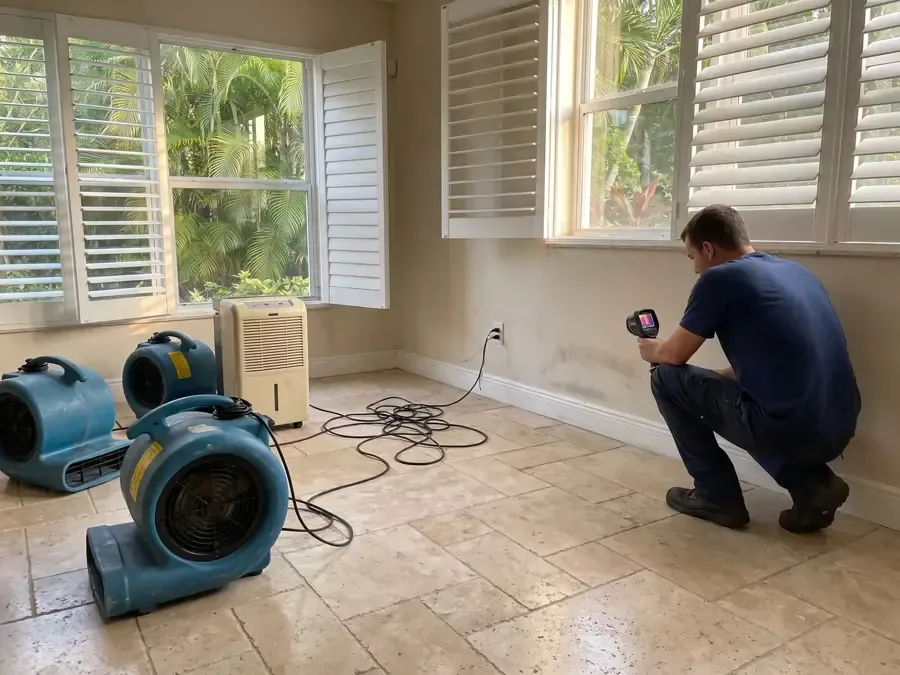
Once retained construction is prepared, direct meters determine what is still damp. Air movement supports evaporation from accessible faces, while dehumidification removes released vapor inside the controlled zone. Main area sewage cleanup explains the broader service sequence.
- Complete gross removal before detailed cleaning
- Inspect corners and texture after each cleaning pass
- Start airflow only in prepared areas
- Measure concrete and wood with suitable methods
- Maintain separation from occupied dry space
Creating an orderly project record
Service reaches the area around Lakewood Elementary School, Airline Highway, and the Mississippi River. During a backup, the plumber identifies the drain problem while restoration technicians trace wastewater contact through the room. The property file keeps the repair findings beside the contamination map so cleanup and repair can be coordinated.
Water damage services in Luling connect sewage work with later structural drying. Initial conditions, removed materials, contents decisions, cleaning steps, equipment changes, and final moisture values are recorded in sequence. That chronology explains the physical work while the insurer decides how policy terms apply.
Confirming that the cleaned boundary remains stable
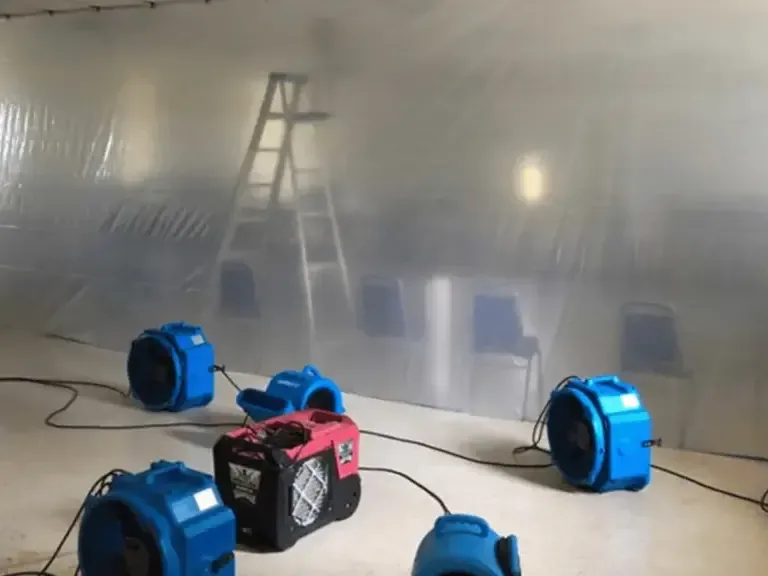
After wastewater and discarded porous materials leave the controlled area, the cleanup crew inspects edges that meet unaffected rooms. Door thresholds, cabinet ends, wall bases, and utility penetrations receive close attention because small deposits can be missed where surfaces change. If contamination is found beyond the original barrier, containment and cleaning expand before drying equipment is repositioned. Clean equipment never crosses that boundary without the required handling.
St. Charles Parish handles drainage and wastewater issues, while a private building event still requires its own source findings. Lakewood Elementary School, Airline Highway, and the Mississippi River locate the Luling service area without implying a recurring backup pattern. Project records identify the rooms restricted, materials removed, hard surfaces physically cleaned, waste path used, and moisture points monitored after preparation. Those observations, not general utility context, define the completed scope.
Final photographs show cleaned retained surfaces before drying equipment changes the prepared work area.
Sewage backup cleanup across Luling and nearby communities
Sewage cleanup covers locations near Lakewood Elementary School, Airline Highway, the Mississippi River, and ZIP areas 70070, 70057, and 70039, with contact evidence defining control zones.
The same service nearby: sewage backup cleanup in LaPlace, Destrehan, Norco.
Related water damage services in Luling
Sewage Backup Cleanup questions in Luling, LA
Sewage has crossed an occupied floor?
The affected area is isolated before wastewater, contaminated materials, and debris are removed.
(888) 417-5665Arrange controlled contamination cleanupWhy must occupants avoid sewage?
Sewage may contain harmful microorganisms and other contaminants. Unprotected contact or foot traffic can extend the affected boundary into otherwise clean rooms and contents. The debris route and tool handling plan should also keep unaffected rooms outside the controlled zone.
Can carpet remain after sewage contact?
Absorbent carpet and pad can retain contamination below the visible face. Contact, material construction, condition, cleaning access, and local project requirements instructions the disposal decision. Drying begins after reachable retained surfaces have been physically cleaned and prepared.
Is extraction alone sufficient?
No. Liquid and solids are removed first, but contaminated surfaces still require physical cleaning. Retained structural materials then enter a separate measured drying phase.
How are wall cavities handled?
Testing and contact evidence define access. A controlled opening can remove affected insulation, expose framing for cleaning, and preserve dry wall sections beyond the confirmed boundary.
Can air movers start immediately?
High velocity airflow waits until gross debris is gone and the affected retained surfaces are cleaned. Early movement could distribute contaminants from unprepared material.
What records support the project?
Photographs, source reports, room diagrams, material decisions, contents notes, cleaning steps, disposal information, equipment dates, and final measurements explain the completed work.
What affects sewage cleanup cost?
Rooms reached, liquid and solid volume, porous contact, cabinetry, walls, access, containment, debris handling, detailed cleaning, drying equipment, and monitoring influence the total.
Keep affected and clean areas separated
Cleanup specialists remove wastewater and unsuitable materials, clean reachable construction, and begin measured drying only after the zone is prepared.