Commercial Water Damage in Luling, LA
A release can disrupt entrances, equipment, inventory, records, and occupied areas at once. The response divides the building by hazard, use, moisture, and access so each phase remains understandable. Controlled routes protect unaffected functions while wet zones are measured and restored.
(888) 417-5665Request commercial help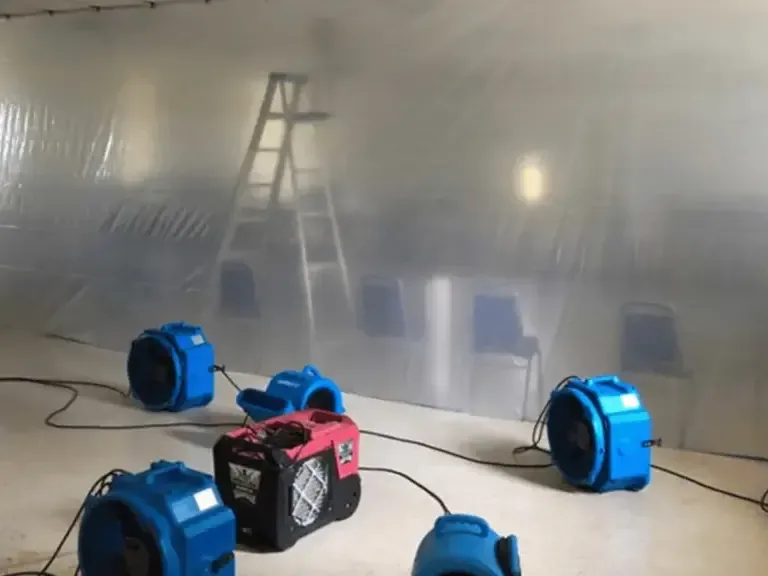
Why the commercial water damage plan follows the water
Rapid local response
The response team dispatches 24/7 for active water and starts with source control, safety and a full moisture boundary.
IICRC S500 drying standard
The drying team sets category and class, chooses equipment for the evaporation load and verifies progress with daily readings.
Claim-ready documentation
The record can include the source, room diagram, moisture map, category, class, daily logs and photos before removal.
River Parish water knowledge
The crew plans for tropical rain, storm surge, humid air, supply failures and occasional freezing conditions.
How commercial is handled in Luling
Create the facility zone map
Management priorities, hazards, security, uses, contents, clean routes, utilities, and source status are recorded by functional area.
Extract and protect operations
Water is removed through controlled routes while inventory, records, furnishings, and specialist equipment receive documented handling decisions.
Prepare retained construction
Cleaning, contamination controls, and measured openings expose walls, floors, ceilings, and casework for effective structural drying.
Report material and access status
Repeat readings, equipment changes, completed tasks, restrictions, trade dependencies, and next actions are organized separately for each zone.
First steps for commercial water damage in Luling
Restrict unsafe public access
Use established emergency procedures to separate occupants from wet electricity, unstable finishes, sewage, slippery floors, and active equipment routes.
Designate one site representative
Choose a contact able to provide access, identify critical operations, approve contents movement, coordinate vendors, and receive daily work zone changes.
Preserve facility records
From safe areas, gather source reports, incident timing, photographs, inventory information, maintenance documents, and specialist contacts for affected equipment.
Separate work and operating traffic
Route staff, customers, deliveries, and clean contents away from extraction, debris handling, containment, hoses, and cords until access status changes.
A commercial water event can affect people, assets, building systems, and business access simultaneously. At a Luling facility, the response begins with a site contact and a working map that separates unsafe, wet, drying, protected, and potentially usable areas.
What does commercial water damage cost in Luling, LA?
Commercial water restoration commonly ranges from $3,000 to $18,000 or more. Area, water category, operations, contents, finishes, access, containment, equipment, utilities, and reporting needs determine scope. Material access and containment needs can also change the work.
Focused loss
$3,000 to $7,980
- Source area isolated
- Accessible finishes affected
- Limited contents movement
Multi-room loss
$7,980 to $12,600
- Several functions disrupted
- Inventory handling required
- Expanded extraction and drying
Complex loss
$12,600 to $18,000+
- Broad contaminated impact
- Special access coordination
- Extensive equipment and records
Ranges are typical, not a quote: category of water, square footage, material class and how fast drying started move the number most. Run the water damage cost calculator for a closer range.
Establishing priorities before active mitigation
Management identifies critical operations, security restrictions, sensitive contents, utility concerns, and approved access. Emergency officials and qualified trades address conditions outside restoration authority. One designated property representative receives scope changes and coordinates keys, vendors, and occupant communication.
Lakewood Elementary School and Hale Boggs Memorial Bridge provide local context but reveal nothing about a facility's construction or risk. The walkthrough records public areas, storage, offices, utility spaces, production needs, and clean routes as separate operational zones.
- Name a property contact with access authority
- Mark hazards and emergency routes clearly
- Identify equipment requiring specialist vendors
- Protect dry storage before extraction traffic
- Separate staff movement from hoses and cords
Removing water while preserving assets and access
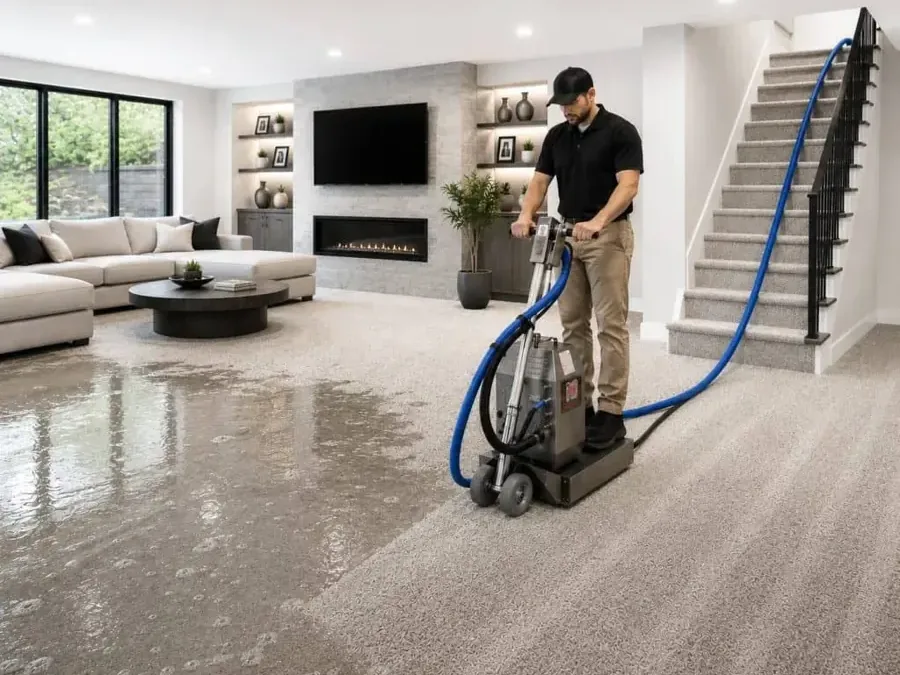
Once source and electrical conditions are safe, extraction starts where water threatens additional finishes or blocks important circulation. Broad surface tools and portable equipment serve different zones. Barriers, protective runners, and planned hose routes keep the active work footprint visible.
Inventory, furniture, records, and equipment are photographed before movement. Identifiers connect each item with its original area and current location. Dry goods move to protected storage, while wet hard and porous contents receive separate cleaning or disposition decisions based on contact and condition.
- Clear active thresholds before interior zones
- Preserve origin data for moved contents
- Keep unaffected inventory outside humid treatment areas
- Coordinate secure access around operating hours
- Contain debris before it crosses clean routes
Matching drying plans to commercial assemblies
Concrete, resilient finish, wood casework, gypsum partitions, insulation, and ceiling systems dry differently. The moisture map lists material and location for each zone. Limited openings expose concealed dampness while dry functioning areas remain protected where safety and management allow.
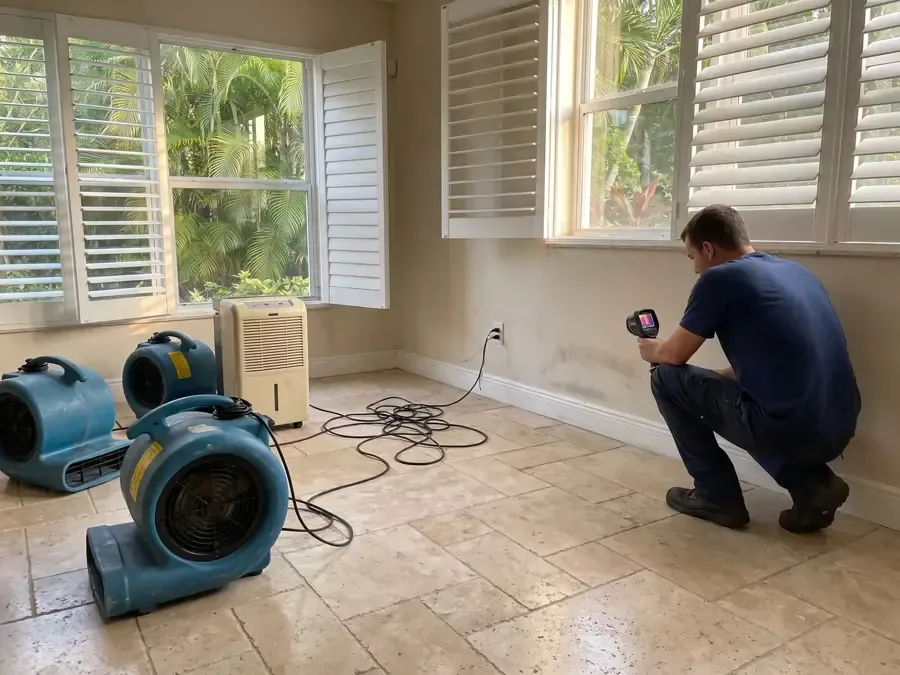
Existing environmental and fire protection systems cannot be altered casually. Restoration equipment placement is coordinated with building needs and electrical capacity. Structural drying service follows measurements, reducing or moving equipment as individual areas reach goal.
- Test partitions from both accessible sides
- Measure floor layers below surface finishes
- Track protected and active zone humidity separately
- Keep temporary barriers compatible with building use
- Refer specialized machinery to its appropriate vendor
Reporting progress for each functional area
Airline Highway, the Mississippi River, and St. Charles Parish Waterworks further establish the coverage area, without describing a particular building loss. The project record remains organized by zone, material, contents activity, and access status.
Commercial restoration in Luling connects extraction, sewage response, and drying services. Daily reports can list completed work, current values, equipment changes, source status, trade dependencies, and the next activity. The insurer interprets policy coverage, while management decides operations using current safety and access information.
Planning transitions between work and occupied zones
A commercial loss often has doorways, delivery paths, shared utilities, and equipment that cannot all be treated alike. The response team marks a clean route, a controlled work route, storage locations, and any temporarily restricted area before extraction begins. As conditions improve, a zone returns to use only after its hazards, material moisture, and access needs are checked. Opening one area does not automatically release an adjoining section.
Airline Highway, Lakewood Elementary School, Hale Boggs Memorial Bridge, and the Mississippi River provide verified Luling location context. St. Charles Parish Waterworks provides public utility context, but the building record establishes the present source and affected operations. Area logs connect photographs, contents movement, surface cleaning, equipment placement, daily readings, and completion decisions to specific functional spaces. That structure helps managers coordinate trades and occupants without blending unrelated conditions into one broad status statement.
Shift changes can alter access to a work zone, so the current barrier and equipment layout are communicated before occupants return. Sensitive stock and movable equipment remain in documented holding locations until their original areas are dry, clean, and released for normal use.
Final zone readings are recorded again before barriers move.
Commercial water damage across Luling and nearby communities
Commercial water restoration covers facilities near Lakewood Elementary School, Hale Boggs Memorial Bridge, the Mississippi River, and ZIP areas 70070, 70057, and 70039, with operations shaping priorities.
The same service nearby: commercial water damage in LaPlace, Destrehan, Norco.
Related water damage services in Luling
Commercial Water Damage questions in Luling, LA
Water has disrupted a commercial operation?
The work plan separates occupied areas, equipment routes, and wet zones so each stage can be coordinated.
(888) 417-5665Arrange commercial water restorationCan part of a facility stay in use?
Possibly, when management and appropriate authorities find a separated zone safe. Egress, power, contamination, noise, security, occupants, and equipment routes must be considered. Separate zone records help managers understand which functions remain restricted and which can safely resume.
How are contents tracked after movement?
Each item or group is connected with its original zone, material, water contact, condition, destination, and cleaning or disposition decision. Contents, utilities, shared routes, and operating schedules are coordinated with the measured restoration boundary.
Who evaluates wet specialized equipment?
Restoration personnel document surrounding water and protect access, while qualified equipment vendors address isolation, internal condition, repair, and return to operation.
How is sewage separated in a business?
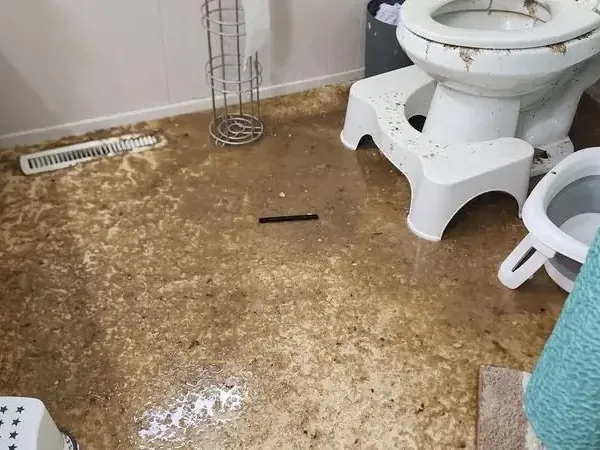
Affected access is restricted, clean routes are protected, unsuitable porous materials are removed, and physical cleaning occurs before normal structural drying begins.
Can restoration machines use existing power?
Electrical capacity, circuit condition, equipment load, operating needs, and placement require evaluation by property management and qualified electrical personnel.
What belongs in a commercial status report?
Source condition, access changes, zone work, contents activity, material values, equipment placement, safety issues, dependencies, and planned next steps support clear coordination.
What affects commercial restoration cost?
Water category, area, operating constraints, security, contents, specialized equipment, materials, cleaning, demolition, power, drying capacity, monitoring, and reporting all shape scope.
Organize safe work around critical functions
While coordinating with ongoing operations, the response team maps hazards, protects contents, removes water through controlled routes, and reports drying progress for every affected zone.