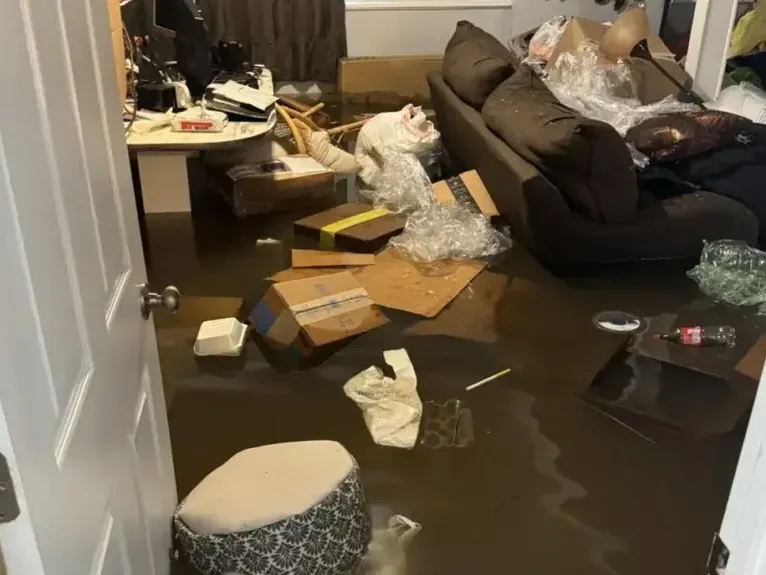
Storm water changes a building quickly. The safest response preserves people, separates contaminated areas, and records the water path before removal changes the evidence.
Key takeaways
- Stay outside rooms with wet electrical components, unstable ceilings, moving water, or uncertain flooring.
- Treat water that crossed exterior soil, paving, drains, or debris as potentially contaminated until the path is assessed.
- Photograph entry points, high water marks, affected rooms, and contents from safe footing before cleanup alters them.
- Remove liquid and sediment before detailed cleaning, then dry only the retained surfaces that have been properly prepared.
- Use direct material readings to track walls, floors, wood, concrete, and cabinets rather than judging completion by appearance.
Why storm entry requires a different first decision
A plumbing release starts inside a controlled supply system, while storm water may cross roofs, walls, soil, drainage routes, and exterior debris before reaching a room. That history changes the contamination assessment and the way porous materials are handled.
The storm and flood cleanup service begins with the entry route and every surface contacted along the way.
LaPlace has documented experience with severe water events. Hurricane Isaac produced devastating flooding, and more than 7,000 homes in the area were affected by storm surge from Lake Pontchartrain.
Hurricane Ida badly damaged the community in August 2021, with reports of homes filling with water. Those events explain why preparation matters, but each current property still needs its own evidence.
- Keep people and pets outside the affected rooms.
- Do not assume clear water is clean water.
- Preserve exterior and interior entry evidence.
- Wait for qualified help when electricity or structure is uncertain.
Make safe access the first working boundary
Standing water can hide loose flooring, sharp debris, displaced furniture, and openings in the walking surface. Water near outlets, appliances, electrical panels, or ceiling fixtures adds another hazard.
Occupants should observe from a dry location and avoid operating switches or carrying powered equipment through the wet area.
Sagging ceiling board, bowed walls, and loose insulation require distance. Storm entry can affect the roof assembly and the room below at the same time.
Emergency officials, roofing personnel, electricians, or other qualified trades may need to establish safe conditions before a restoration team can begin routine removal.
- Close access to unstable or electrically affected rooms.
- Use an existing safe exit rather than crossing water.
- Move only light dry belongings that are reachable without exposure.
- Leave wet heavy or trapped contents for controlled handling.
Document how water entered and where it traveled
Photographs taken from secure footing should show the exterior opening when visible, the interior water edge, stains, sediment, affected contents, and transitions into neighboring rooms. A broad room image establishes context, while closer images preserve material conditions.
The record should distinguish what was observed from what remains uncertain.
The Mississippi River makes a pronounced turn near LaPlace. The West Shore Lake Pontchartrain Hurricane Risk Reduction project includes earthen levees, floodwalls, floodgates, drainage structures, and pump stations.
After storm water enters a home, photographs of doors, wall openings, ceilings, and floor edges help the crew trace its route. The restoration record connects those entry points with the rooms and materials that need cleanup.
- Capture water marks before pumping lowers them.
- Photograph floor seams and doorway crossings.
- Save repair reports and relevant weather information.
- List contents moved from their original locations.
Remove water and sediment before ordinary drying
Pumping and extraction recover liquid after access and disposal conditions are set. The crew works from deeper areas toward margins and revisits recesses as levels fall.
Sediment and loose debris are collected instead of being dried onto the finish, because physical cleaning cannot be skipped by adding airflow.
Carpet pad, insulation, and other absorbent products that contacted exterior water need conservative evaluation. Some materials cannot be cleaned through their full thickness.
The water extraction process handles movable liquid, while selective removal provides access to hidden deposits and wet structural surfaces.
- Track the water level while removal proceeds.
- Collect visible soil before cleaning fine details.
- Contain porous debris inside the affected zone.
- Protect dry rooms from hoses wheels and waste bags.
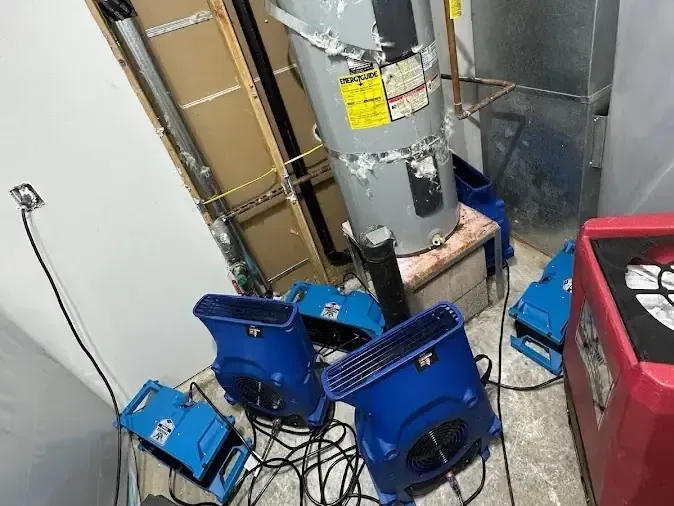
Clean retained construction before controlling moisture
Hard surfaces and exposed framing require physical cleaning appropriate to the observed contact. Joints, fastener pockets, textured areas, and penetrations deserve a second look after gross debris is gone.
Air movers should not distribute residue from material that has not completed this preparation stage.
Once the retained assembly is clean, directed air supports evaporation and dehumidifiers collect the vapor released. Temporary barriers can help maintain a stable treatment area when outside humidity changes.
Structural drying and dehumidification follows direct values from each material and adjusts access when a section stops improving.
- Separate cleaning records from later moisture readings.
- Measure wood concrete gypsum and flooring independently.
- Investigate readings that rise after rainfall.
- Reduce equipment only as completed materials permit.
Close the loss with measurements and organized records
A room can look normal while underlayment, wall backs, cabinet bases, or framing remain damp. Technicians return to labeled locations and compare values with suitable dry references or selected targets.
Appearance, touch, and room comfort cannot confirm concealed completion.
The final file should connect entry repairs, initial photographs, water and sediment removal, material decisions, cleaning, contents activity, equipment changes, and finish readings. Insurers decide how policy language applies.
The restoration record explains the building conditions that were observed and the physical work that followed.
Watch for renewed entry during the work
A storm loss can change after the first extraction pass. Water trapped in a wall may drain onto a cleared floor, or later rainfall may reveal that an exterior opening remains active.
The crew should revisit the original entry points and compare new marks with the first photographs before interpreting a rising reading as slow drying.
When fresh water appears, source correction takes priority over increasing drying equipment. The time, location, weather condition, and affected materials are added to the record.
Once the entry remains stable, later measurements can reflect the response of retained construction rather than a continuing release.
- Recheck thresholds and wall openings after extraction.
- Record any new mark before wiping it away.
- Pause finish closure while source control is uncertain.
- Connect later readings with the weather and repair timeline.
Questions
Is storm water inside a home considered clean?
No assumption should be made. Water that crossed outdoor surfaces may carry soil, drainage contaminants, chemicals, and debris. The observed route and material contact determine precautions.
Can carpet remain after exterior water entry?
Water category, sediment, duration, backing, pad, floor below, physical condition, and cleaning access all matter. Contaminated absorbent layers often require removal because hidden soil cannot be verified away.
When can air movers begin?
Ordinary high velocity airflow starts after gross debris is removed and retained affected surfaces are physically cleaned. Earlier use could spread contamination to cavities or cleaner rooms.
How is structural drying completion proven?
Direct readings are repeated at consistent material locations and compared with suitable drying goals. Technicians also test accessible concealed layers, recording the final values before equipment is removed.
What records should a property owner keep?
Useful items include weather and repair information, photographs, room diagrams, contents notes, material decisions, cleaning records, equipment dates, final readings, invoices, and insurer communication.