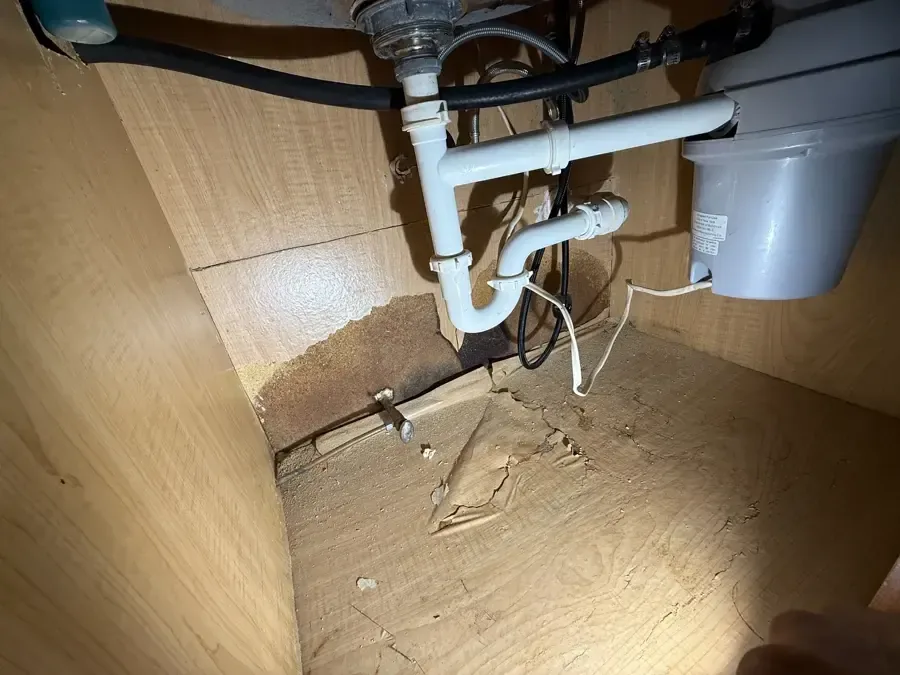
Cold weather preparation and post break restoration solve different problems. One reduces exposure, while the other follows released water through the building after repair.
Key takeaways
- Disconnect and drain outdoor hoses before freezing weather, then protect exposed pipe and faucets in unheated areas.
- Seal access doors and cracks that admit cold air near plumbing, especially around garages and crawl spaces.
- Know the master water shutoff location before severe weather and use it only when the approach is safe.
- Have plumbing personnel identify and repair the failed component before cavities and finishes are closed.
- Map spray, gravity, and absorption routes because the visible break may be only the start of the wet area.
Prepare exposed plumbing before temperatures fall
Regional utility advice says freezing temperatures can make water pipes more likely to crack or burst. Recommended preparation includes disconnecting and draining outdoor hoses, insulating pipe and faucets in exposed or unheated locations, and sealing cold air access near plumbing.
These tasks reduce exposure without promising that a failure cannot occur.
Garages and crawl spaces are specifically identified as places where exposed pipe may need insulation. Listed heat tape or heat cable should be used only according to its instructions.
Knowing the master shutoff location before weather arrives can prevent a search through a wet or dark building later.
- Drain hoses and disconnect them from outdoor faucets.
- Insulate vulnerable pipe in unheated spaces.
- Close cracks and access doors near plumbing.
- Locate the master water shutoff in advance.
Prepare exposed plumbing before a winter freeze
South Louisiana prepared for freezing temperatures and snow in January 2025. The forecast called for 4 to 6 inches of snow, and officials urged residents to protect pipes and plan for possible power loss.
That regional event supports preparation, but it cannot diagnose a current broken pipe.
A plumber must identify the damaged component and explain the repair. The restoration team begins from that evidence and records where water traveled.
Burst pipe restoration in Luling does not assume pipe age, material defect, or a recurring private failure pattern.
- Keep the plumber finding with the loss file.
- Record when water was first observed.
- Avoid guessing why the component failed.
- Separate weather context from building evidence.
Act safely when a pipe releases water
A shutoff should be used only when it can be reached without crossing water near electricity, unstable ceilings, or slippery damaged flooring. Occupants should not manipulate wet appliances, panels, lights, or cords.
Qualified electrical help may be needed before routine access.
Pressure can spray walls and contents, gravity can carry water downward, and porous materials can wick it outward. Photographs taken from safe footing should show the break area, visible water edge, ceiling or wall changes, and rooms below before extraction alters the scene.
- Keep away from wet power and overhead damage.
- Close water from a safe dry approach.
- Move only reachable dry contents.
- Preserve the failed component information.
Follow all routes beyond the repaired section
The repaired pipe is a starting point, not the entire boundary. Testing extends beside and below it through insulation, framing, wallboard, flooring, cabinets, and connected cavities.
A small mark in a lower room can represent a longer hidden gravity path.
The Luling restoration hub covers water cleanup around Lakewood Elementary School and the Mississippi River. After a pipe fails, a useful first report identifies the shutoff location, rooms with visible water, and any ceiling or electrical concerns.
The crew uses those details to plan safe access and the first extraction pass.
- Test spray contact beside the break.
- Trace water downward through penetrations.
- Inspect insulation against wood and gypsum.
- Establish dry references beyond the travel path.
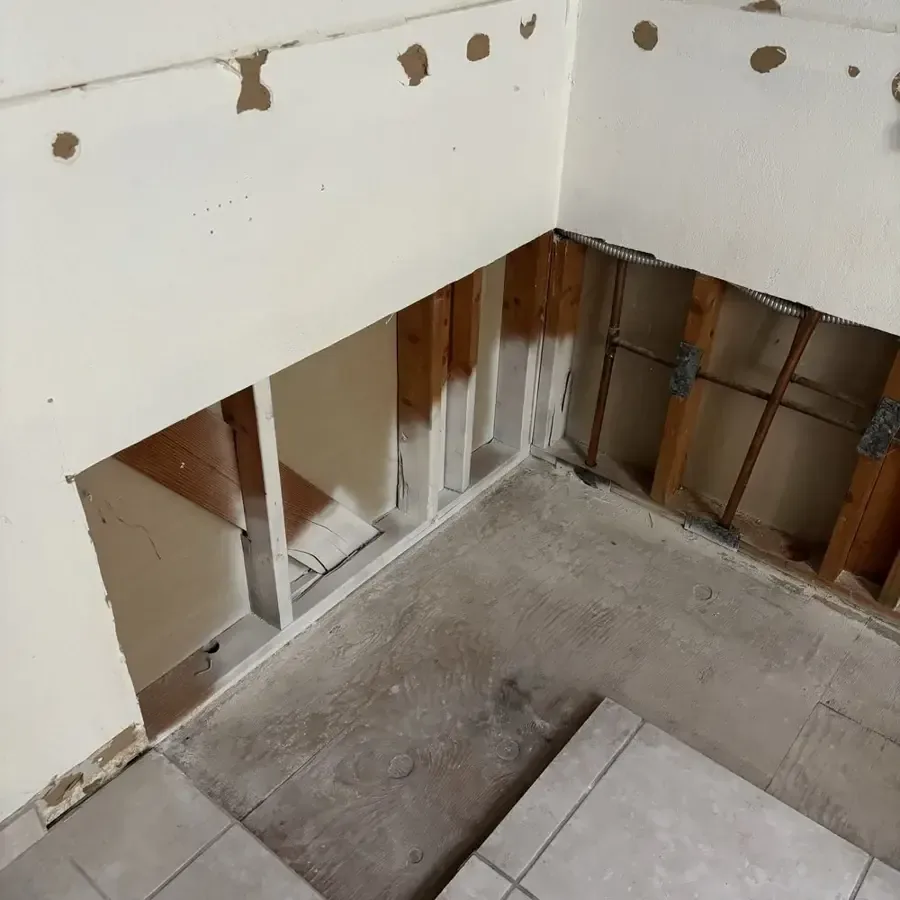
Extract liquid and expose closed wet surfaces
Open water is recovered before it enters more finishes. Portable tools reach cabinet recesses and small edges, while broader equipment handles open floor areas.
Saturated insulation can keep framing wet and may need removal to expose the cavity.
A controlled opening should follow readings rather than a convenient wall corner. Stable dry construction outside the perimeter remains protected.
Water extraction service transfers the remaining absorbed moisture to a structured drying plan after movable liquid is gone.
- Recover low collection areas first.
- Open only confirmed wet cavities.
- Contain insulation and board during removal.
- Retest every newly exposed surface.
Measure framing through the dry phase
Directed air reaches exposed wet faces, while dehumidification controls vapor released into the treatment area. Framing, gypsum, concrete, floors, and cabinets receive separate measurements because they dry at different rates and do not share one completion value.
A stalled point may indicate a hidden barrier, missed insulation, weak airflow, or renewed leakage. Structural drying and dehumidification changes access and equipment according to the recorded trend.
Final values remain paired with source repair notes and initial photographs.
Prepare for power and access interruptions during cold weather
Winter conditions can affect more than exposed plumbing. A power interruption can stop heat, lighting, extraction equipment, and dehumidification.
Occupants should keep the route to the master shutoff clear and avoid entering dark wet spaces where ceiling, floor, or electrical conditions cannot be seen.
If restoration equipment loses power, the interruption time should be recorded. Technicians can then interpret the next indoor humidity and material readings correctly.
Equipment should not be moved to an unknown circuit without electrical evaluation, and extension arrangements must remain outside wet walking paths.
Cold outside air is not automatically helpful for drying. Ventilation decisions should follow measured indoor and outdoor conditions because uncontrolled replacement air can alter the treatment load.
After power returns, the crew confirms source stability, checks for new water, and resumes the system according to the current wet material map.
Before wall or ceiling repair begins, the completion record should identify tested framing, retained gypsum, insulation decisions, and any inaccessible location. That handoff keeps plumbing repair, restoration drying, and finish reconstruction as clear separate responsibilities.
- Keep shutoff access visible and unobstructed.
- Report every equipment power interruption.
- Avoid improvised heating around plumbing.
- Reinspect for new leaks after conditions change.
Questions
Which pipe preparation is recommended before freezing weather?
Regional advice includes draining outdoor hoses, insulating exposed pipe and faucets, sealing cold air openings near plumbing, and knowing the master shutoff location.
Can an open flame be used to thaw pipe?
No. Improvised flame creates serious hazards. Listed heat cable should be used only according to instructions, and plumbing personnel should handle frozen or damaged components.
What should the plumber record after a suspected freeze break?
The plumber records the failed component, inspection findings, and repair. Restoration technicians then document where the released water traveled and which materials need extraction, access, and drying.
Can water remain after the floor looks clear?
Yes. Insulation, framing, wall backs, cabinet bases, and floor layers can remain wet after open water is extracted. Direct testing identifies those areas.
How is a burst pipe cavity declared dry?
Readings from retained materials are repeated at consistent locations and compared with suitable targets or unaffected references. Visual improvement alone cannot prove completion. Source repair and material completion remain separate entries in that record.