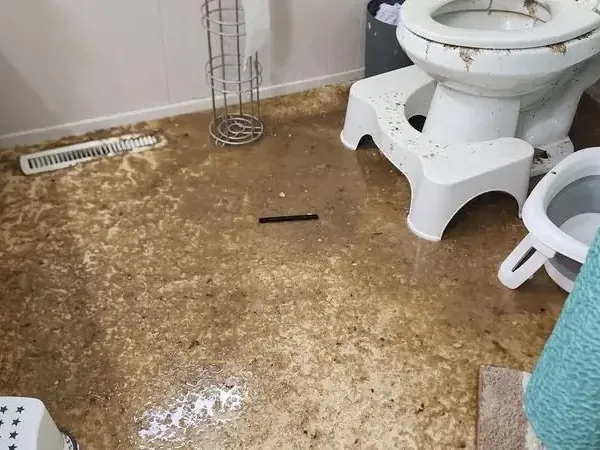
Sewage restoration succeeds or fails on sequence. Removing liquid is only the beginning, because contamination control and physical cleaning must precede ordinary drying.
Key takeaways
- Keep occupants, children, pets, household tools, and unprotected traffic outside the affected boundary.
- Map splash, liquid movement, floor seams, wall contact, cabinets, and porous contents before removal changes the scene.
- Contain sewage, solids, and unsuitable absorbent materials along a route that avoids clean rooms.
- Physically clean accessible retained surfaces before high velocity air movement begins.
- Start moisture control only in the prepared area and document direct values from each retained material.
Restriction comes before removal
A backup boundary follows water and splash, not merely the fixture where sewage appeared. Doorways, floor joints, baseboards, cabinet recesses, and contents can extend the affected area.
Occupants should close access where practical and avoid carrying ordinary mops, vacuums, or footwear through the zone.
St. John the Baptist Parish provides public wastewater context, but no unsupported rule about private drain responsibility should be applied. Plumbing findings for the current property identify the source.
Sewage cleanup in Garyville documents contamination spread separately.
- Stop routine access through affected rooms.
- Keep clean storage outside the work path.
- Identify a contained debris route.
- Save plumber findings with the room map.
Map every material touched by sewage
Technicians photograph the fixture, visible water edge, solids, staining, and contents before work begins. Direct inspection extends beneath trim and into transitions where wastewater can travel unseen.
The clean boundary is documented so protective measures are not expanded or reduced by guesswork.
Service covers the area around Airline Highway, the Garyville Refinery, and the Mississippi River. At a property with a backup, the crew marks wastewater contact from the affected fixture to the farthest wet surface.
That boundary determines the cleanup route and which adjoining rooms need protection during removal.
- Mark splash separately from pooled liquid.
- Inspect cabinet ends and toe recesses.
- Check wall cavities when contact reaches openings.
- Label unaffected areas that need protection.
Remove liquid, solids, and unsuitable porous materials
Equipment dedicated to the affected area recovers wastewater and solids. Carpet pad, insulation, and other absorbent products may hold contamination below accessible surfaces.
Contact, construction, condition, and cleanability determine which materials require controlled removal.
Wallboard and composite cabinets are evaluated component by component. A stable measured cut can expose affected framing and preserve dry material beyond the boundary.
Debris is bagged within the work area before transport through the property.
- Collect solids before fine surface cleaning.
- Contain absorbent debris where it is removed.
- Protect dry walls and flooring from transport.
- Record every removed material by room.
Physically clean the surfaces that remain
Extraction does not clean joints, texture, fastener pockets, penetrations, or framing corners. After gross removal, accessible retained surfaces receive physical cleaning appropriate to the contamination.
A follow up inspection identifies residue missed by broad passes.
The main sewage cleanup process keeps cleaning and drying as separate phases. Air movers should not operate across contaminated debris or unfinished surfaces because that movement could distribute particles beyond the prepared area.
- Work from broad soil removal into detail.
- Inspect corners and seams after cleaning.
- Keep dedicated tools within the controlled zone.
- Document when a section enters the drying phase.
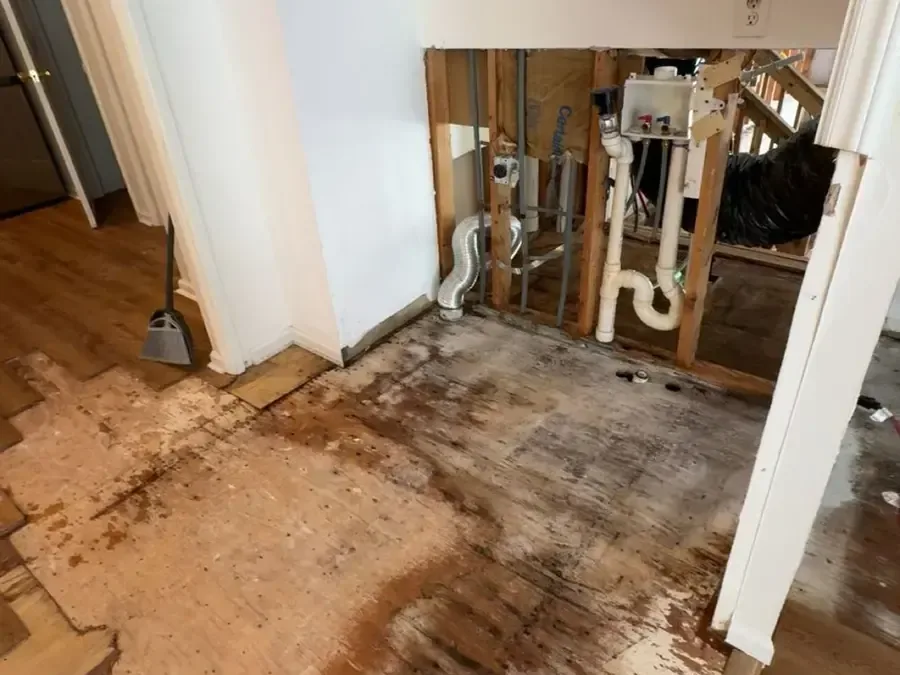
Measure and dry the prepared structure
Meters establish which concrete, framing, and retained finishes still hold moisture after cleaning. Directed air supports evaporation at accessible damp faces, while dehumidification collects vapor inside the treatment boundary.
Materials are tested separately because their behavior and endpoints differ.
Structural drying and dehumidification relies on repeat values rather than a fixed schedule. A stalled point may indicate closed insulation, limited air access, or another damp layer.
Equipment changes should have a recorded reason tied to the trend.
- Create moisture points only on prepared surfaces.
- Keep treatment air separated from occupied space.
- Investigate any reading that stops improving.
- Store final values with the cleanup chronology.
Close the project without losing the sequence
A strong completion file shows the reported source, access restrictions, initial contamination boundary, porous material decisions, cleaning steps, equipment dates, and finish values. Photographs should connect each phase with the same rooms and material locations.
The Garyville restoration hub links sewage response with extraction and drying. An insurer decides policy application.
Restoration documentation explains the physical conditions and why each material was removed, cleaned, retained, or monitored.
Handle contents without mixing clean and contaminated decisions
Contents inside a sewage zone need the same separation discipline as building materials. Each item is photographed in place when safe, then identified by room, material, visible contact, and condition.
Clean belongings outside the boundary should move only to a protected dry area, not through the active debris route.
Hard items with fully accessible surfaces may be candidates for physical cleaning. Absorbent belongings that contacted sewage can hold contamination through seams, padding, paper, fabric, or internal voids.
Sentimental or specialized items may require an appropriate specialist, but their movement still needs containment and a written chain of locations.
After an item leaves its original position, the floor and wall behind it require inspection. A cabinet, storage bin, or furnishing may have hidden wastewater at its base.
The moisture and cleaning map is updated before the exposed spot enters the next phase. This prevents the project from finishing around a concealed untreated patch.
Tools and protective coverings also need a controlled exit. Equipment used inside the affected zone should not move directly into clean storage with visible soil or untreated contact surfaces.
The crew follows the established cleaning and containment procedure before those items leave, then inspects the travel route for any debris or splash created during removal.
Occupant return should follow completion of contamination removal, physical cleaning, structural drying, and any required repairs. A visual improvement alone is not a return criterion.
The record should identify which rooms completed the process and which remain restricted because another trade or material decision is still pending.
- Photograph items before controlled movement.
- Separate cleanable hard goods from absorbent contact.
- Protect clean storage from work tools and debris.
- Inspect every newly exposed building surface.
Questions
Why should occupants avoid sewage water?
It can contain harmful microorganisms and other contaminants. Unprotected contact and foot traffic can spread affected material into clean rooms and contents.
Is liquid extraction enough?
No. Solids and unsuitable porous materials must be removed, and accessible retained surfaces need physical cleaning before ordinary structural drying starts.
Can carpet stay after sewage contact?
Absorbent carpet and pad can hold contamination through their thickness. Contact, condition, construction, and cleaning access usually require a conservative material decision.
When can air movers operate?
After gross debris is removed and retained affected surfaces are physically cleaned. Earlier high velocity airflow could distribute contamination.
Which records support sewage restoration?
Useful records include source findings, photographs, room boundaries, removed material lists, cleaning steps, disposal information, equipment logs, and final direct readings. The completion file should also state when the debris route and protective floor coverings were cleaned, removed, and inspected before ordinary traffic returned. That closeout detail prevents later confusion.