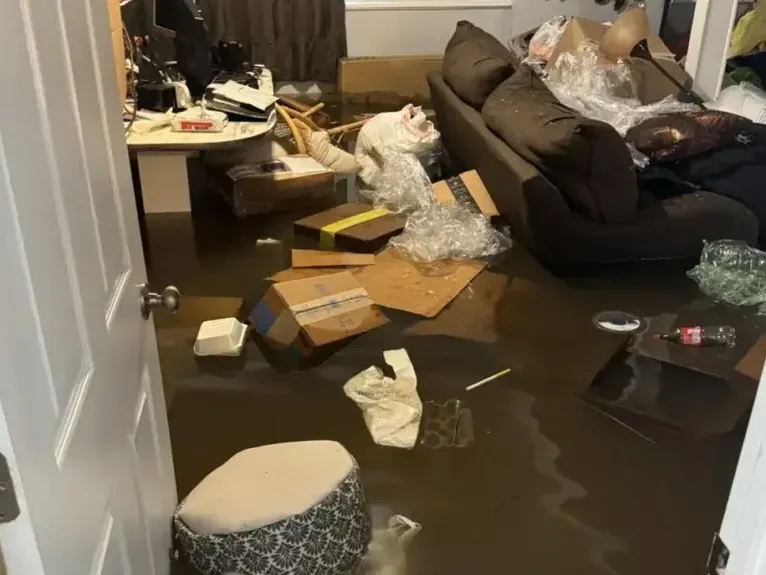
Heavy rain can overwhelm a property before occupants understand the route indoors. A safe response separates hazard control, evidence, cleaning, and moisture work.
Key takeaways
- Stay out of rooms with moving water, wet electrical components, unstable finishes, or hidden floor hazards.
- Photograph entry points, water marks, sediment, damaged contents, and room transitions before removal changes conditions.
- Treat exterior water cautiously because it may have crossed soil, drains, debris, and other contaminated surfaces.
- Collect sediment and remove unsuitable porous materials before ordinary structural drying airflow begins.
- Track retained walls, floors, wood, concrete, and cabinets with direct readings until selected goals are reached.
Heavy rain can wet several layers of a room
A slow moving cold front dropped up to 9 inches of rain around Norco in about two hours in December 2018. A local report said 19 homes were damaged, and one reported home had affected sheetrock, baseboards, cabinets, carpet, and doors.
The parish response involved public works, wastewater, and waterworks departments.
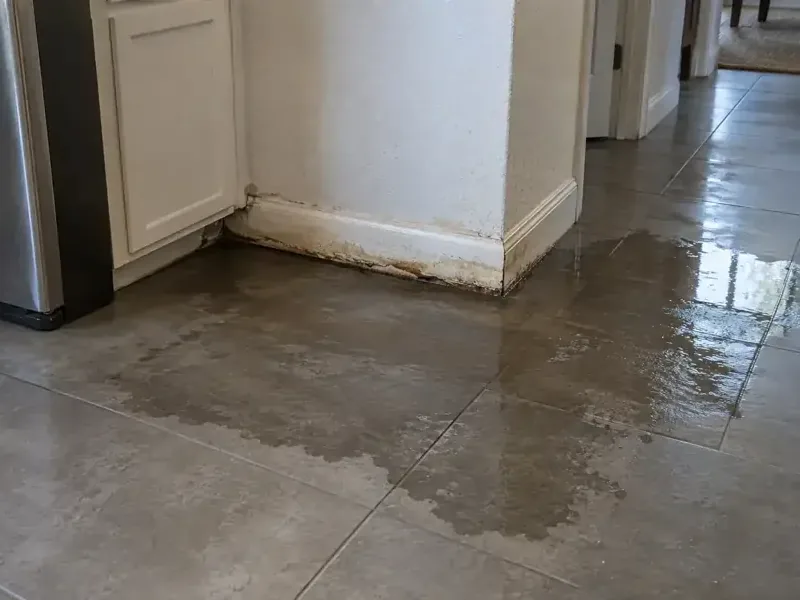
Cleanup must follow the water into each affected layer, including the wall base and flooring beneath furniture. Storm cleanup in Norco starts with the entry route, visible water marks, and direct material checks.
The resulting room map guides pumping, debris removal, and cleaning before equipment begins drying retained construction.
- Keep event history separate from current site evidence.
- Record the highest visible water mark.
- Identify every observed entry route.
- Preserve repair and weather information.
Decide whether entry is safe before documenting indoors
Water can conceal loose floor covering, sharp debris, displaced contents, and openings. Wet outlets, equipment, fixtures, panels, or cords create electrical concern.
Occupants should not cross an uncertain room merely to take photographs or retrieve property.
Ceiling changes and weakened wall material also require distance. Emergency direction and qualified structural or electrical findings take priority over routine cleanup.
From a dry position, broad photographs can preserve useful information without adding exposure.
- Keep children and pets away from the affected area.
- Avoid switches and powered equipment near water.
- Do not stand beneath sagging material.
- Move only dry items reachable from safe footing.
Map water, sediment, and material contact
The crew records water height, sediment distribution, floor seams, doorway crossings, wall contact, cabinet recesses, and contents. As pumping lowers the water, newly exposed low points are photographed.
This sequence shows where liquid stood and where debris collected.
Norco lies on the eastern edge of the Bonnet Carre Spillway, an outlet from the Mississippi River toward Lake Pontchartrain during river flooding. Cleanup coverage also includes Diamond and the area around Norco Elementary School.
At a flooded property, the crew records sediment deposits and water marks before removal changes the scene.
- Mark wet and dry room boundaries.
- Inspect thresholds and cabinet toe spaces.
- Keep sediment notes separate from moisture readings.
- Recheck entry points as water levels fall.
Remove deposits before cleaning retained surfaces
Pumps and extraction equipment recover accessible liquid after safe access and disposal planning. Sediment and solids are collected rather than allowed to dry onto floors and framing.
Porous materials are evaluated by contact, contamination, condition, and the ability to clean through their full thickness.
Carpet pad, insulation, and weakened composite products may require controlled removal. Stable hard surfaces can remain when fully accessible for physical cleaning.
The main storm cleanup service separates debris removal from the later environmental drying phase.
- Work from deeper collection points toward margins.
- Contain porous debris within the wet zone.
- Inspect joints after gross cleaning.
- Protect unaffected rooms from cleanup traffic.
Dry only the clean retained assembly
After preparation, material testing establishes what remains damp. Air movement supports evaporation from accessible faces, while dehumidification captures released vapor.
Temporary boundaries help keep outdoor humidity and ordinary building traffic from disrupting the treatment environment.
Walls, floor layers, cabinets, and wood framing can respond differently. Water extraction and removal reduces the liquid load, but daily direct values drive later equipment changes.
A stalled point may require another access opening or a renewed source check.
- Measure each material independently.
- Keep air from distributing loose debris.
- Investigate rising values after new rainfall.
- Document why equipment is moved or reduced.
Create a finish record that supports repair decisions
Final photographs and readings should correspond with the original water and material map. Removed finish, cleaned framing, equipment activity, contents movement, and entry repairs remain listed in chronological order.
This makes the transition from contaminated water removal to structural drying clear.
The Norco restoration hub connects storm response with roof, extraction, and drying services. Insurers interpret policy coverage.
The restoration file documents observed building conditions, material handling, and measured completion without assigning unsupported flood classifications.
Plan contents movement without expanding the wet boundary
Flood affected belongings should not be carried casually through clean rooms. The crew first identifies a protected holding area and a route that can be covered and cleaned.
Each moved item or group is connected with its original room, observed contact, material, condition, and destination.
Hard nonporous contents may allow physical cleaning when all surfaces are accessible. Saturated absorbent items require closer decisions because soil can remain below a visible face.
Heavy, unstable, or contaminated objects stay in place until suitable handling equipment and containment are available.
Dry belongings also need protection from elevated humidity and work traffic. They should not be stacked inside the drying zone where they block airflow or absorb released vapor.
After movement, the newly exposed floor or wall is photographed and tested so the moisture map reflects areas that were hidden during the first inspection.
Exterior correction also belongs in the completion picture. Drying interior material while water can still return through an opening creates misleading progress.
The final status should identify repaired entry points, drainage or roofing work still pending, and any area that remains under observation during later weather.
- Create the clean holding area before moving items.
- Label contents by original location and contact.
- Keep contaminated items inside a controlled route.
- Retest every surface uncovered by movement.
Questions
What should be recorded before storm cleanup begins?
From safe footing, photographs can capture entry points, water marks, sediment, and affected belongings. The crew adds a room sketch and material readings as safe access becomes available.
Can exterior rain water be treated as clean?
Not automatically. Water may cross soil, drains, paving, chemicals, and debris. Its path and contacts determine cleaning controls and material decisions.
Why remove sediment before using air movers?
Moving air across unclean deposits can distribute particles and contamination. Gross removal and physical cleaning prepare retained materials for ordinary drying.
Can sheetrock remain after storm entry?
Contact height, contamination, strength, cavity access, insulation, and cleaning ability all matter. Selective removal can expose wet material while protecting dry sections.
How is completion documented?
The crew repeats direct readings at labeled material points and saves them with source repairs, photographs, cleaning notes, equipment records, and material decisions. The final walk should also compare cleaned edges, cabinet recesses, and earlier sediment locations with the starting photographs so no prepared surface is omitted from the closeout. Every finished location remains traceable.