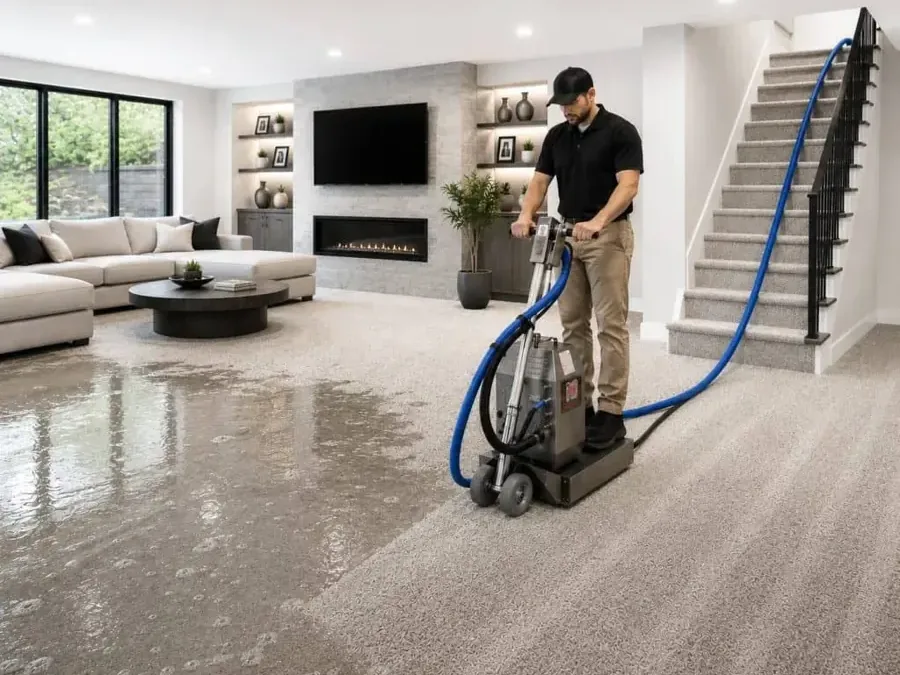
When water appears indoors during a service interruption, the response begins with the active source and the wet rooms. A dated record keeps utility notices, plumbing repairs, and cleanup work organized.
Key takeaways
- Keep utility information, plumbing findings, and restoration observations as separate parts of the incident record.
- Do not assume a public repair caused indoor water without evidence from the current property.
- Photograph visible water and map floor, wall, cabinet, and threshold moisture before extraction changes conditions.
- Boil water advisories address water use precautions and do not replace an indoor contamination assessment.
- Follow direct material readings through extraction and drying until each retained component reaches its selected goal.
Record when service changed and indoor water appeared
St. John the Baptist Parish completed water pipe repairs affecting Reserve, Garyville, and Mount Airy in August 2021. Water service returned gradually, and affected customers remained under a boil water advisory.
For a property with indoor water, useful records include the time of the first leak, photographs of the wet area, and findings from the plumbing inspection.
The building file needs current evidence. A plumber may identify a failed fixture, supply pipe, appliance connection, or another private source.
If water entered during a public disruption, photographs, timing, repair notices, and physical findings should show the connection rather than relying on proximity alone.
- Save the public notice with its date.
- Record the private plumbing inspection separately.
- Photograph the indoor source and travel path.
- Avoid assigning cause before evidence agrees.
Follow water use instructions and inspect wet materials
The August 2021 advisory told affected customers to boil water for one full minute. That direction concerns water used by customers after service disruption.
It does not classify water already inside building materials or decide whether drywall, flooring, insulation, or cabinets can remain.
Indoor material decisions depend on the source, contacts, time, physical condition, and ability to clean and dry each component. Reserve water extraction begins with the visible release and follows it into the actual construction, independent of the public notice language.
- Follow current official instructions for water use.
- Use site evidence for restoration category decisions.
- Keep advisory compliance outside the drying endpoint.
- Ask the proper trade to document the failed component.
Map indoor water before removal alters the scene
The extraction crew records open water, stains, damp contents, and the likely source area. Direct testing moves through floors, thresholds, wall bottoms, cabinet bases, and penetrations.
Thermal patterns can focus attention, but compatible meters confirm individual materials.
Service reaches properties around Riverside Academy, Airline Highway, and the Mississippi River. A room sketch helps technicians follow water through doorways and along shared walls.
Marked dry comparison points beyond the affected perimeter keep equipment focused on the materials that still need drying.
- Mark both sides of every crossed doorway.
- Test cabinet ends and concealed toe spaces.
- Separate finish flooring from layers below.
- Label suitable unaffected comparison areas.
Extract accessible liquid by surface and access
Broad hard surface tools, carpet extraction, portable equipment, or pumping may be appropriate in different portions of the same loss. Operators start with deeper collection areas, then revisit edges and recesses as water clears.
Recovered volume and material response determine additional passes.
Contents are shifted only through a protected route. An item can hide its own wet spot or drip onto clean flooring after movement.
Water extraction and removal includes a second check of newly exposed surfaces so the original map remains complete.
- Choose tools for depth and finish.
- Inspect beneath movable rugs and contents.
- Keep hoses away from unaffected rooms.
- Retest the perimeter after liquid pickup.
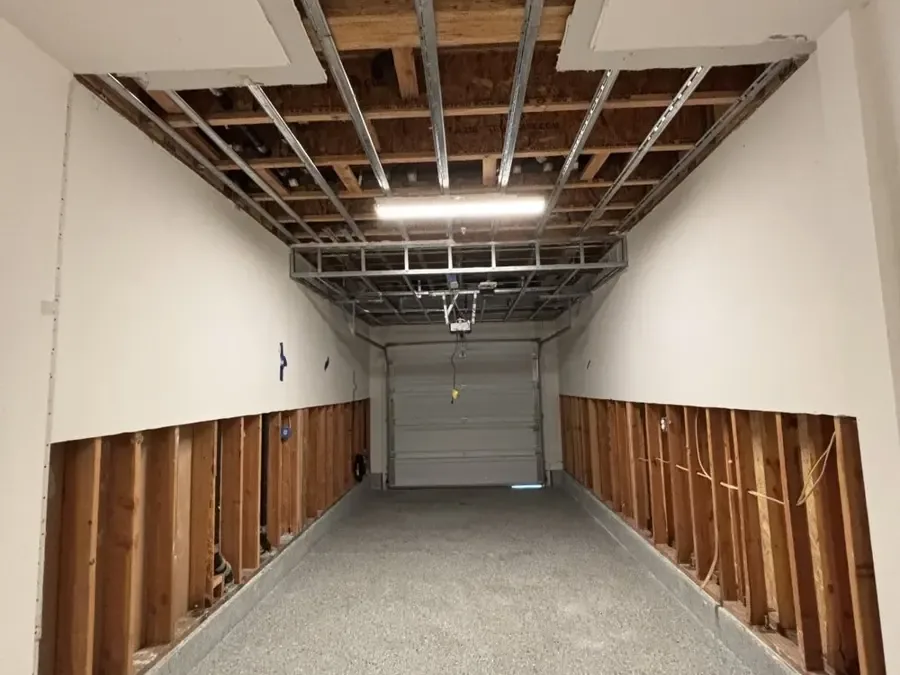
Dry the moisture that extraction leaves behind
Wood, gypsum, concrete, underlayment, and composite cabinets can retain water after the open surface clears. Air movers support evaporation at accessible damp faces.
Dehumidifiers collect the vapor released into the treatment space so indoor humidity does not stall progress.
A sealed covering or closed cavity may block the system. Limited access can expose the lower layer without extending demolition to a convenient room edge.
Structural drying methods use daily values to identify a barrier, missed pocket, or renewed source.
- Measure each material with a suitable method.
- Create access only where evidence supports it.
- Change equipment when the trend explains why.
- Preserve final points on the starting diagram.
Build a record that explains both events accurately
The property file can contain the parish repair and advisory, plumbing findings, initial photographs, extraction notes, material decisions, equipment dates, and final readings. Keeping those items in order prevents a public service event from being treated as a complete private loss diagnosis.
The Reserve restoration hub connects extraction with pipe, appliance, and structural drying work. An insurer applies policy terms to the reported cause.
Restoration documentation remains focused on the physical water path, the materials handled, and the measurements supporting completion.
Build a timeline of the repair and cleanup
A public repair, a pressure change, and an indoor puddle may occur close together without sharing one confirmed cause. The incident timeline should state when the notice appeared, when the property owner first observed water, when plumbing was inspected, and when extraction began.
Each entry should name its source, such as a parish notice, a plumber finding, or a technician observation.
This approach also helps when indoor water has more than one plausible origin. A refrigerator connection, toilet supply, roof opening, or exterior entry may create moisture during the same general period.
Physical evidence and direct testing should narrow the explanation rather than forcing all observations into the public event.
If evidence remains incomplete, the restoration scope can still describe the rooms and materials requiring extraction or drying. It should label the source as reported or undetermined rather than presenting an unsupported conclusion.
The resulting record remains useful because it separates known building conditions from open questions.
This separation also keeps later repair work focused on the surfaces that were actually tested and treated.
- Use one chronology for notices repairs and observations.
- Name who supplied each source statement.
- Mark uncertain cause information plainly.
- Keep material treatment tied to measured conditions.
Questions
Does a public water repair prove the cause of indoor damage?
No. It provides context. Current plumbing findings, timing, photographs, and the observed path must connect the public event to water inside a specific building.
Is a boil water advisory the same as a restoration category?
No. An advisory gives water use precautions. Indoor cleanup decisions depend on the actual source, contacts, materials, contamination, condition, and available cleaning access.
Why test flooring after the visible water is gone?
Liquid can pass through seams into adhesive, underlayment, wood, or concrete. Testing each accessible layer shows where moisture remains and which surfaces need further drying.
Can wallboard remain after a clean supply release?
Stable material may remain when contamination is absent, access is adequate, and readings improve. Weakness, swelling, delamination, or trapped insulation can require removal.
Which records are most useful?
Keep official notices, plumber findings, photographs, moisture diagrams, extraction notes, material decisions, equipment logs, finish readings, invoices, and insurer communication together. Uncertainty stays labeled clearly.