Water Extraction in Reserve, LA
Pooling is only the visible portion of many losses. Extraction technicians work from the deepest collection points toward floor seams, wall edges, and casework, then retest the perimeter before drying begins.
(888) 417-5665Request water removal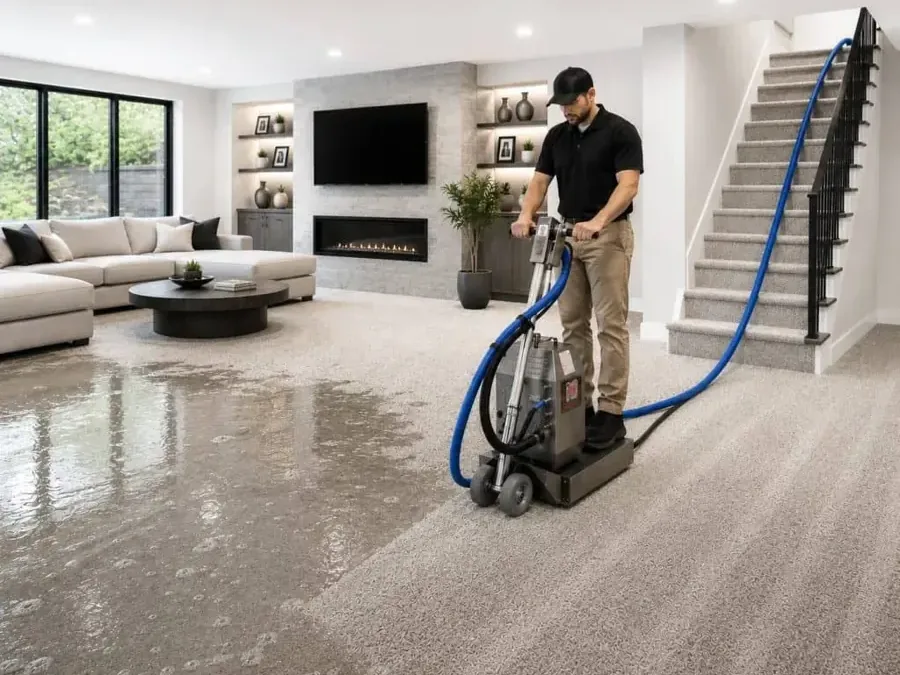
Why the water extraction and removal plan follows the water
Rapid local response
The response team dispatches 24/7 for active water and starts with source control, safety and a full moisture boundary.
IICRC S500 drying standard
The drying team sets category and class, chooses equipment for the evaporation load and verifies progress with daily readings.
Claim-ready documentation
The record can include the source, room diagram, moisture map, category, class, daily logs and photos before removal.
River Parish water knowledge
The crew plans for tropical rain, storm surge, humid air, supply failures and occasional freezing conditions.
How water extraction and removal is handled in Reserve
Trace the liquid path
The source area, lower surfaces, floor transitions, and wall edges are tested before equipment changes visible conditions.
Recover accessible water
Tools suited to carpet, hard flooring, confined recesses, and edges remove the movable portion of the loss.
Prepare absorbed materials
Trim or coverings are opened only where they block inspection, cleaning, extraction, or effective evaporation.
Verify the remaining load
Repeat readings define the drying boundary and later show when each retained material reaches its goal.
First steps for water extraction and removal in Reserve
Avoid electricity in the wet area
Do not cross water near outlets, fixtures, appliances, or panels. Qualified electrical help should address unsafe power conditions before routine extraction.
Use a safe water shutoff
Close a reachable valve when the path is clear. A plumber handles the failed pipe or fixture, while restoration personnel remove escaped water.
Record the room before moving items
Take broad photographs from dry footing and note the source, rooms reached, and water marks. Do not delay a necessary shutoff.
Leave contaminated items contained
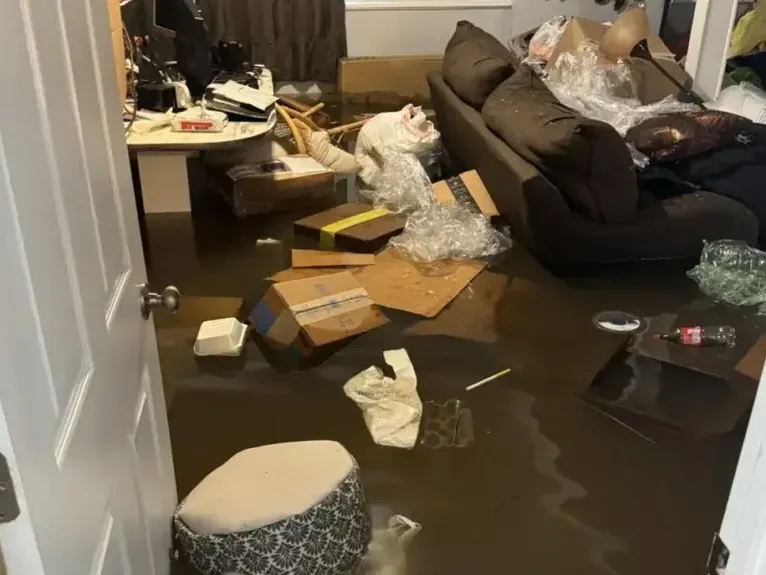
Do not carry sewage or outside water affected materials through clean spaces. A controlled removal route protects unaffected floors and contents.
A puddle can disappear while water remains beneath a threshold or cabinet. For a Reserve loss, the extraction crew first records where liquid is visible, then checks the routes it could have taken through flooring and lower walls. Local water restoration covers the broader response, while this work concentrates on liquid recovery and the moisture left behind.
What does water extraction and removal cost in Reserve, LA?
Water extraction projects commonly range from $1,200 to $6,500 or more. Liquid volume, surface type, affected area, contamination, access, material condition, and the later drying system determine the scope.
Focused loss
$1,200 to $2,926
- Source already controlled
- One accessible wet zone
- Direct pickup and focused drying
Multi-room loss
$2,926 to $4,550
- Water crossed transitions
- Several finish types
- Expanded moisture mapping
Complex loss
$4,550 to $6,500+
- Restricted access or contamination
- Selective material openings
- Broader equipment arrangement
Ranges are typical, not a quote: category of water, square footage, material class and how fast drying started move the number most. Run the water damage cost calculator for a closer range.
Drawing an extraction map before equipment changes the scene
Technicians begin at the reported release and examine the room in outward bands. Hard floors, carpet, wall bases, built in cabinets, and door transitions receive separate checks. Temperature patterns can point toward dampness, but direct readings decide whether a particular material joins the marked work area.
The August 2021 parish repair affected Reserve, Garyville, and Mount Airy. When a property also has indoor water, a dated record of the first wet area helps organize the response. The crew documents the source inspection, plumbing repair, extraction locations, and material readings so each stage of the work can be followed.
- Photograph visible water and the reported release point
- Confirm electrical conditions before entering pooled areas
- Test both sides of floor transitions and doorways
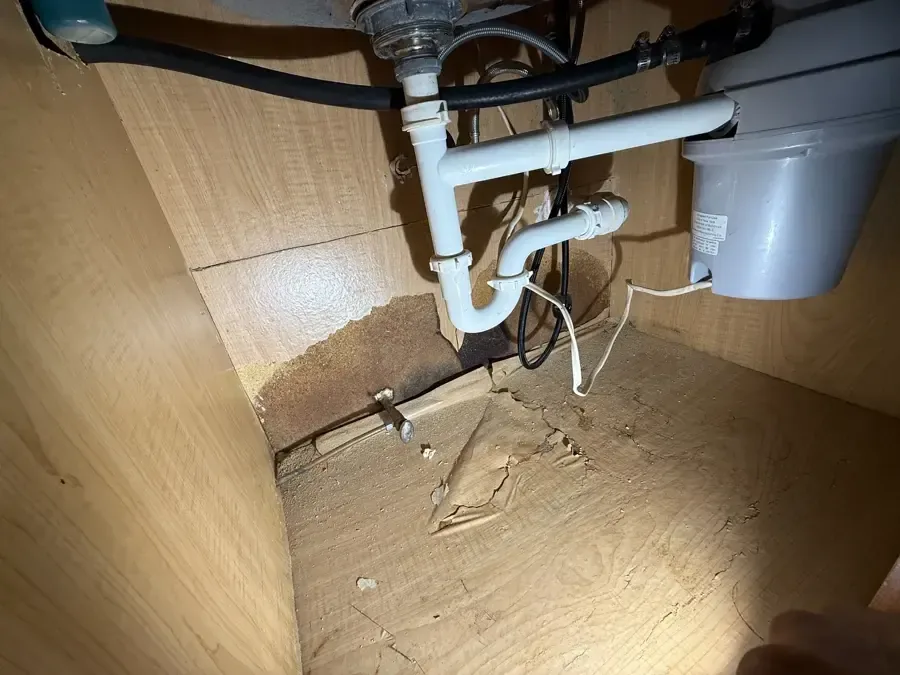
- Check casework at bases, seams, and wall contact
- Establish dry comparison points beyond the perimeter
Matching removal tools to each surface
Open hard flooring may permit broad liquid pickup, while carpet and pad can require weighted extraction. Portable tools reach closets, cabinet recesses, and confined edges. The operator makes additional passes when recovered volume and material response show value, rather than treating one pass as completion.
Contents are shifted only far enough to create a protected work route and expose wet surfaces. Clean rooms are kept away from hoses and debris. When trim traps water against a wall, a narrow removal can provide access without disturbing dry finishes outside the measured boundary.
- Start at deeper water and move toward damp margins
- Choose tools that fit both finish and access
- Inspect beneath removable mats and loose coverings
- Keep extraction traffic out of unaffected rooms
- Retest the outer edge after liquid pickup
Addressing absorbed moisture after liquid removal
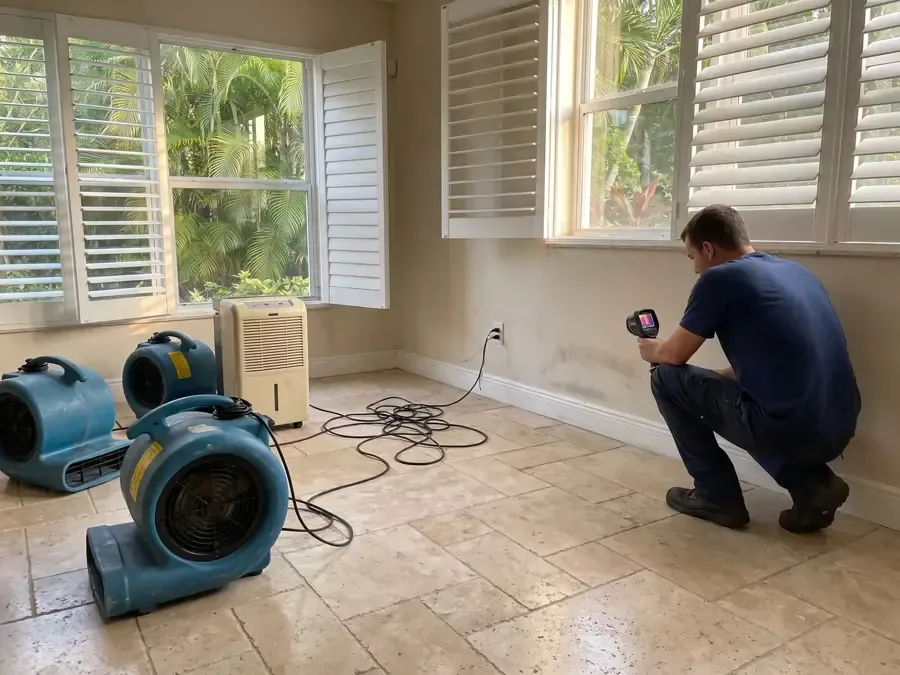
Extraction cannot collect water already held within drywall, wood, concrete, underlayment, or cabinet components. Air movers encourage those materials to release moisture, and dehumidifiers capture vapor inside the controlled zone. Equipment placement follows the actual wet surfaces, including shaded or concealed areas that do not receive normal room airflow.
Repeat measurements reveal slow sections. A stalled value can point to a coating, closed cavity, damp insulation, or limited air exchange. The structural drying service explains how equipment and access respond to those findings. The system is reduced only as the remaining material load allows.
- Record indoor air conditions before the dry phase
- Direct movement across accessible wet material faces
- Test flooring and wall components independently
- Change placement when progress differs between sections
- Save completion values with the extraction record
Documenting the inspection and completed water removal work
Coverage in St. John the Baptist Parish includes properties around Airline Highway, Riverside Academy, and the Mississippi River. Source and building conditions are established during the property inspection. The file for an individual property should identify what technicians actually observed, extracted, opened, dried, and measured.
Useful documentation includes room photographs, the moisture map, recovered water notes, affected materials, equipment dates, and final readings. Plumbing or roofing repair findings can be attached. The insurer applies policy terms to the reported cause, while restoration records explain the physical work.
Checking the boundary after furniture moves
A chair, storage bin, or rug can hide a separate collection area that was not visible during the first walk. Once accessible contents are shifted, the technician inspects the newly exposed finish and repeats edge readings. Water discovered beneath an item is added to the diagram with its own material notes instead of being treated as part of a general room estimate. This second look also catches drips from wet contents that may have created small isolated spots beyond the main path. Extraction tools return only where liquid remains useful to recover. Dampness already absorbed into a finish joins the drying plan. Photographs before and after movement preserve the location of belongings, while protective pads and a clean holding area reduce transfer to dry flooring.
Water extraction and removal across Reserve and nearby communities
Extraction service covers the community around Airline Highway, Riverside Academy, the Mississippi River, and ZIP areas 70068 and 70084, with site readings defining each boundary.
The same service nearby: water extraction and removal in LaPlace, Garyville, Norco.
Related water damage services in Reserve
Water Extraction and Removal questions in Reserve, LA
Water is still covering a floor?
The crew checks the water source and wet boundaries before selecting extraction equipment.
(888) 417-5665Arrange measured extractionHow soon should water extraction begin?
After electrical and structural hazards are controlled, liquid water should be addressed promptly. Early recovery can limit movement into cabinets, wallboard, insulation, underlayment, and neighboring rooms.
Can a floor look dry while water remains below?
Yes. Water can pass through seams or transitions into adhesive, underlayment, subfloor, or concrete. Direct tests at several points reveal whether lower layers are still affected.
Which extraction equipment is used?
The selection depends on depth, finish, access, debris, and contamination. Broad pickup tools, carpet extraction, and portable equipment may serve different parts of the same property.
Does carpet always need removal?
Carpet may remain when its condition, water category, extraction response, and access support retention. Pad and the floor beneath receive independent evaluations rather than one shared decision.
What happens when visible water is gone?
Technicians retest the marked perimeter and materials that can absorb water. Air movement and dehumidification then address moisture that extraction cannot recover as liquid.
How is the endpoint documented?
The crew returns to consistent measurement points, compares them with selected dry goals, and keeps final values with photographs, equipment notes, and material decisions.
What changes the extraction price?
Water volume, category, floor type, wall and cabinet contact, room count, access, debris, cleaning, selective removal, and the required dry phase all affect the work.
Recover liquid before it enters more finishes
The extraction crew maps the outer edge, chooses tools for each surface, and records the remaining material moisture for drying.