Storm Flood Cleanup in Reserve, LA
Rainwater that crosses the exterior can carry sediment and contaminants into floors, wall cavities, and contents. Cleanup begins with safe access, water classification, and a measured map of every material it reached.
(888) 417-5665Request storm cleanup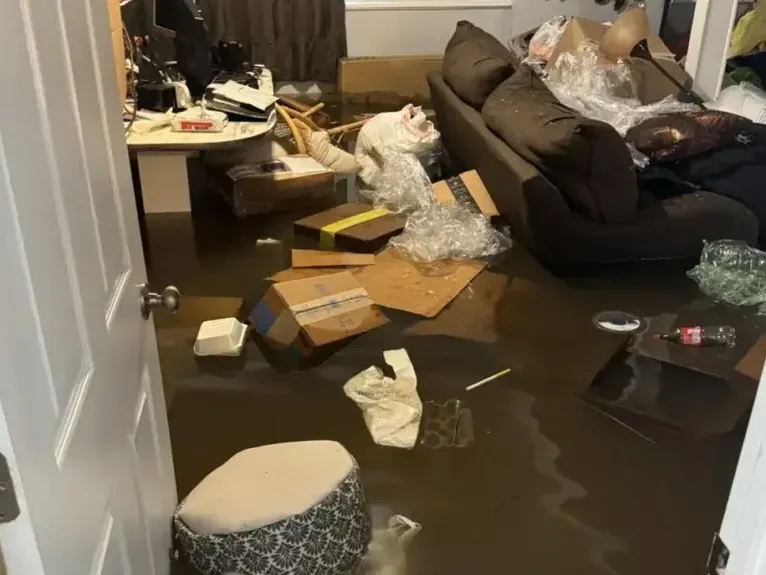
Why the storm and flood cleanup plan follows the water
Rapid local response
The response team dispatches 24/7 for active water and starts with source control, safety and a full moisture boundary.
IICRC S500 drying standard
The drying team sets category and class, chooses equipment for the evaporation load and verifies progress with daily readings.
Claim-ready documentation
The record can include the source, room diagram, moisture map, category, class, daily logs and photos before removal.
River Parish water knowledge
The crew plans for tropical rain, storm surge, humid air, supply failures and occasional freezing conditions.
How storm and flood is handled in Reserve
Classify entry and hazards
The team records the water path, electrical concerns, structural conditions, and contamination controls before ordinary access.
Extract and clear deposits
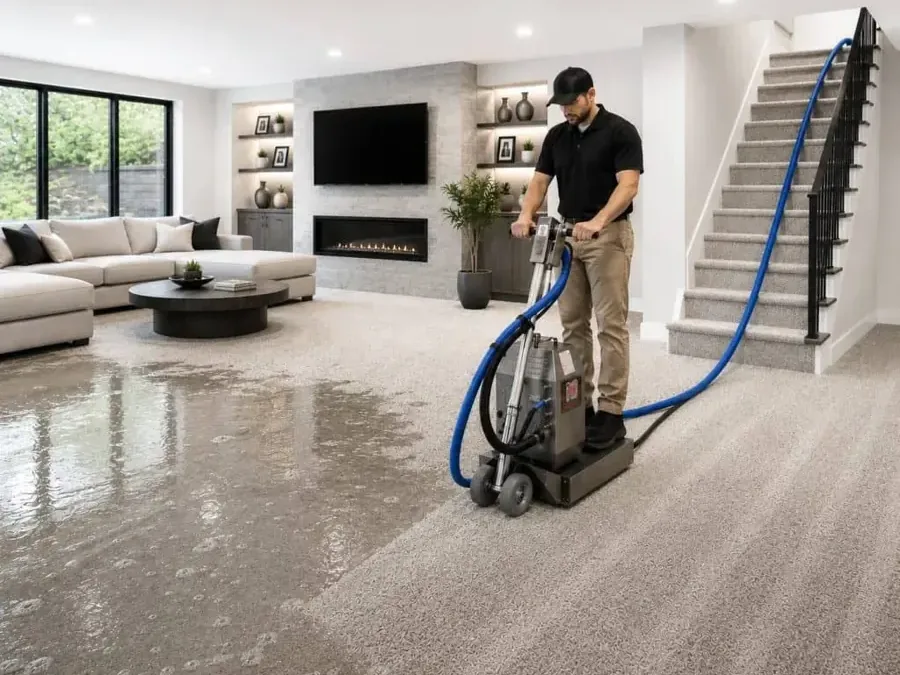
Pumps and surface tools remove liquid while sediment and loose debris are collected from edges and concealed recesses.
Clean the prepared assembly
Affected porous materials are evaluated, unsalvageable layers are removed, and accessible retained surfaces receive physical cleaning.
Dry and substantiate completion
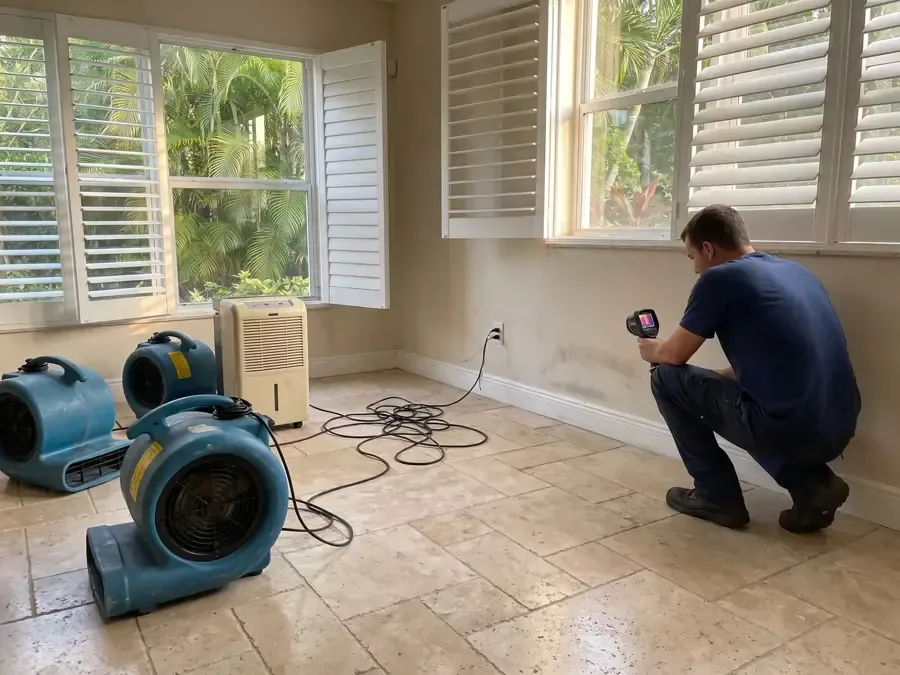
Managed airflow and dehumidification operate until direct measurements show that retained materials have reached selected targets.
First steps for storm and flood cleanup in Reserve
Wait for safe access
Do not enter moving water, unstable construction, or rooms with wet electrical systems. Emergency officials and qualified trades address immediate hazards before cleanup.
Avoid contact with outside water
Keep children and pets away, cover cuts, and do not handle saturated porous materials without appropriate protection and containment.
Record conditions from dry footing
Photograph visible water marks, entry areas, and affected rooms when it can be done safely. Preserve weather and repair notices with the property file.
Keep clean contents separate
Move only dry accessible items into a protected area. Leave heavy, contaminated, or trapped belongings for controlled handling by the cleanup team.
Heavy rain can push water through a doorway, wall opening, roof breach, or low floor connection. Once water has crossed the exterior, a Reserve cleanup must account for soil, drain overflow, and other substances carried indoors. Community restoration options connect the immediate removal phase with cleaning and drying services.
What does storm and flood cleanup cost in Reserve, LA?
Storm flood cleanup generally ranges from $2,600 to $15,000 or more. Water depth, contamination, sediment, affected rooms, material removal, cleaning, access, equipment, and monitoring determine the final scope.
Limited entry
$2,600 to $6,688
- Shallow contained area
- Accessible hard surfaces
- Focused cleaning and drying
Several affected rooms
$6,688 to $10,500
- Water crossed partitions
- Porous finishes evaluated
- Expanded containment and equipment
Extensive impact
$10,500 to $15,000+
- Deep water or sediment
- Broader selective demolition
- Complex contents and drying
Ranges are typical, not a quote: category of water, square footage, material class and how fast drying started move the number most. Run the water damage cost calculator for a closer range.
Establishing safe entry after severe weather
Standing water can conceal broken glass, loose floor materials, displaced contents, and electrical hazards. The response team observes the route from dry ground, notes any damaged overhead construction, and identifies where water entered. Power concerns go to qualified electrical personnel before routine work begins.
The Mississippi River and regional heavy rain are valid local context, but neither identifies the source at a specific building. A site assessment distinguishes rainfall entry, drainage backup, roof damage, and plumbing release. That finding determines the contamination precautions and the boundaries of the work zone.
- Keep occupants outside rooms with wet electrical components
- Photograph water marks and visible entry points
- Create a controlled route for equipment and debris
- Separate clean storage from affected belongings
- Mark rooms that remain dry before traffic begins
Removing water, sediment, and materials that cannot be restored
Pumps and extraction tools recover accessible liquid after entry is approved. Operators begin where water is deepest and work toward margins, clearing sediment that would interfere with later cleaning. Door thresholds, cabinet recesses, stair edges, and flooring seams receive attention because water may collect beyond an obvious pool.
Porous materials that absorbed contaminated outside water often require conservative decisions. Saturated carpet pad, damaged wallboard, and some insulation may hold soil and microorganisms where physical cleaning cannot reach. Removal follows the measured boundary, with bagging and transport arranged so debris does not pass uncontained through unaffected rooms.
- Remove liquid before it migrates into more assemblies
- Collect sediment instead of drying it onto finishes
- Evaluate each porous layer for cleanability
- Preserve sound construction beyond confirmed impact
- Keep disposal notes and photographs in the job file
Cleaning the exposed structure before drying
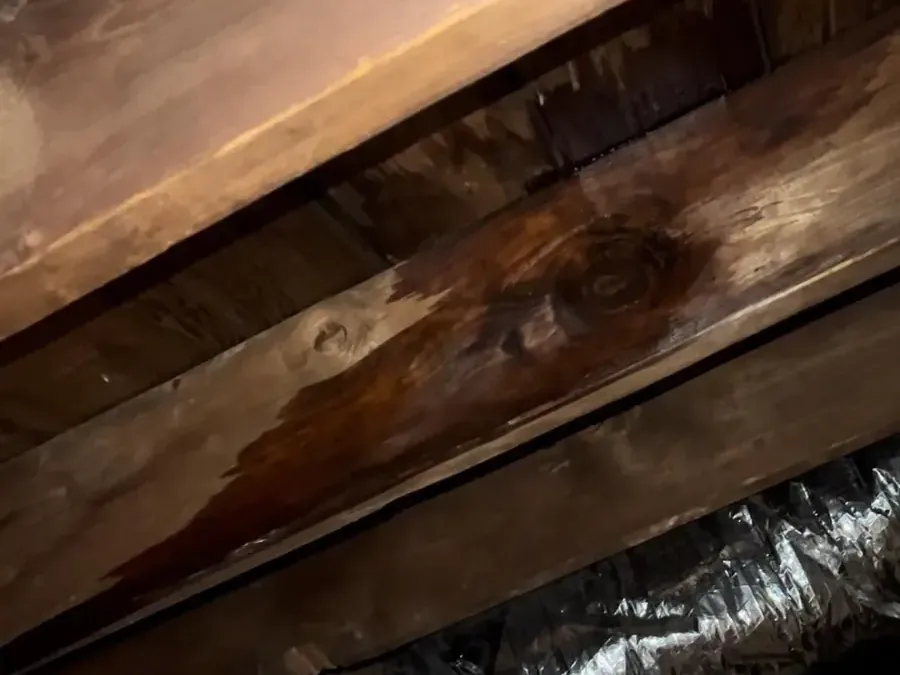
Drying equipment should not distribute debris from an unclean surface. Crews first perform gross removal, then clean exposed framing, hard flooring, and other retainable materials using methods suited to the water category. Detailed inspection of joints, fastener pockets, and sill areas helps find deposits that broad surface wiping can miss.
Once the prepared zone is clean, air movers support evaporation and dehumidifiers collect released vapor. Controlled structural drying is adjusted for the open materials and indoor conditions. Barriers can keep the treatment area stable while outdoor humidity changes after the storm.
- Inspect corners and cavities after demolition
- Clean before high velocity air movement begins
- Set equipment for exposed faces rather than room count
- Track humidity along with direct material readings
- Correct stagnant pockets when progress slows
Documenting a storm loss without overstating local risk
Storm cleanup serves the area around Airline Highway and Riverside Academy in St. John the Baptist Parish. The property file starts with entry points, the highest water mark, and photographs of affected rooms. It then records materials removed, surfaces cleaned, and the measurements used to finish drying retained construction.
Claim support can include weather information supplied by the owner, building repair reports, photographs, inventories, equipment logs, and moisture measurements. The insurer decides coverage under the policy. Restoration documentation explains why each item was cleaned, removed, retained, or monitored.
Watching for water that returns after initial removal
Storm conditions can change while cleanup is underway. A cleared floor edge may collect again if exterior entry continues or trapped water drains from a wall assembly. Technicians revisit the original entry locations after pumping and compare new marks with the first photographs. Reaccumulation is documented and source correction is coordinated before the affected section advances to drying. When no new liquid appears, the crew can distinguish residual material moisture from active entry. This check is especially useful at door thresholds, wall penetrations, and low cabinet recesses where a shallow return may be hard to notice. It prevents a drying system from being asked to manage continuing water and keeps the later moisture trend connected to a stable source condition.
Storm and flood cleanup across Reserve and nearby communities
Storm cleanup is available near Airline Highway, Riverside Academy, the Mississippi River, and ZIP areas 70068 and 70084, with conditions at the property defining the response.
The same service nearby: storm and flood cleanup in LaPlace, Garyville, Norco.
Related water damage services in Reserve
Storm and Flood Cleanup questions in Reserve, LA
Storm water has entered the building?
Safe access, sediment removal, and surface cleaning come before drying the retained structure.
(888) 417-5665Arrange controlled flood cleanupIs rainwater inside a building considered clean?
Not automatically. Water that crossed soil, paving, drains, or exterior surfaces can carry contaminants. Its route and contacts determine the controls and material decisions. Site observations establish the actual category.
Can carpet remain after outdoor flooding?
Carpet, pad, water category, sediment, duration, condition, and cleaning access all matter. Contaminated absorbent layers often require removal because soil can remain below the visible face.
Why remove wallboard only to a measured boundary?
Testing and visible water marks show how high moisture traveled. A controlled cut exposes wet insulation and framing while protecting dry wall sections above the confirmed impact.
When can air movers be started?
High velocity air movement follows gross debris removal and suitable cleaning. Starting too early can distribute contamination from surfaces that have not been prepared.
How are belongings handled?
Items are photographed and separated by material, condition, and contact. Cleanable hard goods follow a controlled route, while saturated porous contents receive individual disposition decisions.
Does the Mississippi River prove the loss was flooding?
No. It is a confirmed nearby water feature, not evidence for a particular property. Entry observations, weather information, and building findings establish the reported cause.
What affects storm cleanup cost?
Depth, rooms reached, water category, sediment, demolition, contents, cleaning access, structural materials, equipment load, and monitoring visits all influence the work.
Separate contamination from the dry structure
The mitigation team maps entry, removes liquid and sediment, cleans accessible surfaces, and verifies retained materials with repeat moisture readings.