Burst Pipe Water Damage in Garyville, LA
A split pipe can wet several assemblies before the valve closes, especially where water follows framing or enters insulation. The crew coordinates source repair with extraction, careful access, and repeated material checks.
(888) 417-5665Get burst pipe restoration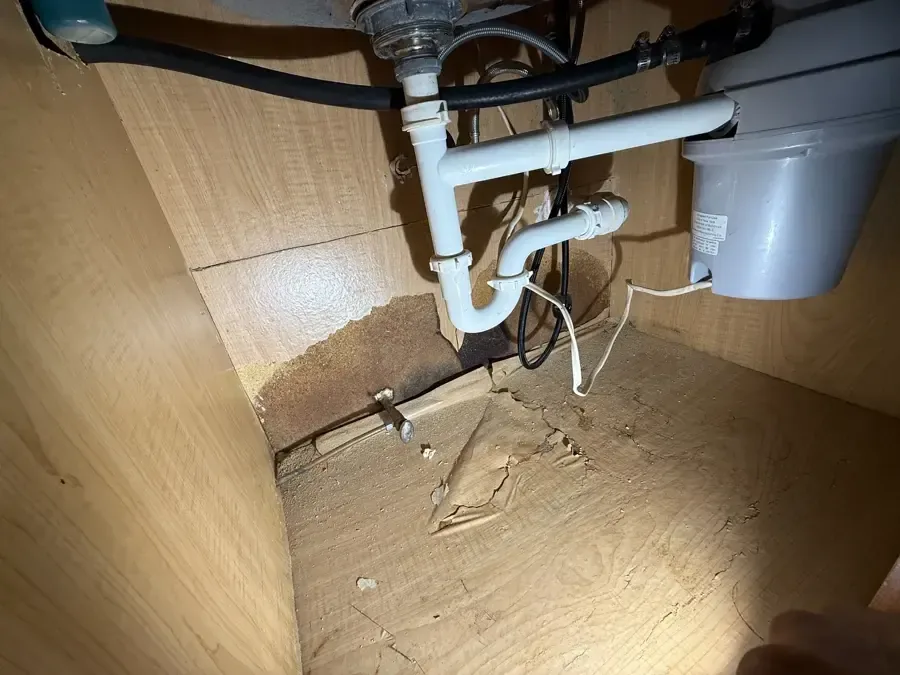
Why the burst pipe water damage plan follows the water
Rapid local response
The response team dispatches 24/7 for active water and starts with source control, safety and a full moisture boundary.
IICRC S500 drying standard
The drying team sets category and class, chooses equipment for the evaporation load and verifies progress with daily readings.
Claim-ready documentation
The record can include the source, room diagram, moisture map, category, class, daily logs and photos before removal.
River Parish water knowledge
The crew plans for tropical rain, storm surge, humid air, supply failures and occasional freezing conditions.
How burst pipe is handled in Garyville
Coordinate shutoff and repair
The plumber isolates and repairs the break while restoration staff photograph the spray path and document hazards around affected materials.
Trace spray and runoff
Readings follow water through walls, ceilings, cabinets, insulation, flooring, and adjoining rooms.
Extract and expose
Liquid is removed and limited openings reveal material that cannot dry behind intact finishes.
Monitor retained assemblies
Repeated values direct equipment adjustments and show when each material reaches its goal.
First steps for burst pipe water damage in Garyville
Use a safe shutoff
Close an accessible valve or master only if the path avoids standing water, damaged ceilings, and electrical hazards. A plumber repairs the pipe.
Avoid sagging overhead finishes
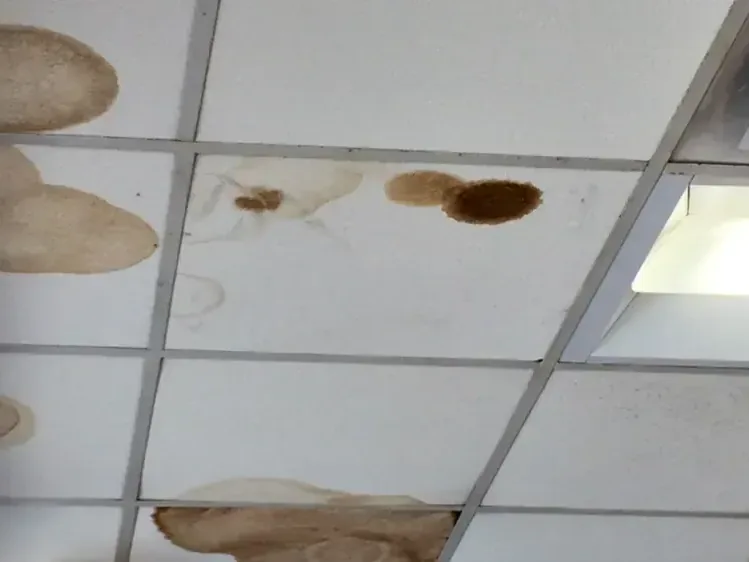
Move away from bowed or dripping overhead finishes. Water held above drywall can release suddenly and may be near electrical fixtures.
Open cabinets when safe
If water is collecting inside an accessible cabinet, open the door without touching wet electrical equipment and leave contents for documented handling.
Record the water path
Photograph the break area, runoff, wet rooms, and visible finish changes from safe positions before extraction alters the scene.
A burst pipe may spray into a cabinet, wall, attic, garage, or crawl space and then follow construction away from the break. Closing water stops new flow, but it does not remove liquid already absorbed by finishes. The restoration team maps the path and coordinates with the plumber. Garyville water damage restoration covers related services when the release reaches multiple systems.
What does burst pipe water damage cost in Garyville, LA?
Burst pipe restoration may range from $1,500 to $7,800 or more. Water volume, pipe location, affected cavities, insulation, flooring, cabinets, access, extraction, removal, equipment, and monitoring influence the final amount.
Focused loss
$1,500 to $3,534
- Source repaired
- Contained wet zone
- Limited access needs
Multi-room loss
$3,534 to $5,460
- Water crossed assemblies
- Several equipment areas
- Broader moisture tracking
Complex loss
$5,460 to $7,800+
- Difficult cavity access
- Insulation or finish removal
- Expanded drying plan
Ranges are typical, not a quote: category of water, square footage, material class and how fast drying started move the number most. Run the water damage cost calculator for a closer range.
Make safe shutoff and repair the first priorities
An occupant can close an accessible fixture valve or master shutoff when the route is clear. Wet electrical areas, sagging ceilings, and slippery surfaces should not be crossed. A plumber repairs the failed pipe and documents the source. Restoration begins hazard assessment, photographs, and moisture testing without interfering with that repair.
Regional utility guidance says freezing temperatures can make water pipes more likely to crack or burst. It recommends insulating exposed pipes and faucets, draining outdoor hoses, sealing cold air openings, and knowing the master shutoff location. South Louisiana prepared for freezing weather in January 2025, yet a current loss still requires proof of its actual cause.
- Approach shutoffs only by a safe route
- Keep clear of wet electrical components
- Save the plumber's source findings
- Photograph spray and runoff patterns
- Identify rooms below or beside the break
Follow water beyond the failed pipe
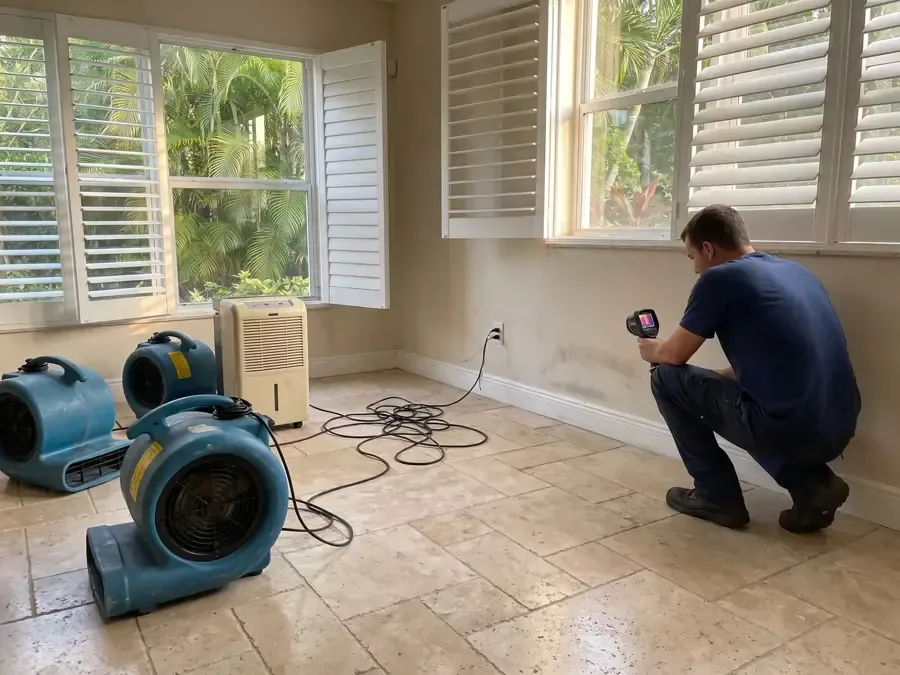
Pressurized water can enter insulation, run along framing, and appear at an opening removed from the source. Technicians test around penetrations, wall bases, ceiling edges, cabinet panels, and floor transitions. Thermal patterns direct attention, while meters confirm which materials are wet. Testing continues into apparently unaffected construction until dry comparison readings are reached.
The water category can change through contact and time. A fresh supply release is assessed differently from water that passed through debris or mixed with another source. Material condition also matters. Wet insulation that cannot drain, swollen composite cabinet parts, and delaminated finishes may need removal even when solid framing can remain.
- Map vertical and horizontal travel
- Check insulation inside accessible cavities
- Test flooring beneath the runoff path
- Separate damaged finishes from sound framing
- Update the diagram as access expands
Extract, open selectively, and dry
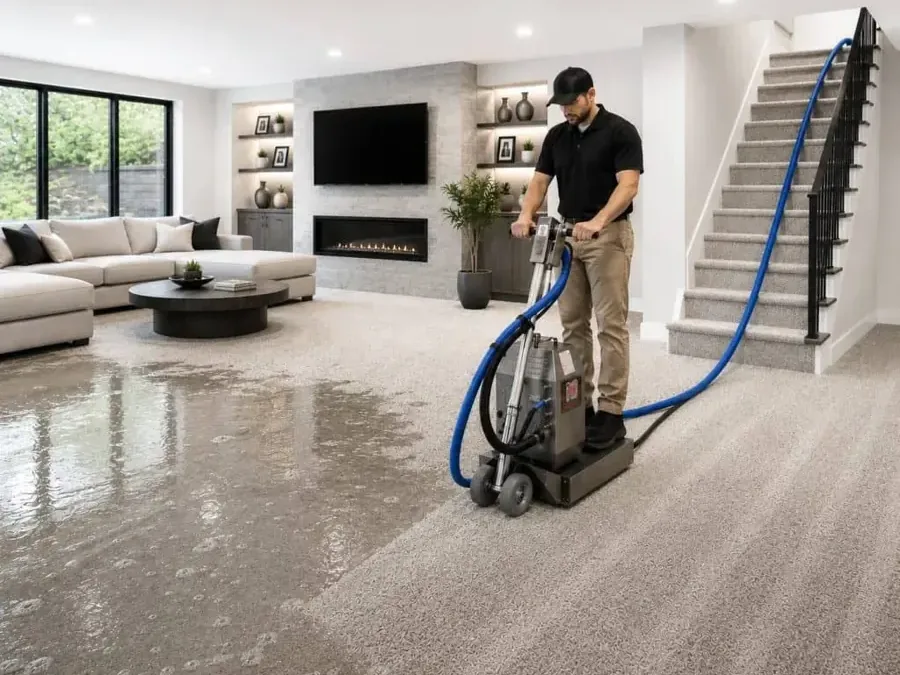
Liquid is recovered from floors and accessible cavities before drying equipment takes over. Small openings can release trapped water or expose damp material when an intact finish blocks evaporation. The crew avoids broad removal without evidence. Each opening should answer a moisture or access problem documented in the work file.
Air movement serves exposed wet surfaces. Dehumidification captures the moisture released into the work zone. Readings at marked points show whether cabinet wood, framing, drywall, or flooring is improving. Structural drying support continues until retained materials meet their separate goals.
- Recover pooled and confined liquid
- Remove barriers supported by readings
- Set equipment within the mapped zone
- Adjust airflow around complex assemblies
- Confirm completion at repeatable points
Connect winter context with property evidence
Airline Highway, the Mississippi River, and Garyville Refinery locate the response area. None establishes that a building has exposed plumbing or suffered a freeze break. The source report, weather timing, pipe condition, and moisture pattern provide the project evidence.
The file can include source photographs, plumber notes, room diagrams, material decisions, equipment logs, and final readings. Insurers determine policy coverage. Clear restoration documentation shows what escaped water affected and how those materials were handled.
Contents and built in finishes can reveal how the spray traveled. Water marks on a cabinet back, damp insulation below a penetration, or changed flooring at a doorway help connect the break to the measured boundary. Technicians photograph those indicators before cleaning or removal and keep unrelated dry belongings outside the hose route.
After repair, the source area is observed for renewed moisture before the cavity closes. This step distinguishes residual drying from continued leakage. If readings rise unexpectedly, the plumber can reassess the component while restoration records the change. That coordination prevents new water from being mistaken for slow drying in the original assembly.
Where insulation was removed, the exposed framing is checked at several points before replacement. This confirms that one dry face is not being used to represent the entire cavity.
Burst pipe water damage across Garyville and nearby communities
Burst pipe mitigation is available around Garyville, including properties near Airline Highway and Garyville Refinery. The measured water path defines the actual response area.
The same service nearby: burst pipe water damage in LaPlace, Reserve, Norco.
Related water damage services in Garyville
Burst Pipe Water Damage questions in Garyville, LA
Pipe release still feeding the loss?
After the pipe is shut off, technicians trace escaped water through adjoining walls and floors.
(888) 417-5665Shut water safely and request helpWho fixes the burst pipe?
A plumber repairs the failed plumbing component. Restoration staff address the escaped water, affected building materials, controlled drying, cleaning needs, and documentation. The original spray pattern and nearby cavities should be included in the assessment.
Can a small break cause broad damage?
Yes. Pressurized water can follow framing, enter insulation, cross floor transitions, and appear below the source. Direct testing establishes the actual boundary.
Should a frozen pipe be heated?
Unsafe heat methods can create fire or electrical hazards. Occupants should follow utility guidance and use qualified plumbing help rather than applying open flames or improvised heating.
Does all wet drywall come out?
Not necessarily. Contamination, strength, delamination, cavity access, insulation, and reading trends shape removal. Sound drywall may remain when the assembly can dry effectively.
Why check cabinets after a pipe break?
Composite panels, toe kicks, back panels, and the floor beneath can hold water out of sight. Each accessible component receives condition and moisture checks.
How is the drying setup changed?
Technicians compare daily readings at marked points. Slow progress can prompt new airflow, additional dehumidification, or selective access where a finish blocks evaporation.
What affects burst pipe cost?
Pipe location, water volume, wet area, insulation, cabinet and floor involvement, access, removal, cleaning, drying equipment, and monitoring determine the restoration scope.
Trace every wet assembly after the plumber repairs the source
Technicians recover water, inspect cavities, create measured access, and track retained construction until drying goals are documented.