Slab Leak Water Damage in Garyville, LA
A concealed plumbing release may spread beneath finished flooring before dampness appears at a wall or cabinet. Restoration begins after source diagnosis, then carefully separates concrete moisture from damage in adjacent finishes. Each material receives its own completion goal.
(888) 417-5665Discuss hidden water damage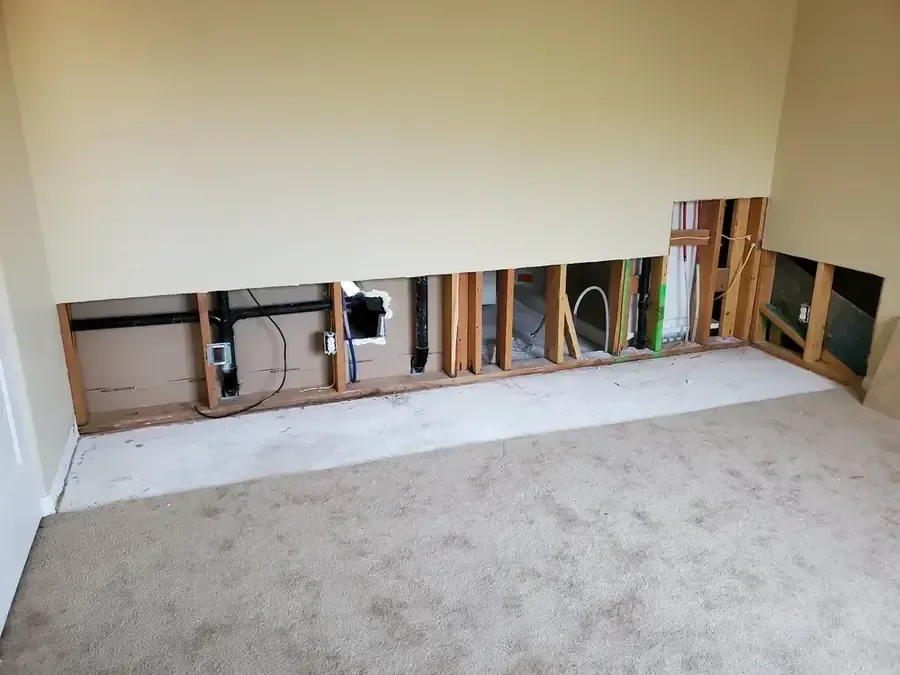
Why the slab leak water damage plan follows the water
Rapid local response
The response team dispatches 24/7 for active water and starts with source control, safety and a full moisture boundary.
IICRC S500 drying standard
The drying team sets category and class, chooses equipment for the evaporation load and verifies progress with daily readings.
Claim-ready documentation
The record can include the source, room diagram, moisture map, category, class, daily logs and photos before removal.
River Parish water knowledge
The crew plans for tropical rain, storm surge, humid air, supply failures and occasional freezing conditions.
How slab leak is handled in Garyville
Coordinate source findings
Plumbing findings identify the hidden source while the restoration survey records affected floor surfaces, adjoining rooms, and lower wall materials.
Map floor and wall moisture
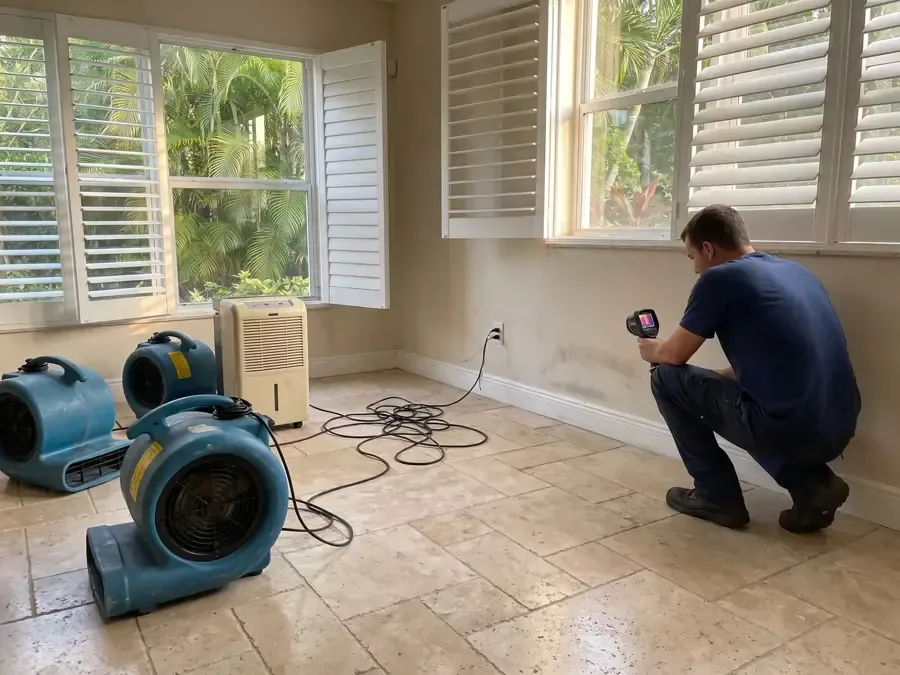
Marked testing points follow moisture beneath floor finishes, behind cabinet edges, and into wall bases beyond the visible change.
Create measured access
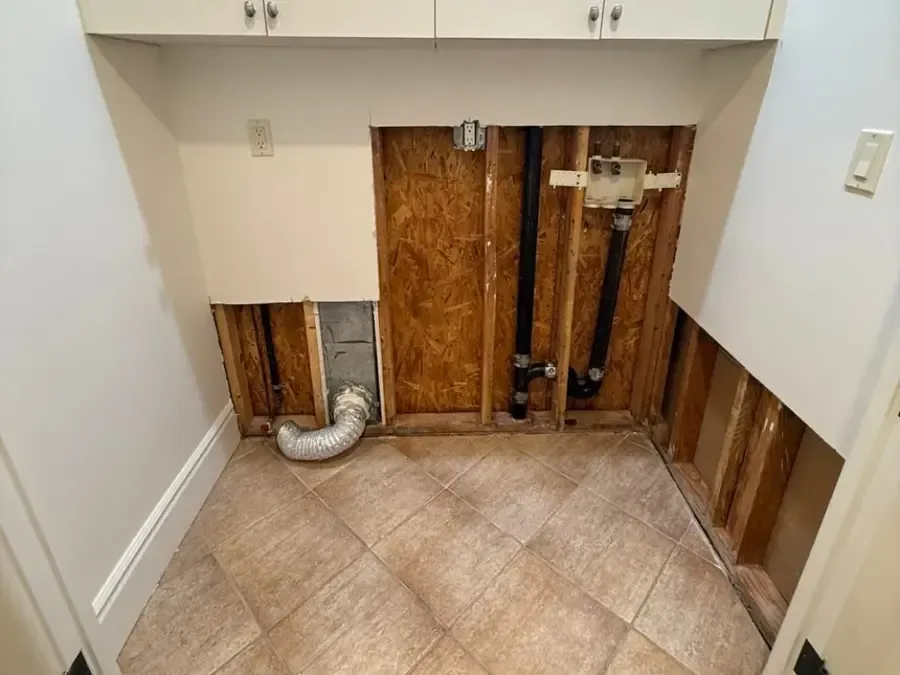
Only barriers supported by condition and readings are lifted or opened for effective drying.
Verify separate targets
Concrete, flooring, wood, and drywall are tracked against suitable goals through completion.
First steps for slab leak water damage in Garyville
Shut water off safely
Use an accessible master valve only when the path is clear. A plumber confirms and repairs the concealed plumbing source before normal drying proceeds.
Protect finished surfaces
Avoid pulling flooring or trim without a mapped reason. Unplanned openings can damage material that might otherwise remain.
Note visible indicators
Photograph damp edges, changed flooring, cabinet swelling, or staining from safe positions before repair and extraction alter conditions.
Keep the area open
Move loose items away when safe, but leave attached cabinets and finishes for inspection so the water path can be documented.
Warm flooring, a damp baseboard, or unexplained moisture can suggest a hidden supply problem, but none identifies the source by itself. A plumber performs diagnosis and repair. The mitigation team then records how far water traveled beneath finishes and into adjoining construction. Garyville restoration services address the complete loss when more than the floor assembly is involved.
What does slab leak water damage cost in Garyville, LA?
Slab leak restoration may range from $1,800 to $8,500 or more. Plumbing access, wet floor area, finish type, cabinet involvement, selective removal, drying conditions, and monitoring determine the actual total.
Focused loss
$1,800 to $3,914
- Small mapped zone
- Limited access work
- Focused equipment
Multi-room loss
$3,914 to $5,950
- Water crossed transitions
- Several materials affected
- Expanded monitoring
Complex loss
$5,950 to $8,500+
- Difficult plumbing access
- Broader finish removal
- Extended drying scope
Ranges are typical, not a quote: category of water, square footage, material class and how fast drying started move the number most. Run the water damage cost calculator for a closer range.
Separate source diagnosis from moisture mapping
Plumbing findings identify the failed component and repair access. Restoration readings answer different questions: which finishes are wet, where the boundary ends, and whether water reached walls, cabinets, or another room. The survey compares suspected materials with unaffected references rather than assuming one reading applies to every surface.
No community wide foundation share is established for Garyville. The Census Bureau identifies the place as an unincorporated community in St. John the Baptist Parish, but that fact says nothing about a particular building system. Inspectors assess the actual property instead of assigning it a foundation type from local geography.
- Obtain the plumber's source finding
- Test flooring in a grid around the concern
- Check wall bases and fixed cabinets
- Compare concrete and finish readings separately
- Photograph conditions before access work
Choose access from the assembly outward
Water below a floor can move through seams, adhesive beds, underlayment, or gaps at penetrations. Finish condition matters. Swelling, debonding, staining, odor, contamination, and trapped moisture can each change whether material stays or is removed. Small controlled openings may reveal an edge without turning the entire room into an unnecessary demolition area.
Concrete naturally behaves differently from wood, drywall, and resilient finishes. A surface reading cannot establish moisture throughout the slab, and a dry wall face cannot prove the bottom plate is unaffected. Technicians select meters and sampling locations suited to each material. The recorded map is revised as access exposes new information.
- Inspect transitions before lifting finishes
- Protect unaffected rooms from debris
- Preserve sound material where practical
- Expose blocked wet edges selectively
- Record every material decision
Dry the finish and substrate as separate targets
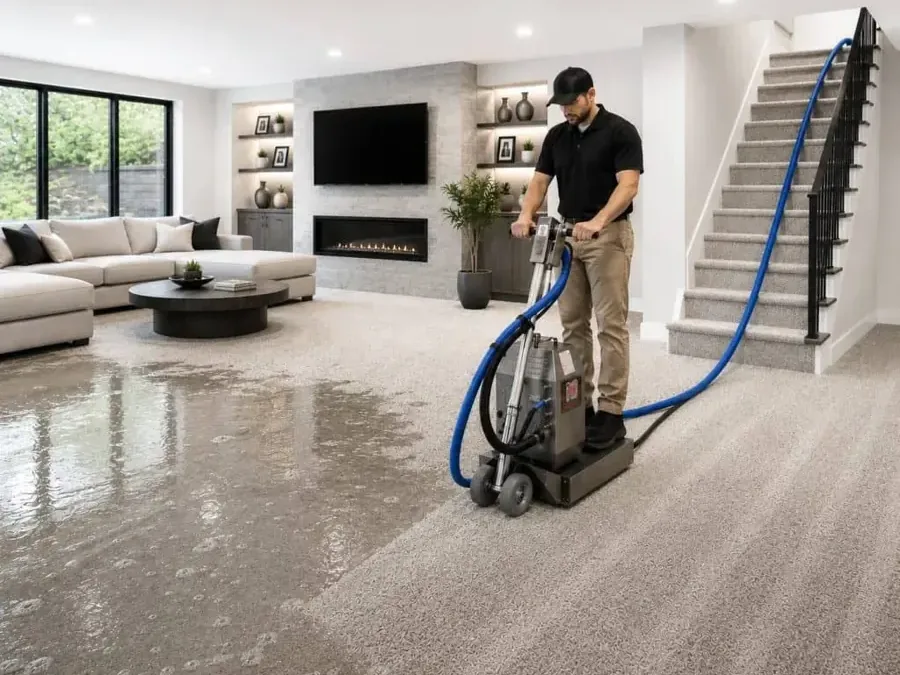
Air movement can help exposed finishes release moisture. Dehumidification removes vapor from the contained work area. When a finish blocks evaporation, lifting or limited removal may be necessary before the substrate can improve. Equipment placement follows readings, not the location of the plumbing opening alone.
Progress monitoring returns to marked points across the mapped zone. If concrete improves while a wall base does not, airflow or access can be revised for that assembly. The structural drying details explain how dry references support decisions. Completion is recorded for each retained material rather than declared for the room as a whole.
- Establish comparable reference values
- Control room humidity during evaporation
- Direct air over accessible damp surfaces
- Check slow areas for hidden barriers
- Save final readings by material
Keep location facts from replacing inspection
Airline Highway, Garyville Refinery, and the Mississippi River orient the service area. They do not reveal where a private pipe runs, whether a building sits on a slab, or how water moved below a specific floor. Those conclusions come from plumbing evidence, assembly access, and direct readings.
A useful record contains the plumber's report, overview photographs, a moisture diagram, removal notes, equipment locations, and completion values. Property owners may provide that file to an insurer, but policy interpretation remains with the carrier.
Furniture and contents near the mapped floor area can interfere with testing or airflow. The crew records their starting position, creates a protected staging area, and leaves fixed cabinets in place until readings show whether access is needed. This order preserves evidence and keeps unrelated belongings outside the equipment path.
Repair access and drying access are not always the same opening. A plumber may reach the failed pipe through one location while moisture remains beneath another finish. Technicians continue testing beyond the repair point and explain any added opening through the measured boundary. Final photographs show exposed and retained surfaces before later floor work begins.
The last floor map identifies monitored points that reached their targets and any finish area reserved for later repair work. This keeps restoration completion distinct from reconstruction.
Slab leak water damage across Garyville and nearby communities
Service reaches properties throughout the community near Airline Highway and the Garyville Refinery. Building specific plumbing findings and direct readings define the restoration work boundary.
The same service nearby: slab leak water damage in LaPlace, Reserve, Norco.
Related water damage services in Garyville
Slab Leak Water Damage questions in Garyville, LA
Moisture appearing without a clear source?
A plumbing diagnosis locates the leak; moisture readings guide access beneath the affected flooring.
(888) 417-5665Arrange a floor assembly assessmentWho repairs the leak beneath the floor?
A plumber diagnoses and repairs the failed pipe. Restoration technicians map escaped water, remove damaged material when necessary, dry retained assemblies, and document moisture conditions. Direct readings confirm scope.
Does damp flooring prove a slab leak?
No. Appliance releases, wall plumbing, exterior entry, and other sources can affect floors. Plumbing diagnosis and a material map are needed before assigning the cause.
Must all flooring be removed?
Not always. Contamination, swelling, adhesion, trapped moisture, access, and reading trends shape the decision. Selective lifting may be enough when sound material and the substrate can dry effectively.
Can concrete stay wet after the room feels dry?
Yes. Room comfort and surface feel do not measure moisture held in a substrate. Concrete and finish layers receive their own readings and completion goals.
How are cabinets checked?
Technicians test accessible faces, toe kicks, side panels, and nearby walls, then consider limited access if readings indicate moisture behind fixed sections. Unaffected cabinetry is protected.
What belongs in the project record?
The record can include plumbing findings, photographs, the measured boundary, access decisions, equipment placement, progress values, completion readings, invoices, and insurer communication.
What changes the cost most?
Floor area, finish system, plumbing access, cabinet involvement, material condition, removal needs, drying barriers, equipment, and monitoring all affect the final scope.
Pair plumbing findings with a measured restoration plan
The team maps affected finishes, opens only supported areas, and tracks concrete, walls, and flooring through separate drying goals.