Slab Leak Water Damage in Reserve, LA
Water surfacing at a floor joint may have traveled beneath finishes before becoming visible. Plumbing personnel identify the failed component while restoration technicians trace moisture through concrete, casework, walls, and adjoining floors throughout the affected building.
(888) 417-5665Request slab leak help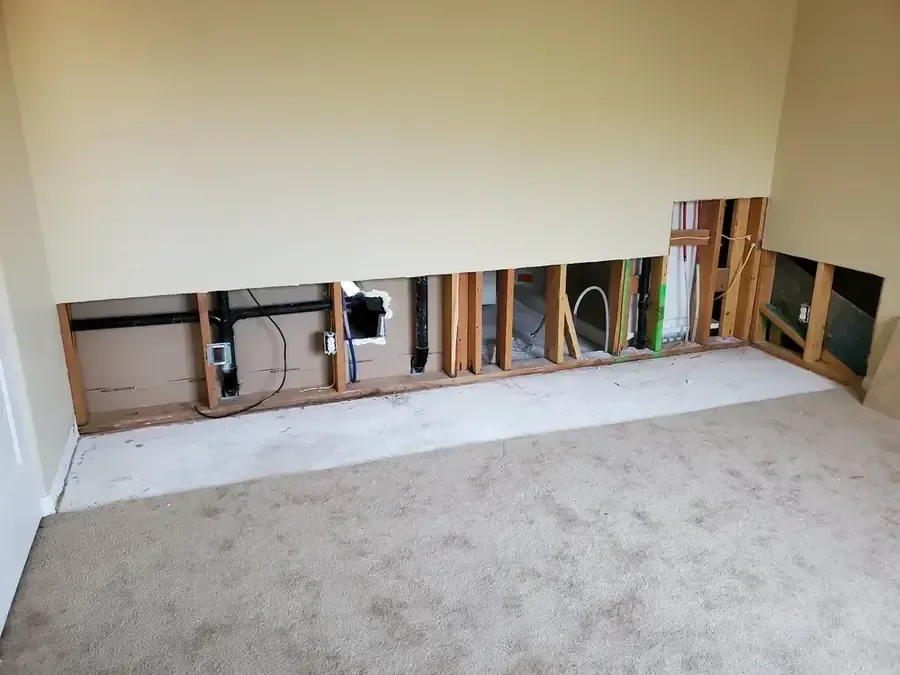
Why the slab leak water damage plan follows the water
Rapid local response
The response team dispatches 24/7 for active water and starts with source control, safety and a full moisture boundary.
IICRC S500 drying standard
The drying team sets category and class, chooses equipment for the evaporation load and verifies progress with daily readings.
Claim-ready documentation
The record can include the source, room diagram, moisture map, category, class, daily logs and photos before removal.
River Parish water knowledge
The crew plans for tropical rain, storm surge, humid air, supply failures and occasional freezing conditions.
How slab leak is handled in Reserve
Connect the source report
Plumbing findings distinguish an underfloor supply release from water arriving through another route.
Test the assembly in layers
Finish, underlayment, concrete, lower walls, cabinets, and adjoining spaces receive individual moisture checks.
Create a limited drying route
Edges and selective openings expose wet construction while dry floor sections remain outside the work area.
Follow the slow targets
Repeated concrete and finish readings determine equipment changes and establish completion before repairs conceal the area.
First steps for slab leak water damage in Reserve
Use the reachable shutoff
Close water only when the route and valve are safe. Plumbing personnel diagnose and repair the concealed supply component.
Avoid lifted floor sections
Do not step on buckled planks, loose tile, or slick finishes. Changed flooring can create a fall hazard and conceal water below.
Preserve the first appearance
Photograph floor changes, damp wall bases, cabinet swelling, and the location where water first became visible before access work begins.
Leave the measured area uncovered
Move dry rugs and boxes away when safe, but do not cover damp finishes or block the technician's floor testing path.
Water appearing beside a wall or through a floor does not reveal the entire underfloor path. In Reserve, the restoration assessment avoids assumptions about foundation prevalence and starts with the specific plumbing finding. The technician then tests the finish, the layer beneath it, concrete, wall bottoms, and fixed cabinets that touch the damp area.
What does slab leak water damage cost in Reserve, LA?
Slab leak water damage restoration commonly ranges from $1,800 to $8,500 or more. Floor construction, concrete moisture, cabinet contact, affected rooms, access, removal, equipment, and monitoring determine the scope.
Focused loss
$1,800 to $3,914
- Pipe repair completed
- Small floor boundary
- Limited access and drying
Multi-room loss
$3,914 to $5,950
- Water crossed thresholds
- Walls or casework affected
- Several layer measurements
Complex loss
$5,950 to $8,500+
- Broad finish disruption
- Dense materials retain moisture
- Extensive access documentation
Ranges are typical, not a quote: category of water, square footage, material class and how fast drying started move the number most. Run the water damage cost calculator for a closer range.
Giving the plumbing diagnosis and moisture map separate jobs
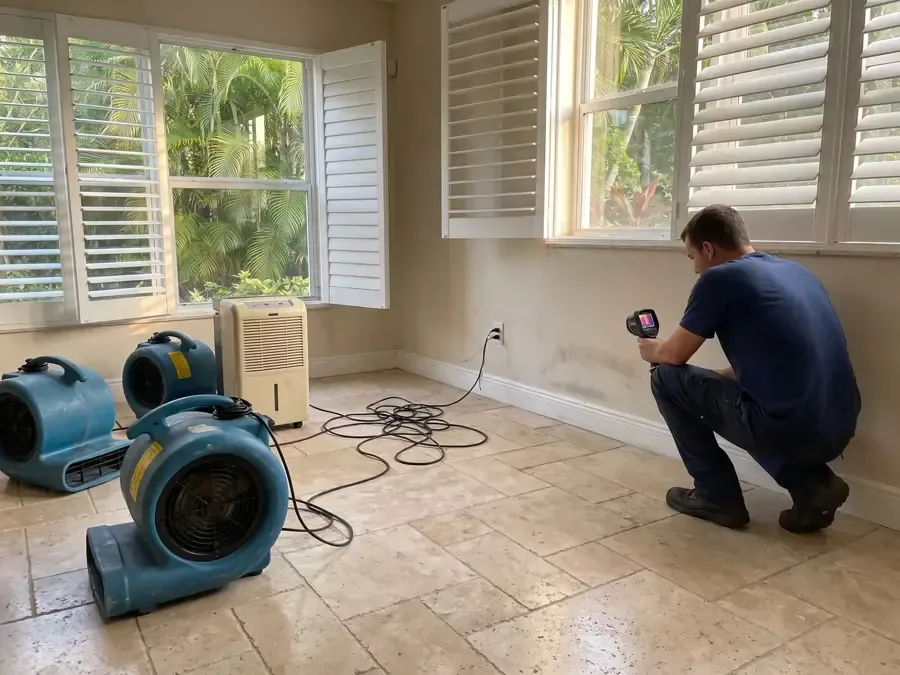
Pressure evidence, acoustic location, and repair access can identify a concealed pipe problem. Those findings belong to the plumber. The moisture map answers another question: which building materials absorbed the released water? Thermal patterns narrow the search, but meters confirm individual surfaces and define the outer edge.
The August 2021 parish repair was followed by a boil water advisory. A homeowner dealing with water beneath flooring can save that notice with the event timeline and plumbing report. Technicians test the slab and adjacent finishes, record the wet boundary, and coordinate access with the plumber's leak diagnosis.
- Retain the plumbing source report with restoration notes
- Measure the floor on both sides of room transitions
- Check cabinet bases and wall contact points
- Compare affected concrete with an appropriate dry area
- Mark materials that are dry and outside the scope
Understanding what each floor layer can conceal
Tile can hide a damp setting bed. Plank flooring may carry water along joints. Sheet finishes can slow evaporation from underlayment, and wood can change shape before the top feels wet. For that reason, the technician identifies the layer being tested rather than assigning one reading to the whole floor.
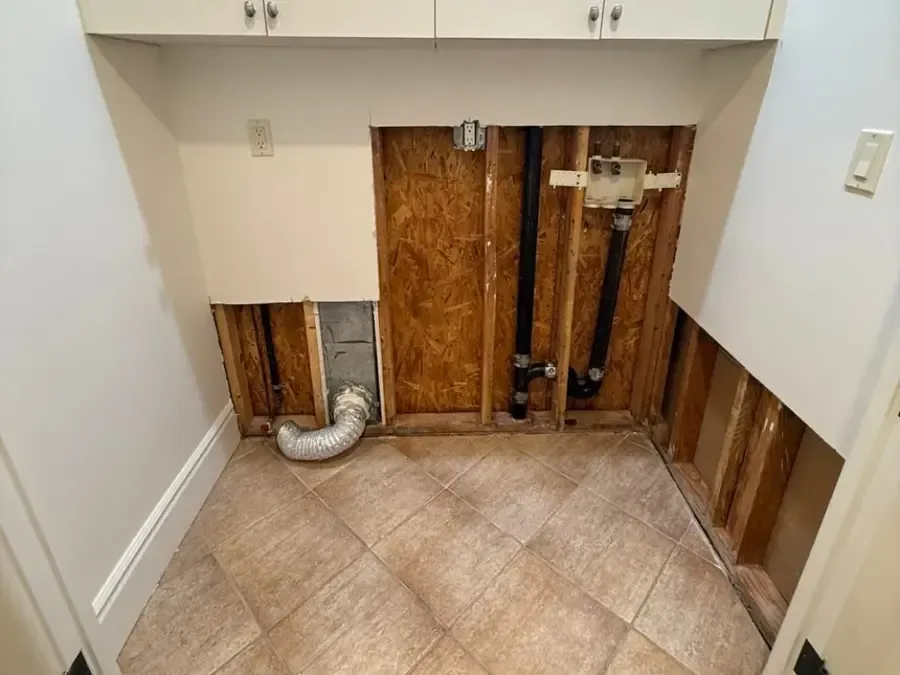
Access begins at edges, thresholds, removable trim, or open cabinet areas when possible. A failed finish may need removal, but sound sections beyond the moisture boundary remain protected. The objective is enough access to inspect and dry the assembly without expanding demolition to a convenient room border.
- List the finish, adhesive, underlayment, and base below
- Inspect transitions where water can cross unnoticed
- Record swelling, loose bond, discoloration, and movement
- Use small openings before broader finish removal
- Retest newly exposed material after access is created
Drying dense and absorbent materials together
Concrete, drywall, wood, and cabinet components release moisture at different rates. Directed air reaches exposed surfaces, while dehumidification controls vapor in the room. A closed floor layer may need selective removal because air across its top cannot reach water held beneath it.
Daily values show whether the boundary is shrinking and whether one component is lagging. A slow slab reading can be expected to behave differently from wallboard, but continued elevation still needs investigation. Structural drying methods explain the relationship between airflow, humidity control, and direct material testing.
- Open an evaporation path to the concrete where needed
- Check wall bases separately from floor materials
- Direct equipment toward measured wet faces
- Compare progress among materials without forcing one timeline
- Finish only after each retained target reaches its goal
Recording repairs and drying across the service area
Coverage includes Airline Highway, Riverside Academy, and the Mississippi River in St. John the Baptist Parish. Reserve restoration services connect slab leak cleanup with extraction and drying. The work begins at the plumbing repair area, then extends across floor seams and adjoining wall bases wherever measurements show additional moisture.
The file can include the plumber report, photographs of the first water appearance, floor diagrams, measurements by layer, access decisions, equipment records, and completion readings. The insurer applies policy terms, and restoration documentation explains what was found above the repaired source.
Planning finish replacement around verified substrates
New flooring should not conceal a slab, underlayment, or cabinet edge that still carries an elevated reading. Before replacement work begins, the restoration record identifies which layers remained, which were removed, and where final measurements were taken. Adhesive residue or a surface coating can change how moisture leaves concrete, so the exposed area is judged according to its actual condition rather than a calendar assumption. If the plumber used an access opening, that location is inspected separately from the wider wet footprint. The resulting diagram gives the flooring installer a clearer substrate history and helps prevent a dry section from being confused with an untested one. Photographs and meter values stay paired by location so later construction decisions can be traced to the observed assembly.
Slab leak water damage across Reserve and nearby communities
Slab leak restoration serves properties around Airline Highway, Riverside Academy, the Mississippi River east bank, and ZIP areas 70068 and 70084, with testing defining each scope.
The same service nearby: slab leak water damage in LaPlace, Garyville, Norco.
Related water damage services in Reserve

Slab Leak Water Damage questions in Reserve, LA
Water is rising through a finished floor?
A plumbing diagnosis locates the leak; moisture readings guide access beneath the affected flooring.
(888) 417-5665Arrange underfloor moisture tracingDoes warm or damp flooring prove a slab leak?
No single symptom proves a concealed pipe failure. Plumbing findings establish the component, while restoration testing identifies materials already reached by released water. Both records remain distinct.
Can tile look normal over wet concrete?
Yes. The exposed tile may appear unchanged while grout, setting material, adhesive, or concrete holds moisture. Several accessible points are compared during assessment. Layer specific values reveal which component still holds water.
Must the complete floor be removed?
No. Removal follows material condition, moisture, access, and drying response. Sound dry sections remain when selective openings provide enough reach to affected layers.
How are cabinets beside the leak evaluated?
Technicians test toe kicks, side panels, wall contact, bases, and reachable flooring beneath. One damp component does not automatically decide the entire cabinet.
Why does concrete require separate monitoring?
Dense concrete releases moisture differently from wallboard or exposed wood. Its progress is tracked at repeatable locations instead of inferred from nearby faster drying material.
Who handles the concealed pipe repair?
A plumber diagnoses and repairs the pipe. The restoration crew extracts water, maps affected construction, creates drying access, monitors equipment, and records completion.
What determines slab restoration cost?
Floor layers, room transitions, concrete area, cabinets, wall contact, access, demolition, extraction, dehumidification, and repeated monitoring shape the restoration work.
Separate pipe repair from the wet material scope
Technicians test each floor layer, inspect walls and casework, create limited access, and monitor concrete through a documented finish.