Appliance Leak Water Damage in Reserve, LA
Water from a washer, dishwasher, refrigerator, or supply hose often disappears beneath cabinets and flooring before the appliance is moved. A complete response tests the footprint, adjoining finishes, and rooms below. Direct measurements define the boundary.
(888) 417-5665Request appliance leak cleanup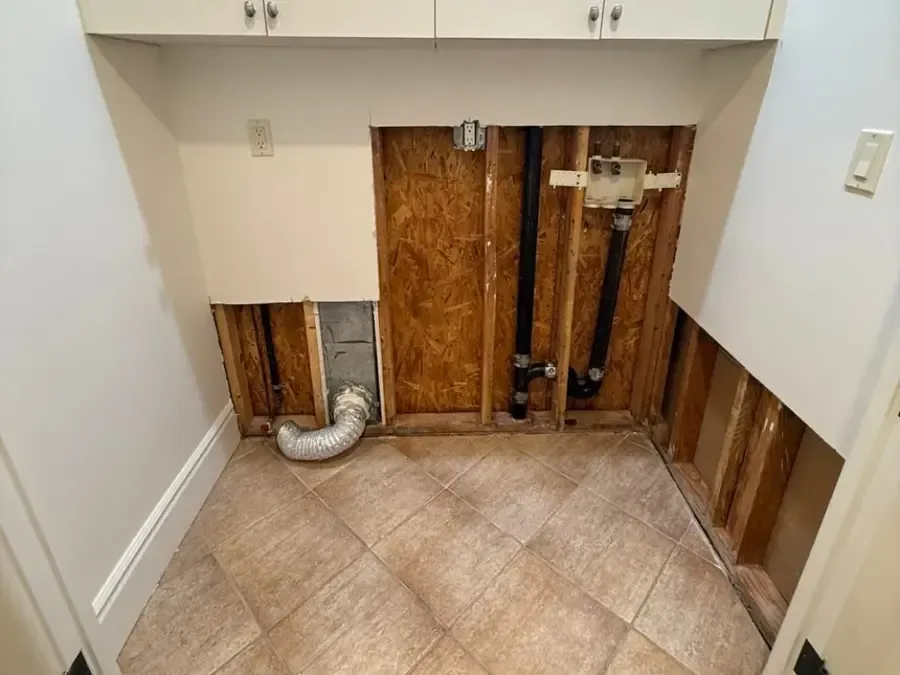
Why the appliance and supply hose leaks plan follows the water
Rapid local response
The response team dispatches 24/7 for active water and starts with source control, safety and a full moisture boundary.
IICRC S500 drying standard
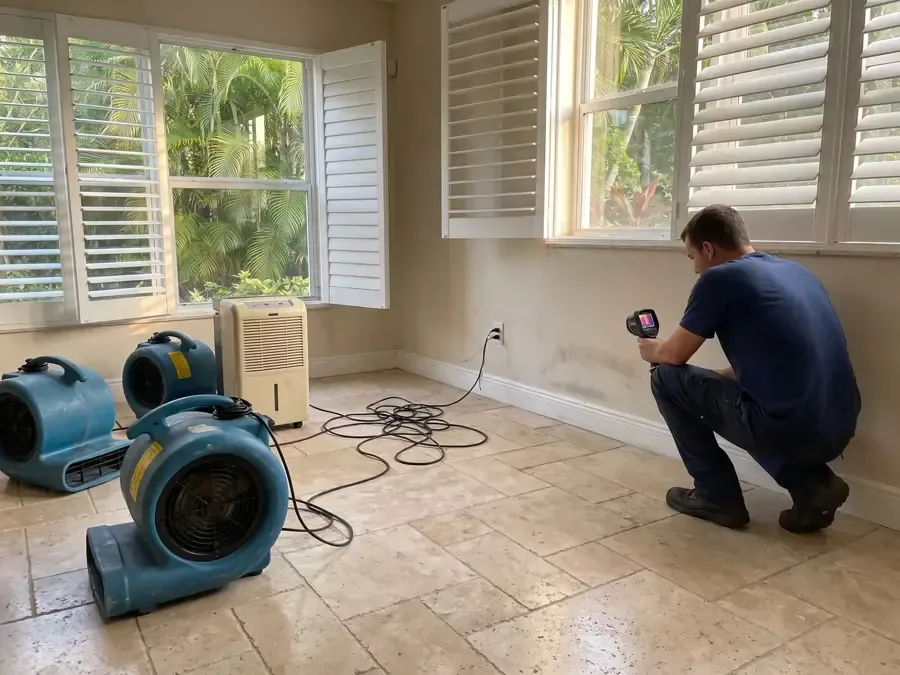
The drying team sets category and class, chooses equipment for the evaporation load and verifies progress with daily readings.
Claim-ready documentation
The record can include the source, room diagram, moisture map, category, class, daily logs and photos before removal.
River Parish water knowledge
The crew plans for tropical rain, storm surge, humid air, supply failures and occasional freezing conditions.
How appliance and supply hose leaks is handled in Reserve
Document source isolation
The appliance position, failed component, repair action, and visible release path are recorded after safe access is established.
Test the concealed footprint
Floor layers, cabinet edges, wall penetrations, thresholds, and any lower room are measured separately.
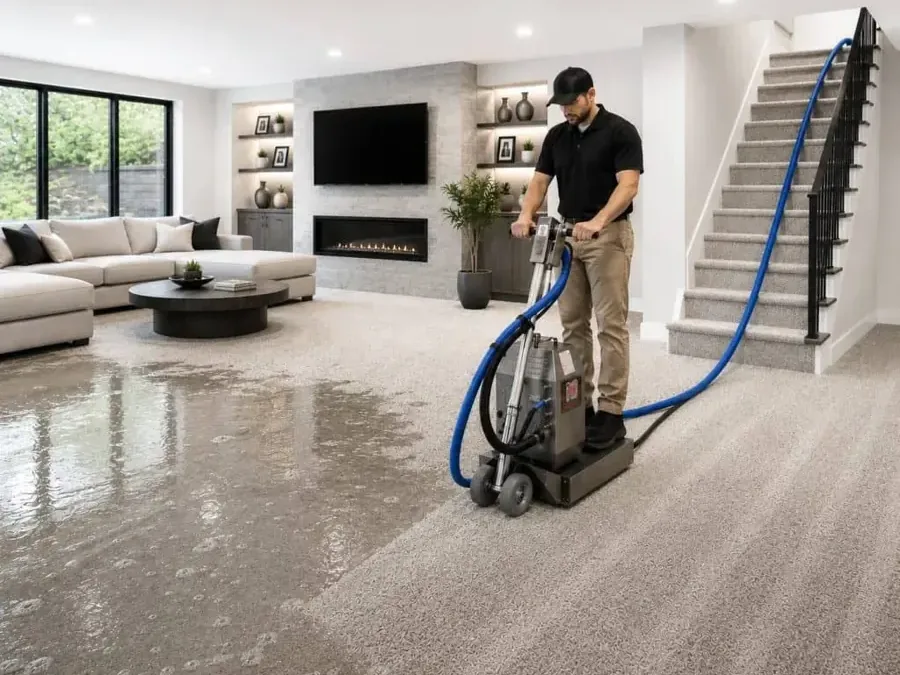
Extract and create access
Confined tools recover liquid while removable trim or limited finish openings expose materials sealed behind the machine.
Verify before reconnection
Repeat readings confirm that retained construction beneath and beside the appliance meets its selected moisture targets.
First steps for appliance and supply hose leaks in Reserve
Keep power and water separated
Do not touch plugs, cords, controls, or the appliance while standing on a water. Electrical and plumbing concerns require trade attention.
Close only a safe supply valve
A reachable dry valve may stop a hose release. Do not lean across water, force a stuck control, or move heavy equipment to reach it.
Protect nearby dry contents
From safe footing, move light dry items away from the spreading edge. Leave trapped, heavy, or wet contents until a controlled work route exists.
Save the failure details
Photograph visible connections and the water path when safe. Keep the failed part, service note, and purchase or repair documents available for the file.
A puddle in front of a machine may be the last part of the loss to appear. Behind it, water can pass through a cabinet opening, floor seam, wall penetration, or baseboard joint. Reserve technicians begin with the equipment footprint and expand testing according to measured moisture rather than the size of the visible pool.
What does appliance and supply hose leaks cost in Reserve, LA?
Appliance leak water damage restoration usually ranges from $1,000 to $5,800 or more. Appliance position, release volume, cabinets, floor layers, wall travel, access, extraction, equipment, and monitoring shape the final scope.
Accessible footprint
$1,000 to $2,584
- Source stopped quickly
- Limited hard surface contact
- Focused extraction and checks
Cabinet or floor spread
$2,584 to $4,059
- Water reached concealed edges
- Several materials tested
- Selective access and drying
Multi-area release
$4,059 to $5,800+
- Water crossed rooms or levels
- Broad underfloor travel
- Complex contents and equipment
Ranges are typical, not a quote: category of water, square footage, material class and how fast drying started move the number most. Run the water damage cost calculator for a closer range.
Making the appliance safe before moving it
Washers, dishwashers, and refrigerators combine electricity, water, weight, and tight clearances. Occupants should not pull a powered unit across a wet floor. An appliance or plumbing professional isolates the source and documents the failed hose, connection, valve, drain, pump, or machine component.
The restoration crew photographs the starting position and visible path once access is safe. A slow refrigerator connection can affect a narrow hidden strip, while a washer discharge can cross a room quickly. No local frequency claim is needed; the current release and actual construction determine the search.
- Do not reach behind energized wet equipment
- Close an accessible supply valve only from dry footing
- Preserve the failed hose or repair information when available
- Inspect wall penetrations after the appliance is moved
- Mark dry comparison areas before work traffic begins
Testing cabinets and floors as layered assemblies
Dishwasher water can enter cabinet toe kicks and the edges of casework. A washer release can travel beneath baseboards or across an adjacent threshold. Refrigerator water may follow the supply opening into a wall. Each route calls for direct readings in the materials that actually touch it.
Floor finish, adhesive, underlayment, subfloor, or concrete are evaluated separately. A dry top surface does not clear the lower layers. Cabinet end panels, backs, shelves near the floor, and toe spaces also receive individual checks because composite components can swell or lose strength after absorption.
- Measure the entire equipment footprint
- Follow seams toward cabinets and nearby doorways
- Check toe kicks from more than one access point
- Inspect the wall behind water and drain connections
- Test any lower room below the release path
Choosing extraction and access around fixed finishes
Portable tools remove liquid from confined edges after the machine is safely out of the way. Removable toe kicks and trim can provide a useful first opening. When a floor covering traps water, a limited lift or cut may be needed to reach underlayment and prevent moisture from remaining sealed below a dry looking face.
Water extraction methods address the movable portion before air and dehumidification take over. Cabinet components that remain stable and clean may dry with focused access. Swollen, delaminated, contaminated, or structurally weakened pieces require a different disposition based on their condition.
- Use small access points before widening demolition
- Protect cabinet faces outside the work boundary
- Direct air into exposed toe and floor cavities
- Collect released vapor with adequate dehumidification
- Change the setup when hidden values stall
Closing the footprint only after verification
Airline Highway, Riverside Academy, and the Mississippi River identify the portion of St. John the Baptist Parish served. These names do not imply a special appliance defect. The failure record, mapped path, and daily values explain the actual Reserve project.
Before an appliance returns, the technician retests the wall, cabinet edges, floor layers, and connection area it will cover. Local restoration services can coordinate related structural drying. Final photographs, source repair notes, material decisions, equipment dates, and completion readings create a useful account for the owner and insurer.
Distinguishing one release from routine appliance moisture
Condensation, a defrost cycle, and a failed water connection can leave different patterns around equipment. The appliance technician's findings clarify the mechanical event, while the restoration map records only water that entered the building assembly. This distinction matters near refrigerators and dishwashers, where a small amount may remain hidden for some time without a large open puddle. Testing begins at penetrations and spreads across compatible floor sections so unrelated readings are not folded into the loss. If an adjacent cabinet remains dry, that boundary is recorded as carefully as the wet side. The result is a focused scope that addresses observed damage without assigning a defect to other appliances or assuming the same path will exist elsewhere in the property.
Appliance and supply hose leaks across Reserve and nearby communities
Appliance leak restoration serves locations near Airline Highway, Riverside Academy, the Mississippi River, and ZIP areas 70068 and 70084, with the machine footprint defining initial tests.
The same service nearby: appliance and supply hose leaks in LaPlace, Garyville, Norco.
Related water damage services in Reserve
Appliance and Supply Hose Leaks questions in Reserve, LA
An appliance has leaked beneath the finish?
Inspection reaches behind the machine and beneath cabinets to find water concealed by fixed finishes.
(888) 417-5665Arrange appliance water restorationShould a wet appliance be pulled away from the wall?
Occupants should not move powered heavy equipment across water. Appliance, plumbing, or electrical personnel establish safe disconnection before the footprint is exposed. This protects both the operator and the surrounding finish.
Where does dishwasher water commonly hide?
It can enter the toe space, cabinet ends, flooring seams, and wall edge. Direct checks determine which of those paths were involved in a particular release. The inspection also follows any opening behind the cabinet.
Can a refrigerator hose wet the wall cavity?
Yes. A connection or tubing release near a penetration can reach wallboard, framing, insulation, cabinets, and floor layers before water appears in front.
Does dry flooring on top mean the assembly is dry?
No. Seams and penetrations can carry liquid into adhesive, underlayment, subfloor, or concrete. Each accessible layer receives an appropriate measurement.
Can cabinets stay after an appliance leak?
Stable clean components may remain when access and readings support drying. Swelling, delamination, contamination, loss of strength, or trapped moisture can require selective removal.
When can the appliance be put back?
After source repair and when returning the unit will not cover unfinished inspection or drying. The footprint and adjacent materials are retested before reconnection.
What determines the restoration cost?
Machine location, water quantity, release duration, cabinets, flooring, walls, rooms below, extraction access, material removal, equipment, and monitoring all affect scope.
Check the footprint before the machine returns
The restoration team coordinates safe movement, maps cabinets and floor layers, creates narrow access where needed, and confirms retained materials with final readings.