Slab Leak Water Damage in Destrehan, LA
Water rising through a floor joint or appearing beside a cabinet can originate below the visible finish. Technicians separate the plumbing diagnosis from the restoration map, then dry the slab and every connected wet assembly.
(888) 417-5665Start slab moisture tracing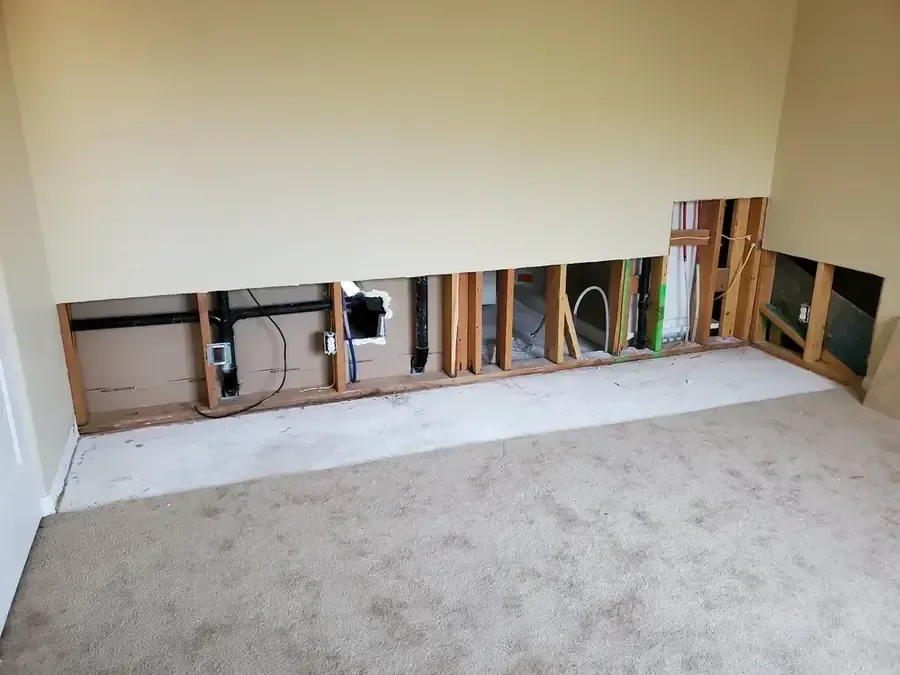
Why the slab leak water damage plan follows the water
Rapid local response
The response team dispatches 24/7 for active water and starts with source control, safety and a full moisture boundary.
IICRC S500 drying standard
The drying team sets category and class, chooses equipment for the evaporation load and verifies progress with daily readings.
Claim-ready documentation
The record can include the source, room diagram, moisture map, category, class, daily logs and photos before removal.
River Parish water knowledge
The crew plans for tropical rain, storm surge, humid air, supply failures and occasional freezing conditions.
How slab leak is handled in Destrehan
Confirm the source finding
Plumbing evidence distinguishes an under slab release from appliance water, roof entry, or surface drainage.
Chart every wet layer
Meters identify moisture in floor finishes, concrete, wall bases, cabinets, and connected rooms.
Create a practical drying path
Selective openings expose retained moisture while sound materials beyond the boundary remain undisturbed.
Measure the slow materials
Concrete and concealed components are monitored until their readings reach the documented target.
First steps for slab leak water damage in Destrehan
Use the safest shutoff
Stop water only when the valve can be reached without crossing wet electrical areas. The plumbing contractor handles diagnosis and repair.
Keep weight off changed flooring
Avoid boards or tiles that have lifted, buckled, or become slick. Movement can spread damage or create a fall hazard.
Save the first observations
Photograph stains, floor changes, cabinet swelling, and the first visible water location before finishes are opened or contents are moved.
Do not cover the wet area
Rugs, boxes, and plastic can slow evaporation or hide spread. Leave the measured floor available for inspection and extraction.
A slab leak often announces itself indirectly. Flooring may darken, a baseboard may swell, or water may collect far from the damaged pipe. In Destrehan, the restoration inspection follows those clues without assuming a foundation type across the community. A plumber locates and repairs the pipe. The mitigation technician defines what became wet above and beside the slab. The local restoration hub connects that work with other water damage services.
What does slab leak water damage cost in Destrehan, LA?
Slab leak water damage projects commonly range from $1,800 to $8,500 or more. Floor layers, affected rooms, concrete moisture, cabinet involvement, access choices, and the required drying period determine the site scope.
Focused loss
$1,800 to $3,914
- Pipe repaired
- Limited floor section
- Targeted drying access
Multi-room loss
$3,914 to $5,950
- Water crossed transitions
- Walls or cabinets wet
- Several monitoring points
Complex loss
$5,950 to $8,500+
- Finish removal required
- Dense materials drying slowly
- Broad documentation needs
Ranges are typical, not a quote: category of water, square footage, material class and how fast drying started move the number most. Run the water damage cost calculator for a closer range.
Separating pipe repair from moisture restoration
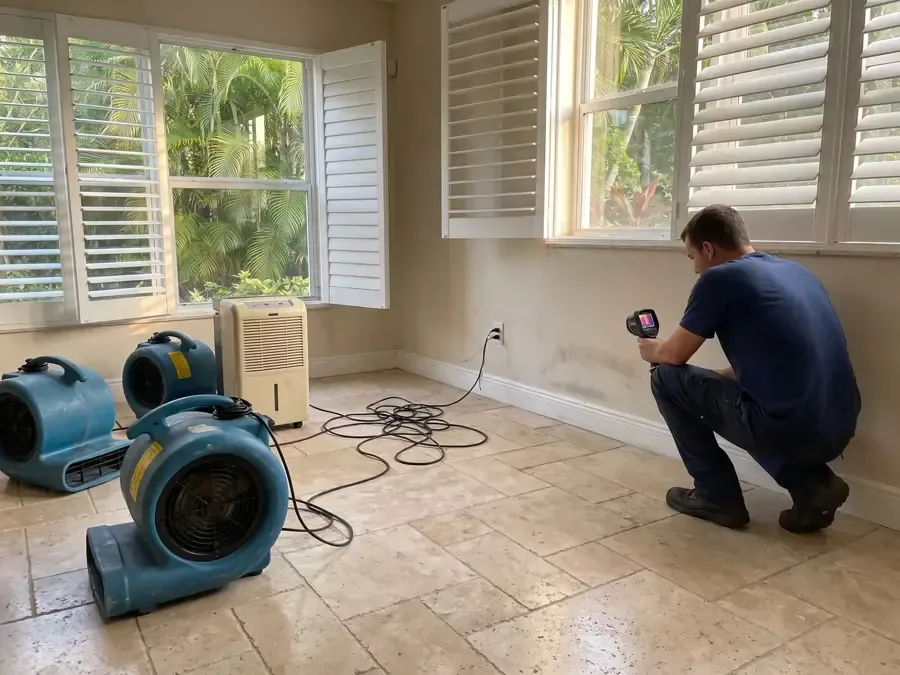
Pressure testing, acoustic findings, and plumbing access belong to the repair diagnosis. Restoration begins with the water already released. The technician checks floor finishes, transitions, baseboards, drywall, cabinets, and nearby rooms. A thermal camera can show patterns worth testing, but pin and pinless meters provide the material evidence used to mark the wet area.
St. Charles Parish Waterworks is the parish water agency. Destrehan experienced a public pipe rupture in January 2017 and another reported break in April 2018. A dated plumbing report is useful when water appears beneath flooring: it identifies the component inspected, the repair made, and whether the supply was isolated. Restoration technicians then trace moisture through the floor and adjoining wall bases.
- Obtain the plumbing source finding before closing access
- Test both sides of floor and wall transitions
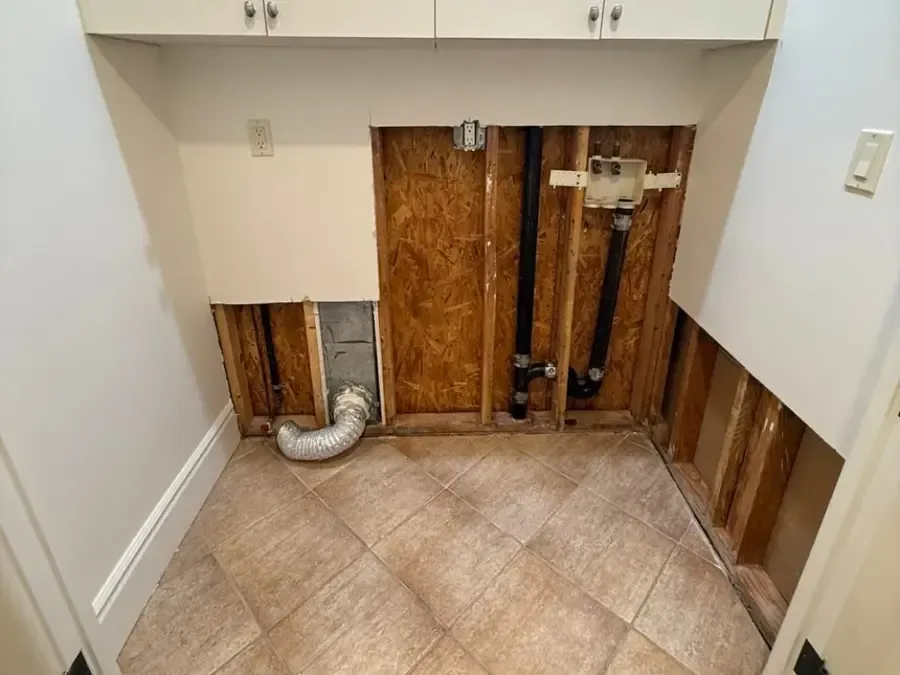
- Check cabinet toe kicks and concealed backs
- Compare slab readings with unaffected concrete
- Keep the moisture map separate from assumptions about foundations
Reading the floor system one layer at a time
Tile, vinyl, wood, laminate, underlayment, adhesive, and concrete respond differently to released water. The setting bed and slab need separate moisture checks even when the tile face feels dry. Wood can change dimension while the underside remains damp. Composite flooring can lose integrity even when surface water was removed quickly.
The technician chooses inspection points that reveal the relationship between layers. A removable threshold may provide access without disturbing a broad floor area. Cabinet openings can expose the slab beside fixed casework. When a finish blocks meaningful drying or has already failed, the affected section can be removed in a controlled way. Sound sections outside the readings remain protected.
- Identify every floor layer within the measured boundary
- Inspect transitions where water can pass beneath another finish
- Check walls that touch the wet floor system
- Document swelling, release, staining, or loss of bond
- Use limited access before considering broader removal
Moving moisture out of concrete and adjacent materials
Concrete releases moisture differently from drywall or exposed wood. Air movement across an open slab can support evaporation, while dehumidification lowers the vapor load in the controlled room. Wall cavities, sill areas, and cabinet bases may need their own air path. The system is adjusted to the slowest relevant material rather than removed when the room merely feels comfortable.
Properties near Destrehan Plantation and Great River Road receive the same material based decisions as those near Airline Highway. Location does not change the drying goal. Technicians record room conditions and material readings at consistent points, then compare each visit with the prior result. A stalled reading can signal blocked airflow, retained water beneath a finish, or the need for better access.
- Expose only the slab area needed for effective drying
- Direct air across the material rather than into clean rooms
- Measure wall bases separately from the concrete
- Watch cabinet components for slow moisture release
- Keep equipment until documented goals are met
Explaining decisions in the project file
A useful slab leak record begins with the plumbing report and continues through the restoration measurements. Photos show where water first appeared and where finishes were opened. The moisture diagram identifies the affected rooms. Daily entries show how concrete, flooring, walls, and cabinets changed while equipment operated.
The final packet can include repair information, initial and completion readings, material notes, and invoices. The insurer applies policy terms to the reported cause. Restoration documentation supplies the observed facts, including why a material remained, why access was created, and how the dry condition was determined. The water damage cost calculator can support early planning before a site scope is complete.
Slab leak water damage across Destrehan and nearby communities
Slab leak restoration covers local properties around local Plantation, Great River Road, Airline Highway, Ormond Estates, and the Mississippi River corridor. Direct material readings define the individual work boundary.
The same service nearby: slab leak water damage in LaPlace, Norco, Luling.
Related water damage services in Destrehan

Slab Leak Water Damage questions in Destrehan, LA
Water appearing through the floor?
A plumbing diagnosis locates the leak; moisture readings guide access beneath the affected flooring.
(888) 417-5665Request a slab moisture assessmentDoes warm flooring prove a slab leak?
No single symptom proves the source. Warmth, sound, pressure loss, visible water, and plumbing findings can contribute to diagnosis, while restoration meters identify the materials already affected.
Can tile hide moisture from a leak?
Yes. The tile face may look normal while water remains in grout joints, setting material, adhesive, underlayment, or concrete. Testing at several accessible points is needed.
Will the entire floor be removed?
Removal follows condition and access, not the room outline. Sound sections may remain when the assembly can be dried and monitored. Failed or moisture blocking finishes may need selective removal.
How are cabinets checked beside a slab leak?
Technicians test toe kicks, side panels, backs, wall contact points, and accessible flooring below. Small access points can reveal moisture without dismantling dry cabinet sections.
Why can concrete take longer to dry?
Concrete stores moisture within a dense porous structure and releases it gradually. Surface appearance can improve before internal readings reach the selected comparison goal.
Who repairs the leaking pipe?
A plumbing contractor diagnoses and repairs the pipe. The restoration team handles extraction, material access, moisture control, structural drying, and documentation of affected construction.
What affects the restoration cost?
Floor composition, room count, water travel, cabinetry, wall contact, contamination, demolition, access, equipment, and monitoring all shape the scope after the pipe repair is separated out.
Trace the wet assembly before finishes hide the path
The response team maps flooring, concrete, walls, and cabinet bases, then builds access and drying around the confirmed readings.